
The Best Beginner Motorcycle Helmet [Saving Brain and Budget]
 Evan Rally
left for contents
Welcome to the motorcycle world!
Before I start throwing DOT, EPS, Mips, and more at you, let me say that the first rule of motorcycling is: stay alive. You can’t very well ride without a working head, and that makes your helmet purchase very important.
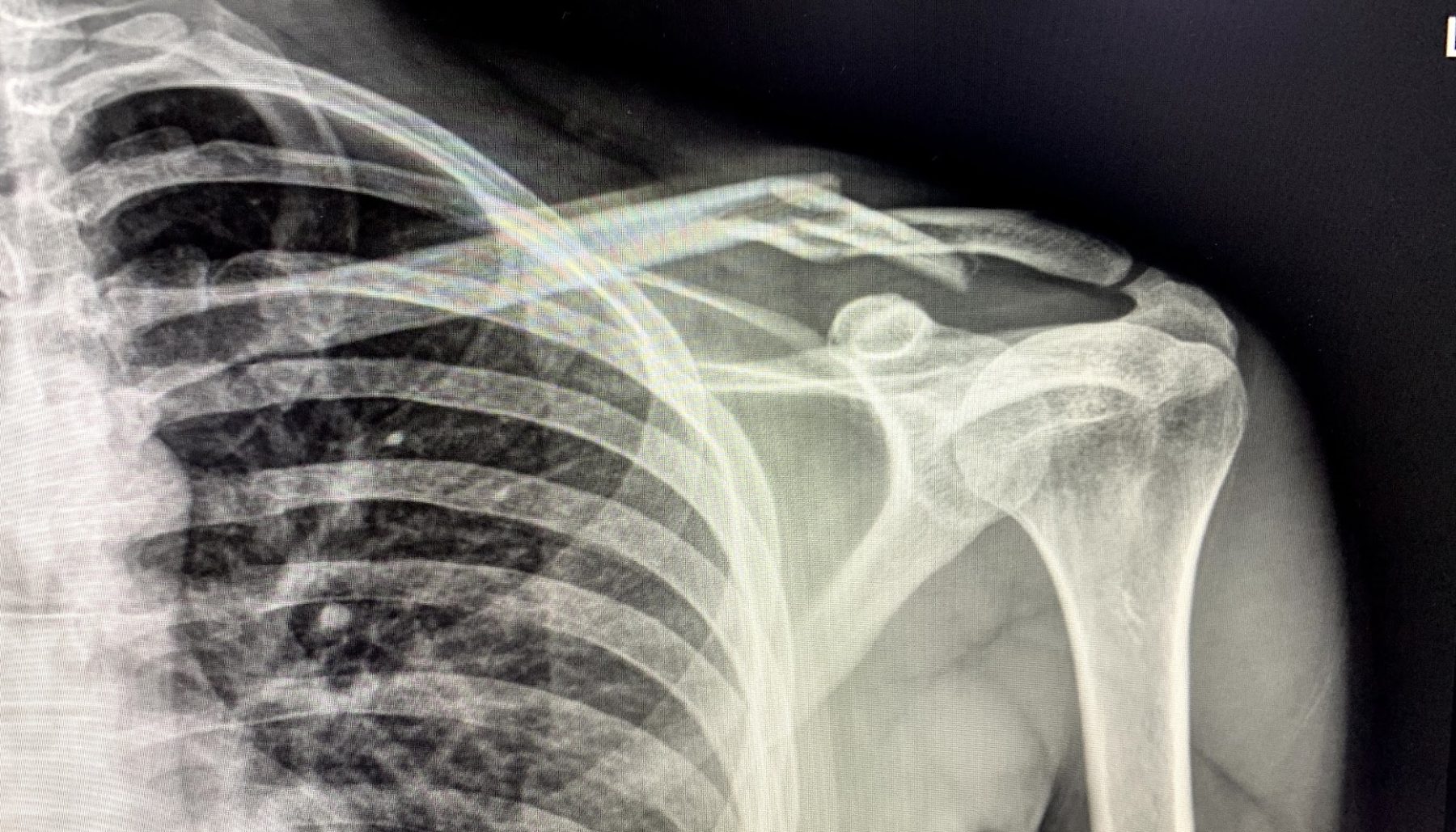
I’ll be honest, when I first started riding I was flippant about helmets. I thought anything would do. Then I broke a collar bone, started looking down the gear rabbit hole… my mind was blown.
Your first motorcycle helmet is arguably the most important piece of gear you’ll ever buy. It’s the only thing standing between your precious brain and the unforgiving asphalt.
Here are a few things you might not realize about motorcycle helmets:
- You should be willing to spend $300+: This is your head we’re talking about. How much is that worth to you? The impact absorption of a more expensive helmet made with superior materials will outclass cheaper lids all day, every day, regardless of safety ratings (which are mostly designed to please the helmet manufacturers). That said, we have plenty of budget options on this list.
- Your head shape matters more than you think. A helmet that doesn’t fit properly won’t do its job effectively in a crash. Make sure you’re getting the right helmet for your head and fitting it properly. We’ll get in to this below.
- Never buy a used helmet. A helmet’s inner foam (EPS foam) is designed to crush upon impact, and it doesn’t recover its shape or impact-absorbing ability. You have no way of knowing if a used helmet has already done its job, even if it looks perfect on the outside. If you’re replacing an old lid instead of buying your first one, our guide on when to replace your motorcycle helmet explains the age, crash, drop, and wear signs that mean it is time to move on.
Ready to find the perfect lid to keep your noggin safe and sound? Let’s dive into some of the best options out there for beginner riders. I highly recommend you also read the buyer’s guide further down to learn more about what to look for in a motorcycle helmet.
We’ll look at some premium choices if you’re able to invest in top-notch safety and comfort, and then we’ll explore some fantastic budget-friendly options that won’t break the bank.
Still building out your first riding kit? While you compare helmets, our beginner motorcycle gear guide covers the helmet, jacket, gloves, boots, and pants new riders should buy first.
The Best Beginner Helmets For All Riders
If you’re the type who believes in buying the best right out of the gate, or if comfort is a top priority for you, these premium helmets are worth a serious look.
Shoei RF-1400: The Gold Standard
Reviewed by our contributor Carl Magnusson after four years of ownership.
The Shoei RF series has been a favorite among riders for years, and the RF-1400 is the latest and greatest in this legendary lineup. This helmet is like the Swiss Army knife of motorcycle helmets – it does just about everything exceptionally well.
This was our contributor Carl’s first helmet, and he still rides in it today.
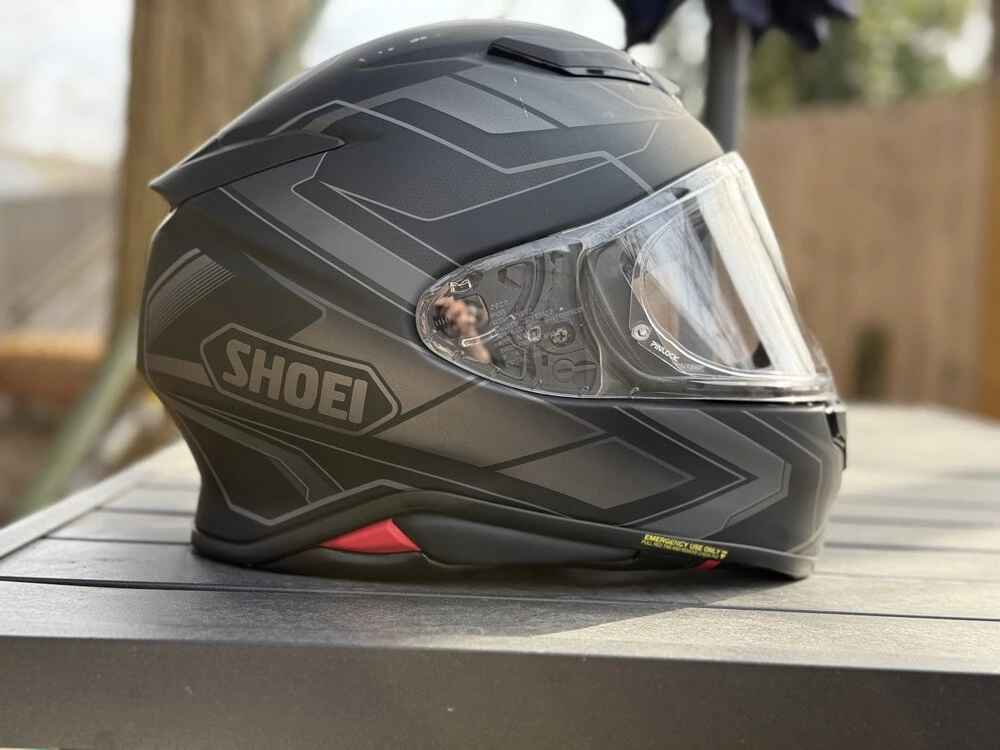
What makes the RF-1400 stand out? For starters, the fit is customizable and phenomenal. Shoei has spent years refining their shell shapes, and the RF-1400 offers a comfortable and secure fit for a wide range of head shapes. The ventilation is also top-notch, with multiple vents that you can easily open and close (or half-close!), keeping you cool on hot summer rides and preventing fogging when the temperature drops.
It is also one of the quietest motorcycle helmets ever made: Why is that such an important aspect? Because the RF-1400 reduces the distraction that comes with loud wind and road noise constantly droning in your ears. You can hear traffic, horns, and other environmental noises much more clearly.
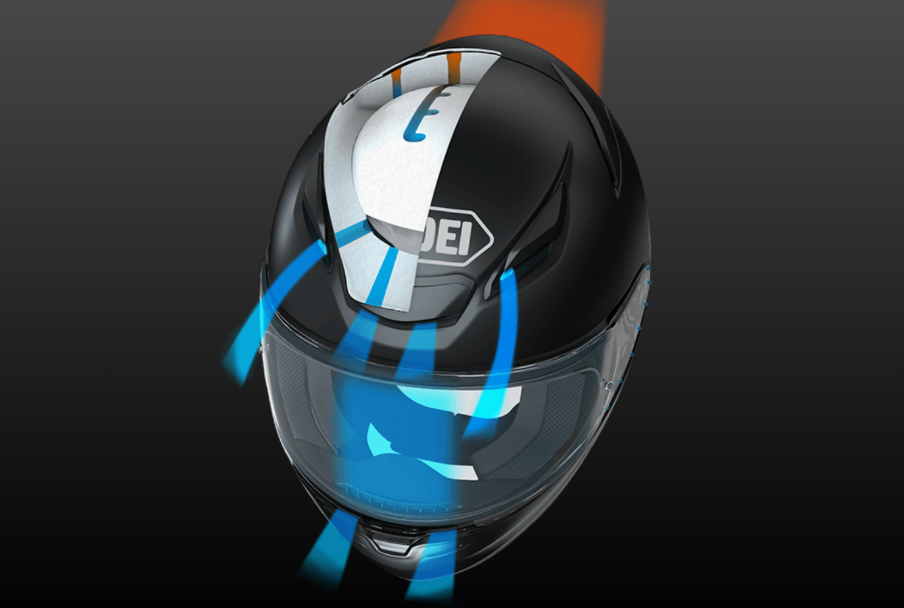
You can also see clearly thanks to a large visor – bigger than most helmets – allowing you to catch what’s happening in your peripheral vision and see everything whether you’re tucked on a sportbike or sitting back on a cruiser. The visor mechanism is smooth and easy to operate, and the included Pinlock anti-fog insert is a lifesaver when the weather turns damp.
The RF-1400 also has Shoei’s excellent build quality. It feels solid and well-made, and the interior liner is plush and comfortable, even on long rides. Plus, it’s Snell certified, making it safer than your average DOT-approved lid.
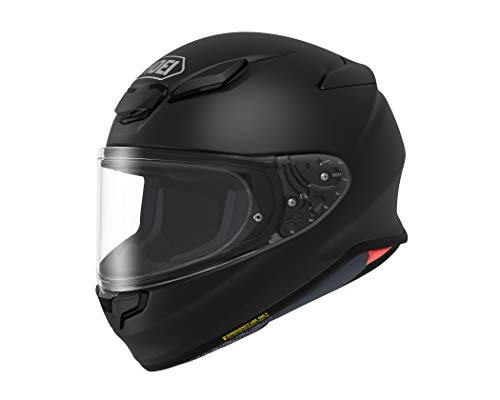
One of the top motorcycle helmets for street riding due to its incredible safety ratings, solid build construction, versatile shell for street and track riding, and reasonable price. Long term review here.
- Staff pick at Revzilla
- Quietest helmet on the market
- Excellent build quality
- Thick noise-sealing cheekpads
- Visor seal built like Fort Knox
- Snell certified for track use
- Lacking touring comfort features like drop down sun shield
Our Review: Our contributor Carl Magnusson has owned and primarily ridden in this helmet for over four years – here’s his full review.
What We Love:
- Lightest and Most Compact: Shoei claims this is their lightest and most compact Snell-approved full-face helmet, reducing neck strain and improving agility. The version of this helmet sold in Europe is ECE certified, so it’s possible the American version also passes ECE – which is even better than Snell because its tests are more true to the realities of motorcycle crashes.
- Optimized Aerodynamics: Extensive wind tunnel testing has resulted in a shell shape that reduces drag, lift, and unwanted noise, leading to a more stable and comfortable ride at speed.
- Excellent Ventilation: With six intake vents and four exhaust vents, the RF-1400 provides exceptional airflow to keep you cool in various riding conditions.
- Premium Build Quality: Expect top-notch materials and construction throughout, from the shell to the comfortable and noise-isolating interior.
- Snell and DOT Certified: Offers high levels of impact protection, meeting both DOT and Snell safety standards.
- Pinlock Included: Comes standard with a Pinlock anti-fog insert for clear vision in all weather.
- Bluetooth-Comm Ready: Designed with speaker pockets and considerations for easy installation of Bluetooth communication systems, although some users have reported the clamp mount can be tricky due to padding.
Shoei RF-SR: Budget, Yet Premium
If the RF-1400 sounds amazing but is a bit outside your budget, the Shoei RF-SR is a fantastic alternative. This was my first road helmet and it shares many of the same DNA as its more expensive sibling, including Shoei’s renowned build quality and comfortable fit, but it comes in at a slightly more accessible price point. I personally own this helmet and have put 20,000+ miles in it.
If you’re stuck between saving money and stepping up to Shoei’s newer premium full-face, our Shoei RF-1400 vs RF-SR comparison makes that decision easier.
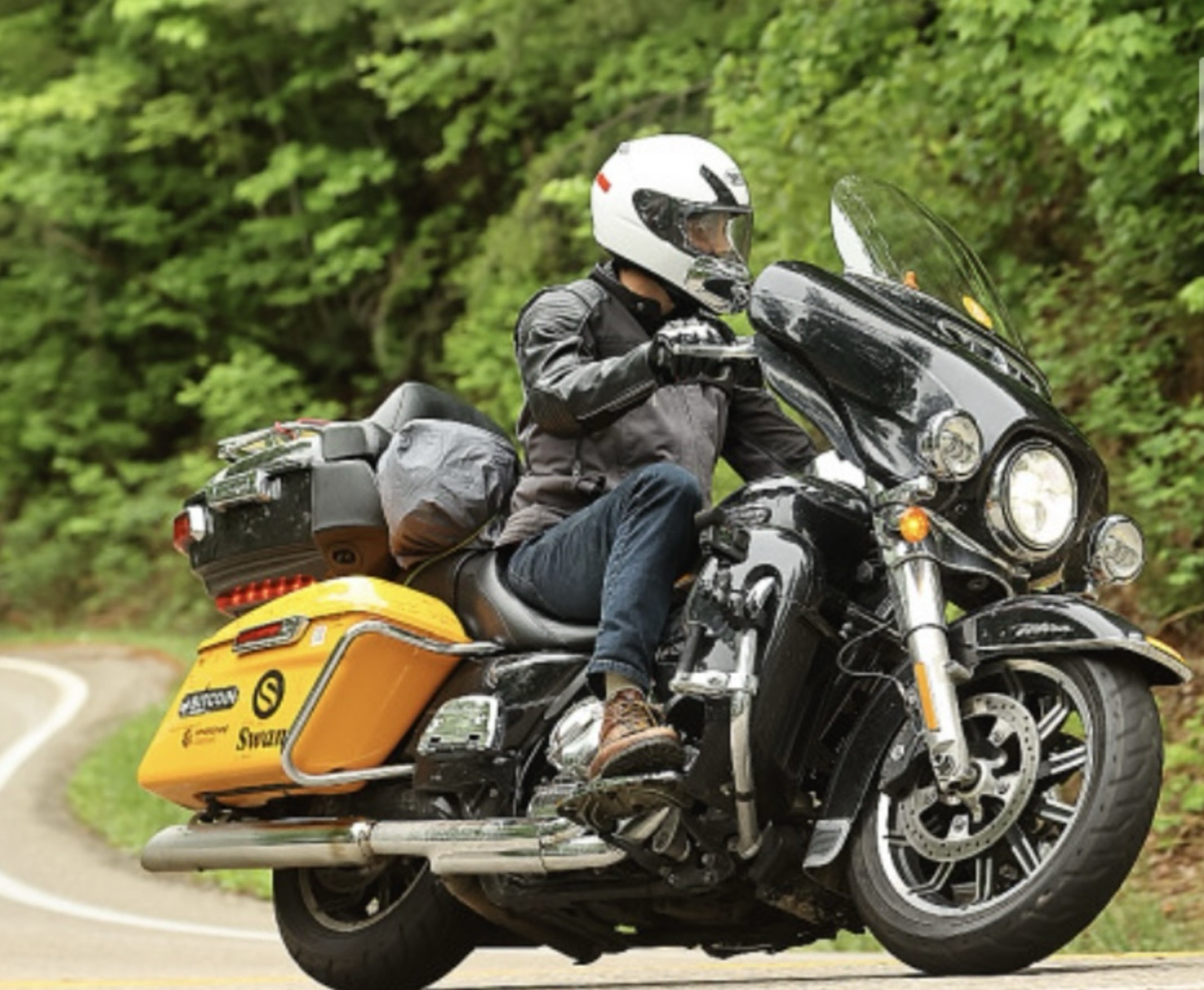
The RF-SR is still Snell certified, so you’re not compromising on safety. It features a slightly more round design compared to the RF-1400, which some riders might prefer. The ventilation system is also very effective, though doesn’t flow as much air as the RF-1400 and is known to sometimes whistle when turning your head at higher speeds.
The RF-SR is a perfect starter helmet that still prioritizes safety and comfort but lets you save a bit of cash. You still get that premium Shoei feel and the peace of mind that comes with wearing a top-tier helmet, without emptying your wallet.
Highly recommend. It’s also a Staff Pick over at Revzilla too!

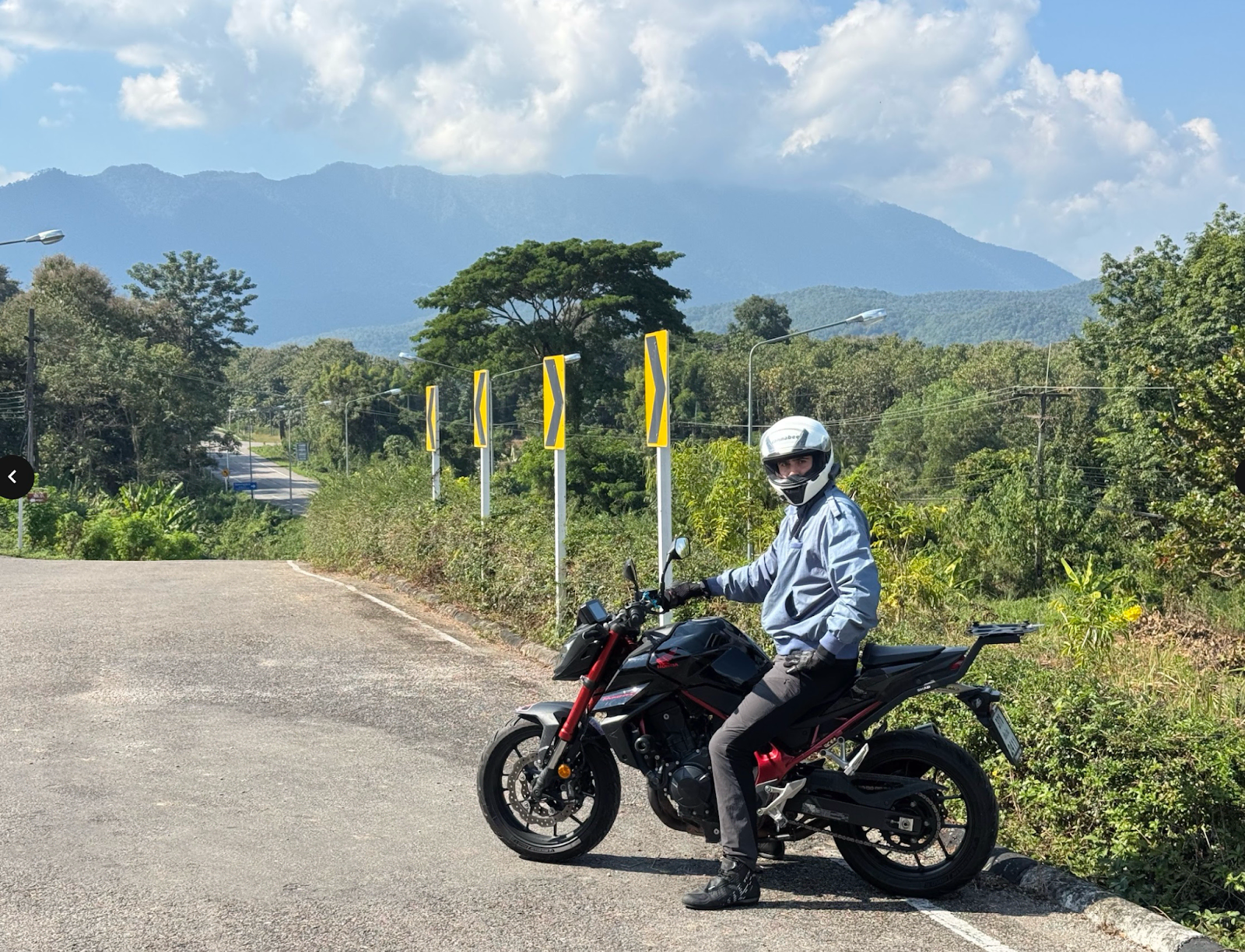
Evan rode in this helmet across America in 2022 and has worn it the tropical climate of Thailand as well. It's the ideal all-around street and touring helmet for a fair price: master of none, but great at everything. Read our long term review here.
- Sturdy build quality from the padding to the visor
- Composite AIM shell (not plastic / polycarbonate)
- Comfortable and snug liner
- Durable (I've battered the poor thing)
- Affordable 💵
Our Review: Check out my review after wearing the RF-SR over 20,000 miles, including across the USA and Thailand. I put this helmet through the ringer, and I’m still wearing it today.
What We Love:
- Excellent Ventilation: This helmet vents incredibly well, making it surprisingly comfortable even in extreme heat and humidity. You’ll feel the airflow!
- Secure & Wide Visor: The visor offers a great field of vision and has a fantastic spring-loaded locking mechanism that keeps it sealed tight at all speeds. It also comes with a Pinlock anti-fog insert.
- Premium Materials: It uses Shoei’s AIM+ composite shell (same as the pricier RF-1400) and has a soft, comfortable inner liner – materials you usually find in higher-end helmets.
- Snell Certified: This helmet meets Snell safety standards, which is often required for track days in the USA.
- Bluetooth Ready: Installing a Bluetooth communicator is a breeze thanks to built-in speaker indents and a clamp-friendly design.
Things to Consider:
- Potential for Vent Whistle: At certain head angles and speeds (around 50+ mph), the vents can produce a whistling sound. This might not bother everyone, but it’s worth noting.
- Snell vs. ECE: While Snell certified, it’s worth knowing that Snell prioritizes multiple impacts, potentially leading to a slightly heavier helmet compared to ECE-rated helmets that focus on rotational forces. However, the composite shell helps keep the weight down compared to polycarbonate Snell helmets (which are cheaper).
Budget-Friendly Starter Helmets
You don’t need to spend a fortune to get a safe and comfortable motorcycle helmet. There are plenty of excellent budget-friendly options available that offer great protection and features for the price.
Not Sure What Size to Order? Get Our Gear Fit Guide.
Sizing charts for helmets, jackets, gloves & boots — with brand-specific fit notes and pro tips so your gear fits right the first time.
- Helmet sizing by brand
- Jacket, glove & boot charts
- Head shape guide
- Between-sizes tips
HJC i91: Touring Modular
Modular helmets are a fantastic choice for beginner riders because they offer the best of both worlds: the full-face protection of a traditional helmet with the convenience of an open-face helmet. The HJC i91 is a standout in the budget modular category. I reviewed this helmet in 2024 and love it for its comfortable interior and integrated sun visor.
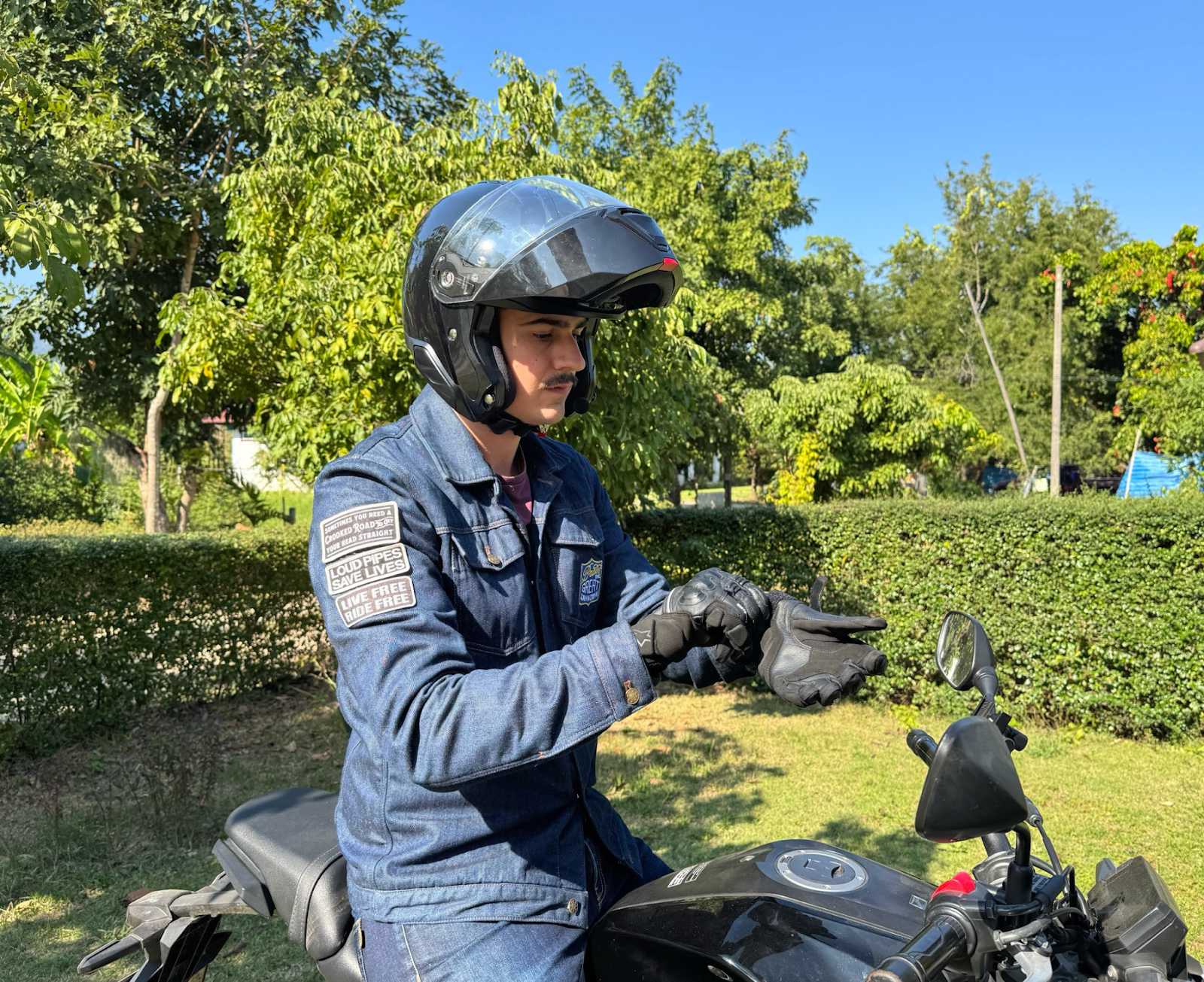
The chin bar can be easily flipped up with one hand, which is incredibly convenient when you stop for gas or want to chat with someone without taking your helmet off. It also has a (super well designed) internal drop-down sun visor, which is a lifesaver on bright days.
What I appreciate most about the i91 is its comfortable liner. It is one of the most comfortable liners I’ve ever felt in a helmet, more plush than my RF-SR that costs almost twice as much.
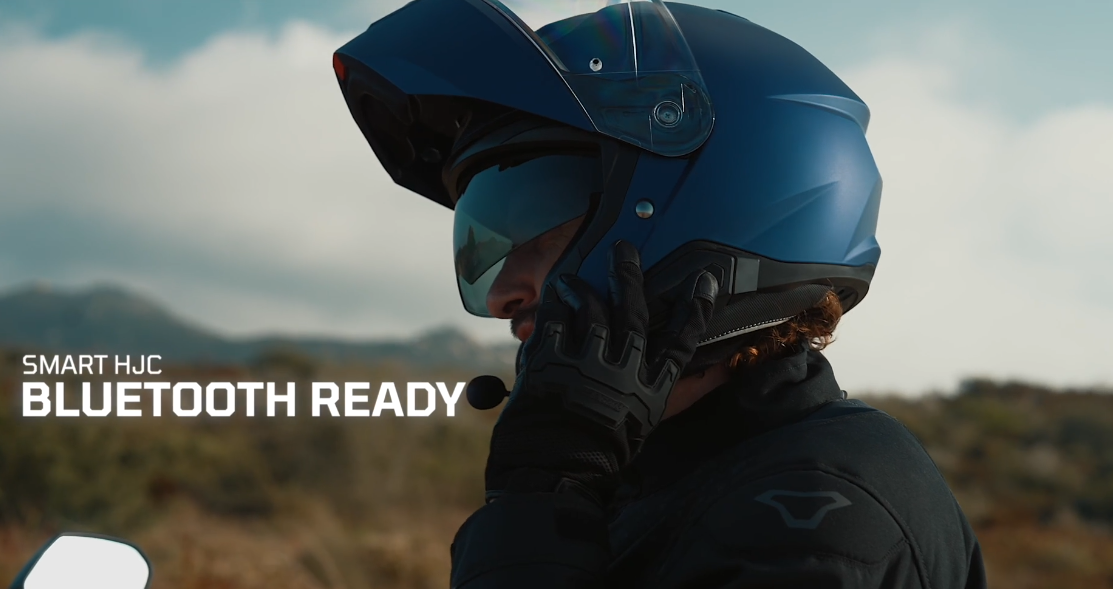
It also comes prepared for Bluetooth communication systems, which is a nice bonus. While it might not have all the bells and whistles of a high-end modular helmet, the HJC i91 offers excellent value for money and is a great option for new riders looking for versatility and convenience.

A solid, comfortable, and affordable touring helmet with its fair share of flaws. But for the price and strong necks, it's good value. Read our full review here.
- Super comfortable liner and plush padding
- 3 shell sizes for better fit, look, and weight
- One of the best drop down sun visors in any helmet
- Heavy on the neck
- Flimsy visor that doesn't seal well
Our Review: We’ve put the HJC i91 through its paces – you can find our full review in the full HJC i91 review.
What We Like:
- Unmatched Comfort: The liner is incredibly plush, especially around your ears, making it fantastic for longer rides and for integrating a comms system like a Cardo or Sena.
- Premium-Feeling Sun Visor: Unlike many cheap drop-down sun visors, the i91’s is actually good! It’s clear, adjustable, and you’ll likely use it daily.
- Convenient Modular Design: Flip up the chin bar easily for quick chats or a breath of fresh air. The mechanism feels secure.
- Good Fit for Many Head Shapes: The neutral round oval shape is surprisingly accommodating, even for some with slightly intermediate oval heads.
- Thoughtful Eyewear Channels: If you wear glasses, you’ll appreciate the design that prevents pressure on your temples.
Things to Consider:
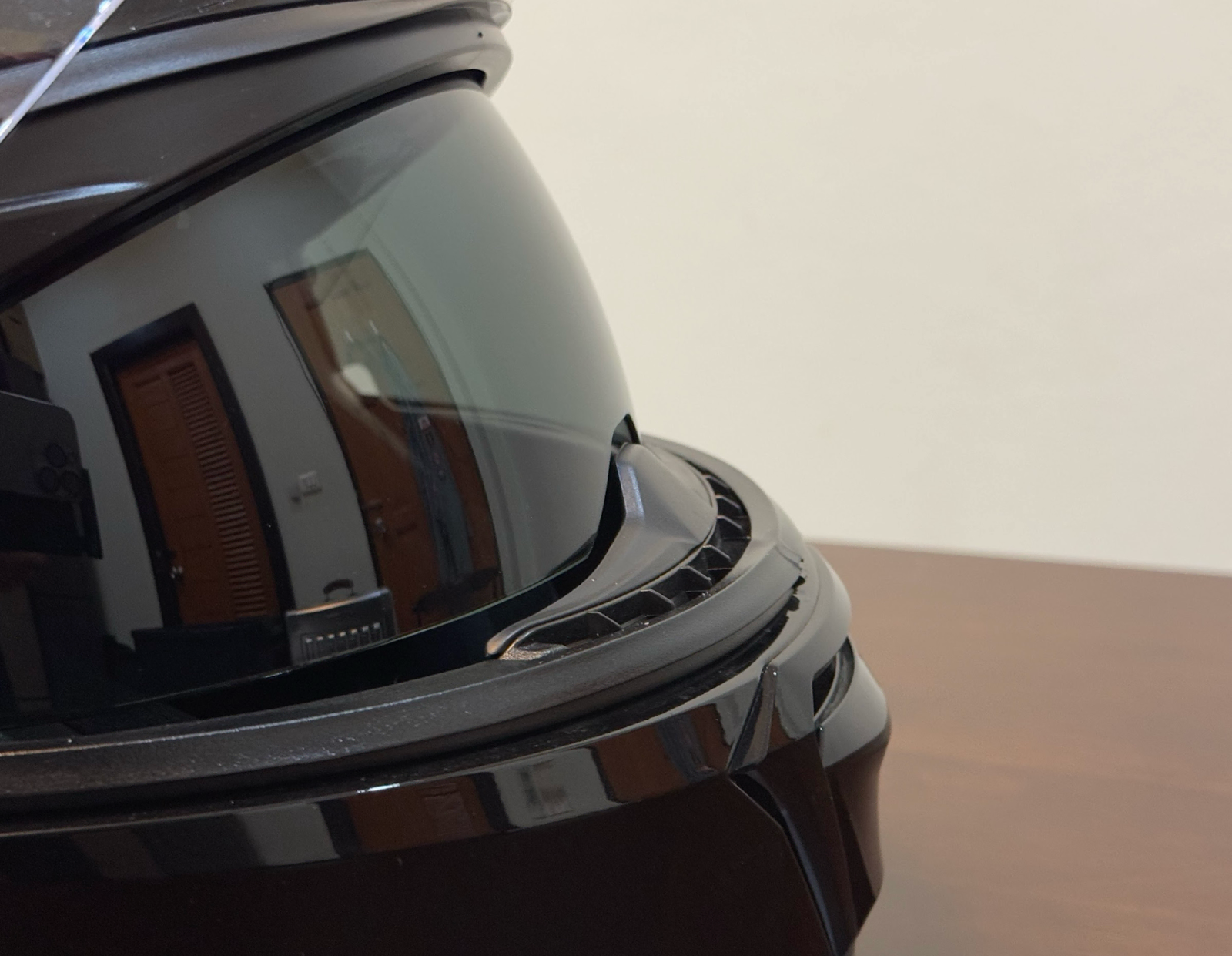
- Visor Quality is Lacking: The main clear visor is thin and can flex, leading to more wind noise. The seal isn’t the best, and the visor detents are shallow so it doesn’t hold the “cracked” position well.
- Can Be Noisy: Expect more wind noise compared to higher-end or full-face helmets, especially on the highway. Earplugs are recommended.
- Ventilation Could Be Better: While decent for cooler weather, airflow might be lacking on really hot days. Consider the HJC RPHA 91 for better ventilation.
- Heavier Than Some: The polycarbonate shell makes it a bit heavier, which you might notice on longer rides.
- Polycarbonate Shell: While safe, polycarbonate doesn’t offer the same impact dispersion as composite shells found in pricier helmets. Testing on its predecessor showed weaker temple protection.
- Best with Specific Communicator: While compatible with Bluetooth, it fits best with the HJC Smart HJC system. Other units might be trickier to install.
- Chin Bar Not for Riding Up: Remember, this helmet is designed for riding with the chin bar down for safety.
Not sure your comms unit will fit?
Sometimes the perfect helmet comes with a catch—it’s designed around a specific Bluetooth unit. That can make it tough if you prefer something different. With an adapter from Tubs Jackson, you can get a factory fit for any comms units on helmets you actually want to ride in.
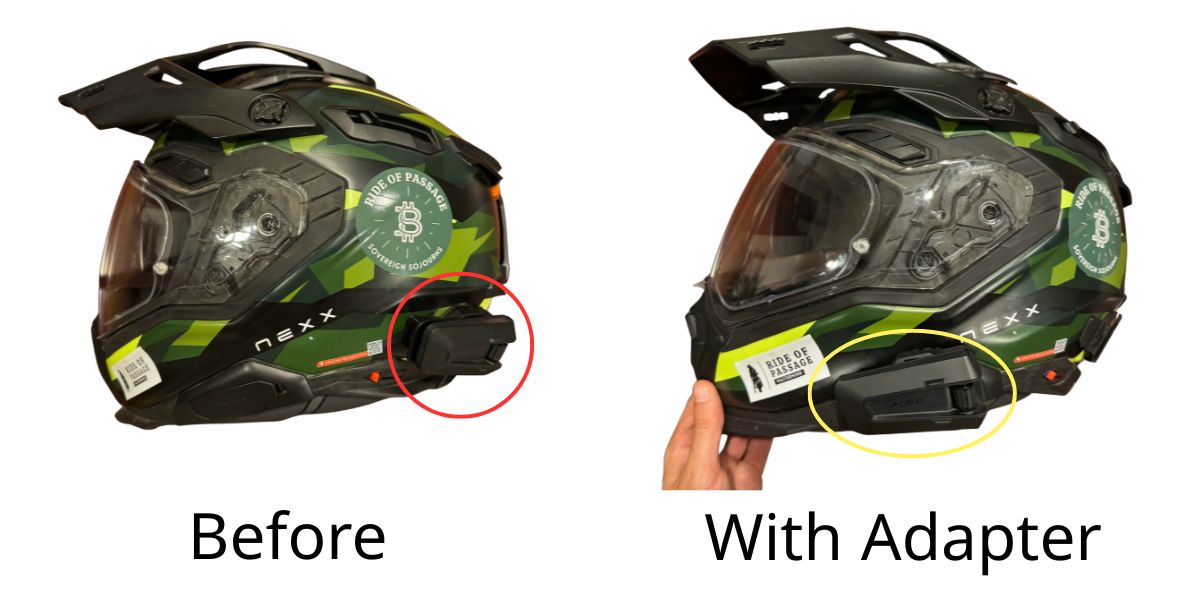
Tubs Jackson is a weird name, I know, but I have their adapter in my Nexx X.WED3 helmet and it’s rock solid. Much nicer than reaching way back to where I had the sticky mount before. I wish I’d thought of this idea.

Tip: Get FREE SHIPPING just by buying here or using code BETTERONTHEROAD at checkout.
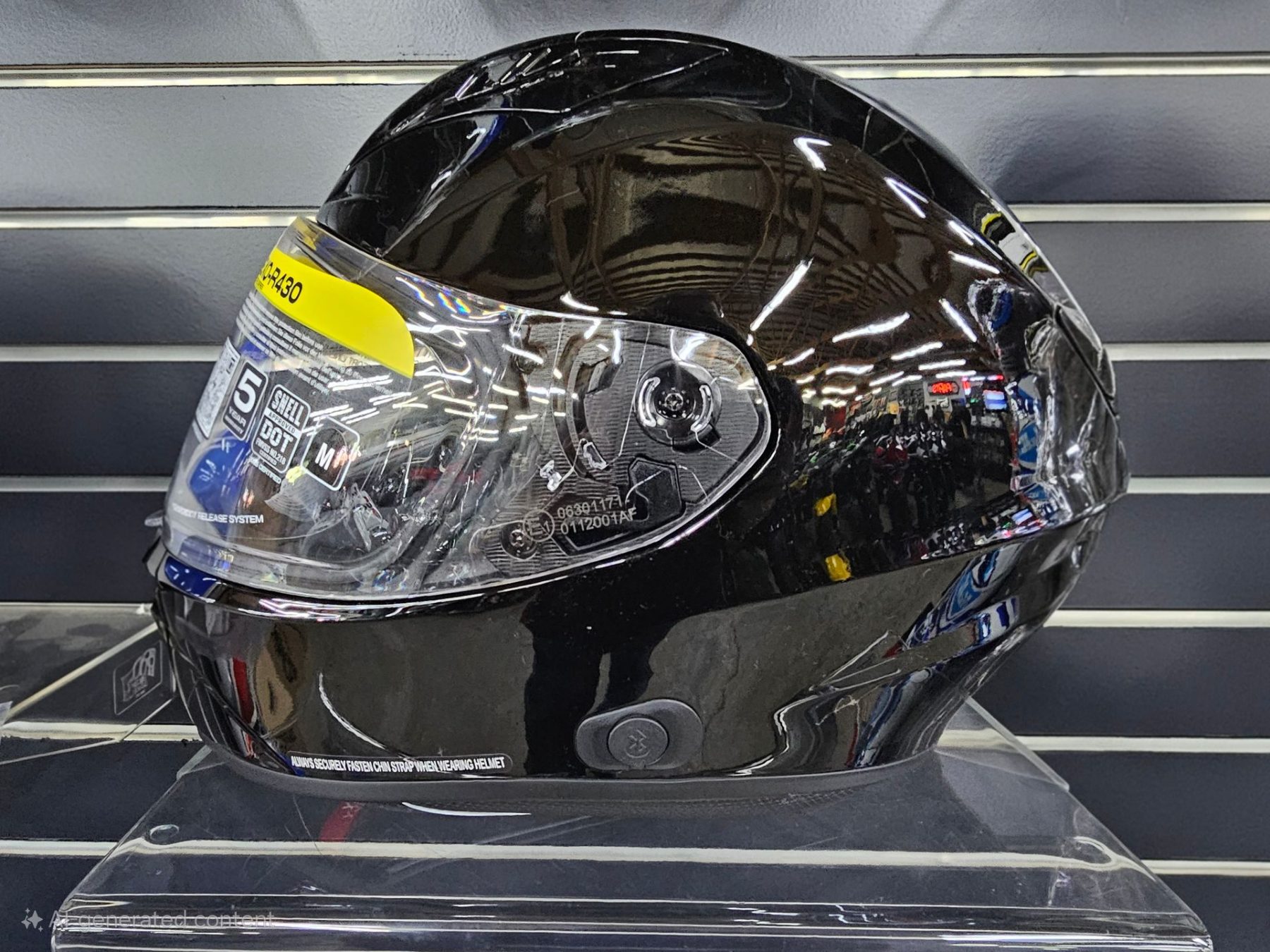
Scorpion EXO-R430: Full-Face
If you prefer the simplicity and maximum protection of a full-face helmet without the modular functionality, the Scorpion EXO-R430 is an excellent choice for beginner riders on a budget. It takes everything that made the R420 such a standout value and updates it with a more refined shape, better airflow management, and a more secure shield system.
The EXO-R430 uses an advanced polycarbonate shell, but it still passes both DOT and Snell 2025 certifications, which is a big win at this price point. It also gets Scorpion’s EverClear no-fog face shield and the newer Elliptec shield mechanism with a central locking system, giving it a tighter seal and easier shield removal than you’d expect from an entry-level helmet.
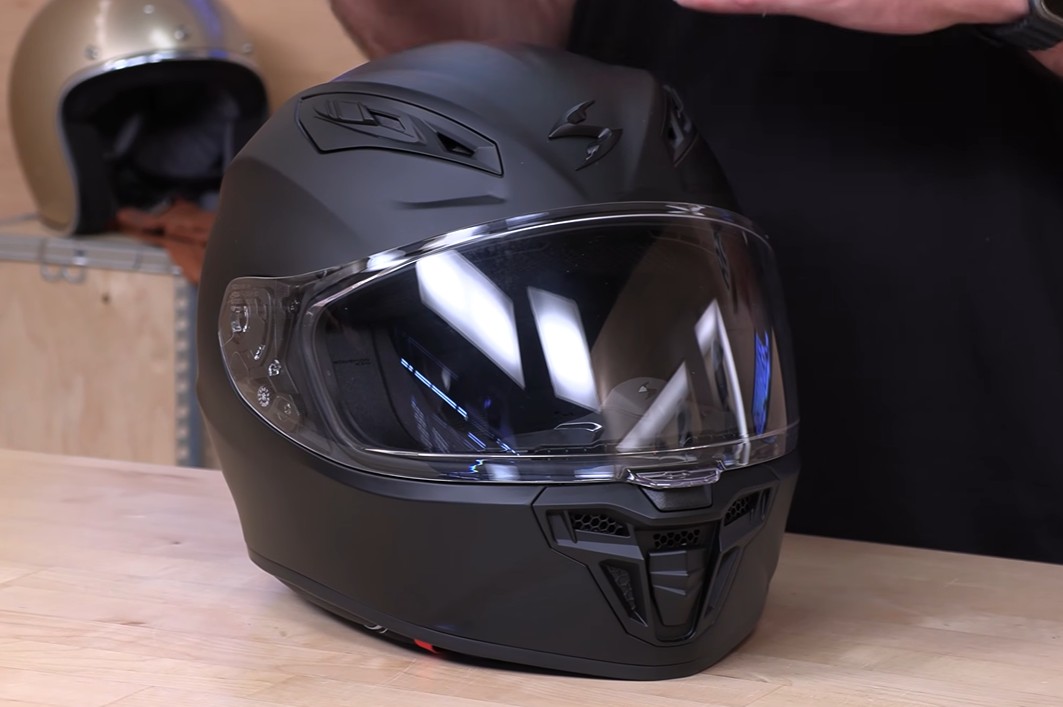
The ventilation system is also improved. Scorpion uses an aero-tuned layout with large top and mouth vents, plus EPS channels that move air effectively in real-world riding. That makes this a better everyday option for new riders who want strong value without ending up in a stuffy budget lid.
Inside, you get the KwikWick C liner, which is moisture-wicking, antimicrobial, removable, and machine washable. The EXO-R430 also keeps the Emergency Cheek Pad Release System, which adds an extra layer of safety and is still something you do not often see on a helmet this affordable.
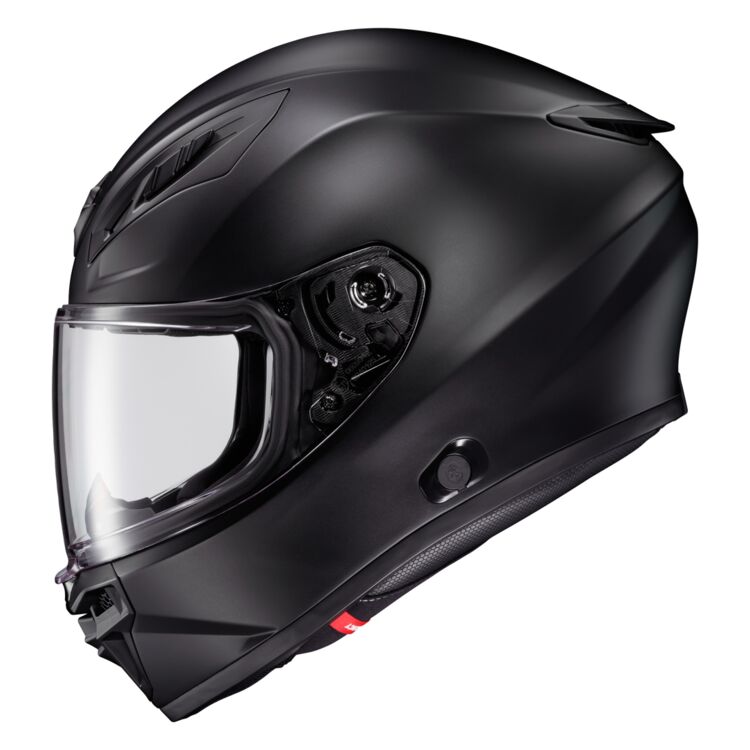
A lightweight, Snell-rated full-face helmet with strong airflow and all-day comfort—ideal for riders who want reliable protection without bulk.
- Lightweight shell reduces fatigue on longer rides
- Strong airflow keeps you cool in warm weather
- Snell rating adds confidence in real-world protection
- Comfort liner stays dry and easy to maintain
- Wind noise higher than premium touring helmets
- Only two shell sizes limit overall fit precision
What We Love:
- Snell 2025 and DOT Approved: Provides excellent impact protection while staying in true beginner-budget territory. That is still one of the biggest reasons this helmet stands out.
- Improved Shield System: The Elliptec face shield with central locking mechanism gives a more secure seal, clearer vision, and tool-free shield removal.
- Effective Ventilation: Large top and mouth vents, plus EPS airflow channels, make it a genuinely usable helmet in warm weather and daily riding.
- Comfortable Liner: The KwikWick C liner is moisture-wicking, antimicrobial, removable, and machine washable.
- Emergency Release System: Includes emergency cheek pad release for added safety in a crash.
- Excellent Value: It replaces the fan-favorite R420 without losing the formula that made that helmet such an easy recommendation.
Things to Consider:
- Polycarbonate Shell: While safe, it is still heavier and less premium than composite-shell helmets. That is part of how Scorpion keeps the price down.
- No Internal Sun Visor: You will still need a tinted shield or sunglasses for bright riding conditions.
- Can Feel Snug Initially: Like the R420, it may feel tight at first, especially around the opening, until the padding breaks in. This is still a fit point worth watching.
- Noise Levels Will Not Rival Premium Helmets: Better shape and seal help, but this is still a budget full-face helmet, not a premium touring lid. This is an inference based on its category and the article’s existing positioning.
HJC i11: Full-Face
If you want a beginner helmet that feels a bit more refined without jumping into premium pricing, the HJC i11 is a strong alternative to the usual entry-level picks. It’s designed for everyday street riding, with a focus on comfort, airflow, and a clean, modern shell shape.
The i11 uses HJC’s Advanced Polycarbonate Composite shell, keeping weight down while still meeting both DOT and Snell M2025 certifications. That gives it the same level of safety credibility as other top beginner options, but with a slightly more polished overall feel.
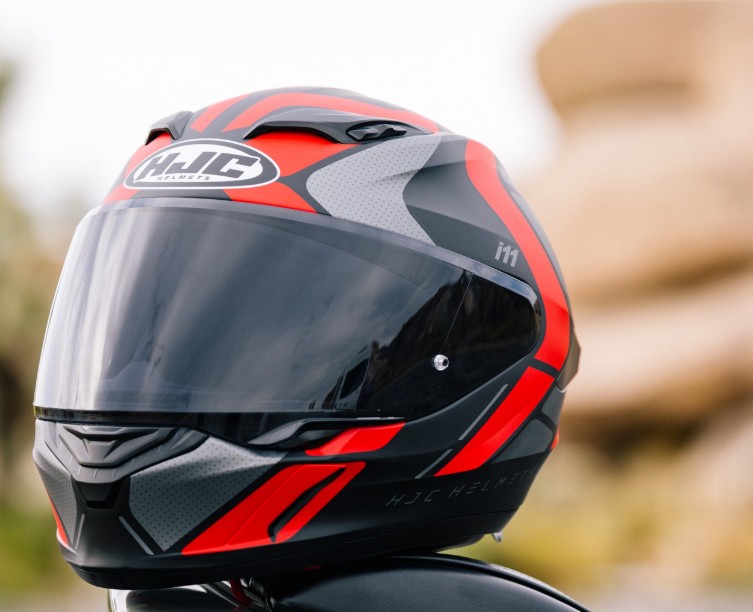
Ventilation is one of the standout features here. The Advanced Channeling Ventilation System moves air efficiently through the helmet, helping reduce heat buildup in traffic or warm conditions. Compared to more basic beginner helmets, it feels noticeably less stuffy on longer rides.
The shield system is simple and effective. It’s Pinlock-ready, offers good visibility, and seals well against wind and debris. Inside, the liner is moisture-wicking, removable, and comfortable enough for daily use, making it a practical option for commuting or weekend riding.
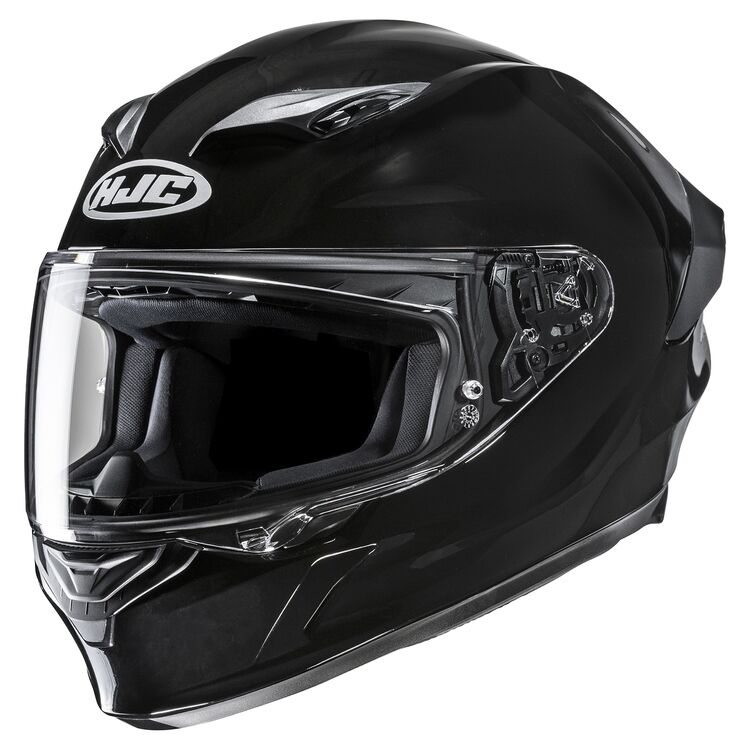
A sporty full-face helmet built for everyday street riding with strong ventilation and a lightweight polycarbonate shell. It balances comfort, airflow, and solid safety certifications for daily riders.
- Strong airflow keeps riders cool in warm weather
- Lightweight shell reduces neck fatigue on long rides
- Snell and DOT certifications add safety confidence
- Removable liner stays fresh and easy to clean
- Wind noise noticeable at highway speeds
- Sun visor not included on the standard model
What We Love:
- Snell and DOT certification: Gives new riders confidence that they’re getting real protection, not just minimum standards.
- Better airflow than most beginner helmets: Noticeably more comfortable in traffic and warm weather riding.
- Refined fit and feel: Feels less “budget” compared to typical entry-level options.
- Easy everyday usability: Simple shield system and comfortable liner make it easy to live with.
Things to Consider:
- Polycarbonate shell: Safe, but heavier and less premium than composite options.
- No internal sun visor: You’ll need a tinted shield or sunglasses for bright riding.
- Still a budget-tier helmet: Noise control and refinement won’t match higher-end lids.
Bell Scout Air: Open-Face
For riders who prefer the open feel and classic style of an open-face helmet, the Bell Scout Air is a fantastic budget-friendly option. While open-face helmets don’t offer the same level of protection as full-face or modular helmets, they can be a great choice for low-speed, around-town riding, especially in warmer climates.

The Scout Air is incredibly lightweight thanks to its Tri-Matrix composite shell – a step above polycarbonate. It has a very low-profile design, which many riders find appealing. Despite its minimalist appearance, it still meets DOT safety standards. The helmet features a comfortable and removable liner, and it comes with a removable peak visor.
Important Note: If you choose an open-face helmet, it’s crucial to also wear appropriate eye protection, such as riding glasses or goggles, to protect your eyes from debris and the elements. Be fully aware you’re not getting the same protection as a full face!
For more sealed eye protection, our best motorcycle goggles guide breaks down options for street, cruiser, ADV, and off-road riders.

A lightweight, low-profile helmet that blends half-helmet freedom with open-face protection.
- Composite Tri-Matrix shell for durability and safety
- Five shell sizes for a sleek, proportionate fit
- Includes two peak visors for versatility
- DOT approved, low profile, ultra-light
- Runs small; sizing up is recommended
What We Love:
- Ultra-Lightweight: The Tri-Matrix composite shell makes this helmet incredibly light, reducing fatigue on longer rides.
- Low-Profile Design: Many riders appreciate its sleek and minimalist appearance.
- DOT Approved: Meets the minimum safety standards set by the Department of Transportation. But nothing more, unfortunately!
- Comfortable Liner: Features a comfortable and removable liner for easy cleaning.
- Removable Peak Visor: Comes with a short, removable peak visor for a bit of sun protection.
Things to Consider:
- Limited Facial Protection: As an open-face helmet, it doesn’t offer any protection for your face or chin in the event of a crash.
- Requires Eye Protection: You’ll need to wear separate eye protection like riding glasses or goggles to protect your eyes from wind, dust, and debris.
- Not Ideal for High Speeds or Cold Weather: Open-face helmets offer minimal protection from the elements, making them less suitable for high-speed riding or cold temperatures.
- Noise: Expect more wind noise compared to full-face or modular helmets due to the open design.
Comparison Table
To help you quickly compare the helmets we’ve discussed, here’s a handy table highlighting their key features:
| Helmet | Shoei RF-1400 | Shoei RF-SR | HJC i91 | Scorpion EXO-R430 | HJC i11 | Bell Scout Air |
| Type | Full-Face | Full-Face | Modular | Full-Face | Full-Face | Open-Face |
| Safety Rating | Snell, DOT (ECE in EU) | Snell, DOT | DOT | Snell, DOT | Snell, DOT | DOT |
| Key Features | Excellent ventilation, Pinlock included, comfortable liner | Snell certified, comfortable fit, good ventilation | Modular design, internal sun visor, Bluetooth ready | Elliptec no-fog shield, emergency release system, comfortable liner | Advanced ventilation system, polycarbonate shell, Pinlock-ready visor | Lightweight, low-profile, removable peak visor |
| Pros | Top-tier comfort and features, excellent ventilation | Premium safety and feel at a lower price | Versatile, convenient, good value | Excellent safety and features for the price | Strong airflow and comfort | Lightweight and stylish for around-town riding |
| Cons | Higher price point | Less comfortable than RF-1400 | Can be slightly heavier than full-face | Basic features compared to premium options | Lacks premium features | Limited facial protection |
| Buy Now | Check Price | Check Price | Check Price | Check Price | Check Price | Check Price |
Your First Helmet: A Beginner’s Buying Guide
Choosing your first motorcycle helmet can feel overwhelming, but it doesn’t have to be. Here are some key things to keep in mind:
Sizing is Everything: How to Measure Your Head
The most crucial aspect of choosing a helmet is getting the right size. A helmet that is too loose won’t protect you properly in a crash, and a helmet that is too tight will be uncomfortable and can even cause headaches.
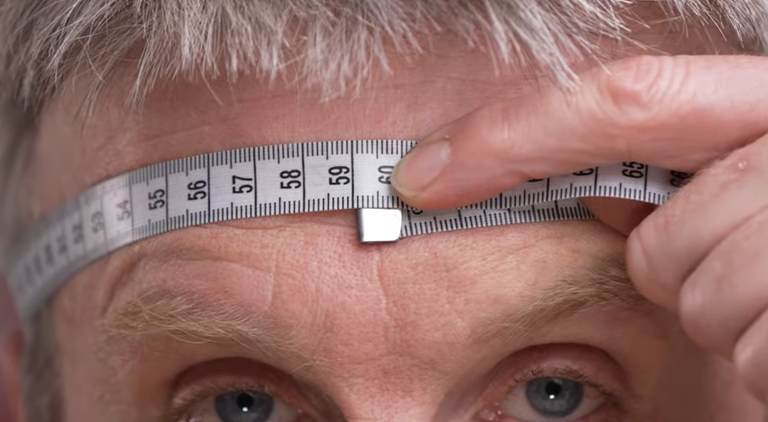
Here’s how to measure your head for a motorcycle helmet:
- Grab a soft measuring tape.
- Measure the circumference of your head at the widest point, which is typically about one inch above your eyebrows and ears.
- Refer to the manufacturer’s sizing chart. Each helmet manufacturer has its own sizing chart, so don’t assume that a size medium in one brand will fit the same in another.
Once you have your head measurement, consult the sizing chart for the specific helmet you are interested in. If your measurement falls between two sizes, it’s generally recommended to go with the smaller size, as the helmet liner will compress slightly over time.
What to Look For: Key Features for Beginners
As a beginner rider, there are a few key features you should prioritize when choosing a helmet:
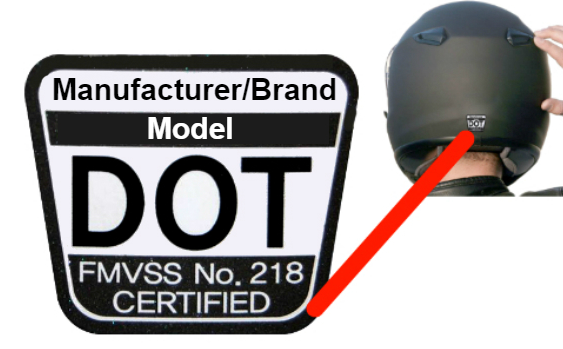
- Safety Certification: DOT is the certification and sticker you need to make a helmet road legal in the USA, but you really should know that it means basically nothing when it comes to safety. Look for a helmet with at least ECE or Snell certification in addition to DOT certification. Snell focuses on repeated heavy impacts to a single spot on the helmet, whereas ECE (the European road legal standard) focuses on rotational forces and repeated impacts – it’s the best for motorcycle helmets since the test conditions are most similar to real motorcycle crashes. However, ECE helmets are not as commonly sold in the USA as Snell helmets.
- Proper Fit: We can’t stress this enough! A good fit is paramount. The helmet should feel snug but not too tight. When you shake your head, the helmet should move with your head, not independently.
- Ventilation: Good airflow is essential for comfort, especially during warmer months. Look for helmets with multiple vents that can be opened and closed.
- Visibility: A clear, wide field of vision is crucial for safety. Make sure the face shield provides good visibility and is easy to open and close. Consider helmets that come with or are compatible with Pinlock anti-fog inserts (like double pane windows for your visor).
- Comfortable Liner: You’ll be spending a lot of time in your helmet, so a comfortable and moisture-wicking liner is important. Look for liners that are removable and washable.
Head Shape Matters! Try It On First
While online shopping can be convenient, we strongly recommend going to a local motorcycle gear shop to try on different helmet brands and models – even if you don’t intend to buy anything in the store.
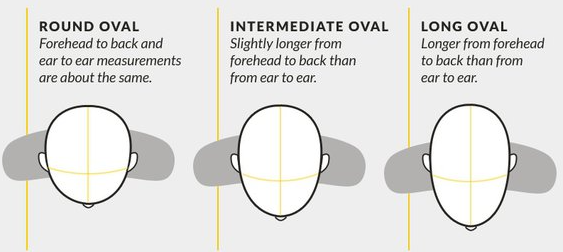
Different manufacturers design their helmets to fit different head shapes. The three main head shapes are:
- Intermediate Oval: This is the most common head shape, and many helmets are designed to fit this profile. It’s a bit narrower than perfectly round – longer front to back.
- Long Oval: Heads with this shape are even narrower and longer front to back than Intermediate Oval.
- Round Oval: Heads with this shape are wider and shorter front to back.
Trying on helmets from different brands will help you determine which brand’s shell shape best matches your head shape. Even if you don’t plan to buy a helmet in the store, the knowledge you gain about fit and brand preferences will be invaluable when you do make a purchase.
Spend some time wearing the helmet in the store for at least 10-15 minutes to see if any pressure points develop.
A helmet that isn’t the right shape for your head will always cause problems! However, even 15 minutes may not be enough time to tell if the shape is right. That’s why buying online rocks – you can put the helmet on while you watch TV, getting a good 30-60 minutes in it, which will tell you whether you have any pressure points in that helmet.
Your Head is Worth It
Choosing the right motorcycle helmet is a deeply personal decision, but it’s one you absolutely must get right. Take your time, do your research, and don’t be afraid to ask questions at your local gear shop.
Your head is the most important piece of equipment you have – you can’t replace it or live without it. Invest wisely in a helmet that fits well, is comfortable, and meets or exceeds safety standards.
See you on the road!