
Sena Stryker vs Sena Phantom: Which Is Better for Smart Helmet Riding?
 Evan Rally
Published: May 29, 2026
left for contents
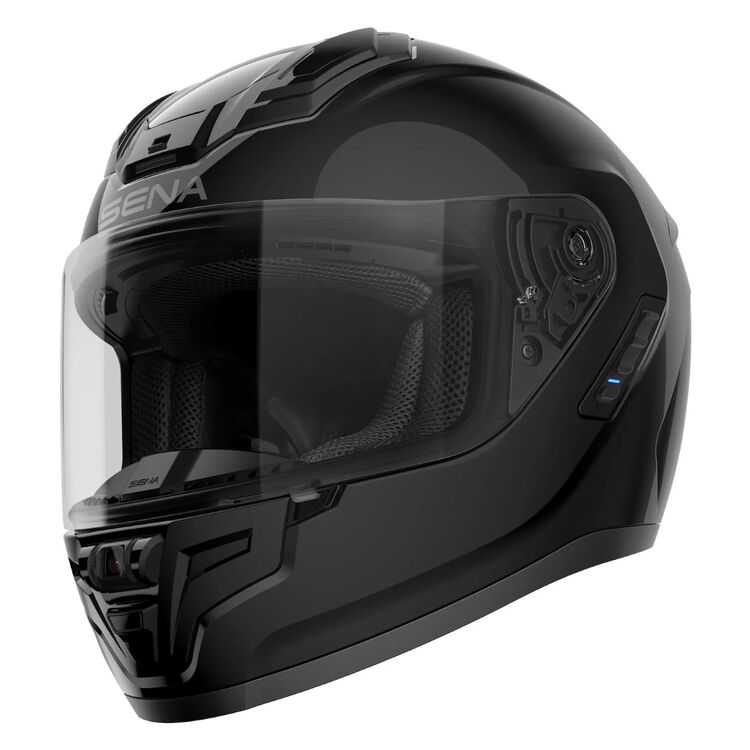
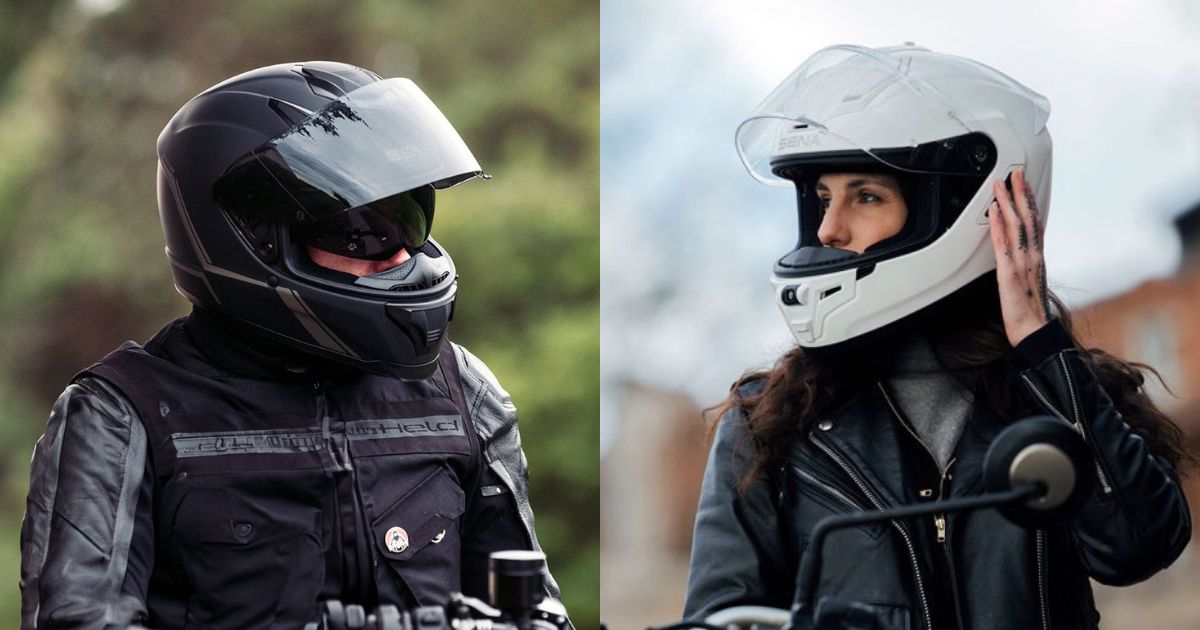
Both helmets bake Sena’s communicator straight into the shell, so you skip the clip-on unit and the rats nest of wires. The Stryker is the helmet that put integrated Sena on the map, while the newer Phantom and Phantom ANC bring the 60S platform, AI noise reduction, and a stack of built-in lights for a few hundred dollars more.
If you’re still weighing integrated comms against a clip-on solution, our best Bluetooth motorcycle helmet roundup covers that broader question. Here’s how to choose between the two Sena options.
Buy the Sena Stryker if you:
- Want the most affordable way into a fully integrated Sena helmet, especially with current closeout pricing.
- Care about Harman Kardon audio, Mesh comms, and a charge that lasts a long weekend.
- Don’t need a chinbar flashlight or active noise cancellation to feel like you got your money’s worth.
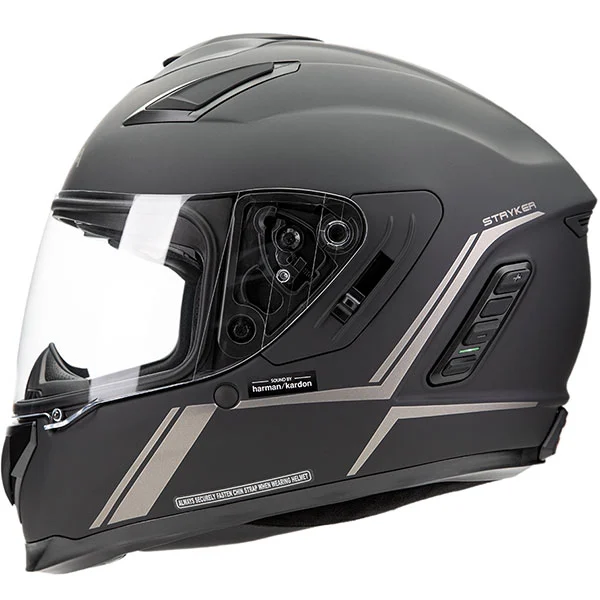
Sena Stryker Mesh Intercom Helmet
Check Price on Revzilla
Top of the line Sena intercom, sound by Harman Kardon, sun visor, even a tail light... what's not to love?
Pros:
- Mesh & Bluetooth built-in
- Harman Kardon speakers and mic
- Drop-down sun visor
- LED tail light
- 18 hour battery life
Cons:
- Can't upgrade the communicator
We earn a commission if you make a purchase, at no additional cost to you.
Buy the Sena Phantom (or Phantom ANC) if you:
- Want the newer 60S-based platform with Bluetooth 5.3, Mesh 3.0, Wave Intercom, and AI noise reduction baked in.
- Ride long highway days where ANC’s claimed 20 dB drop in wind noise pays off in less fatigue.
- Like the front flashlight, rear running lights, and brake-sensing taillight as part of the helmet, not bolted on.
|
| 
|
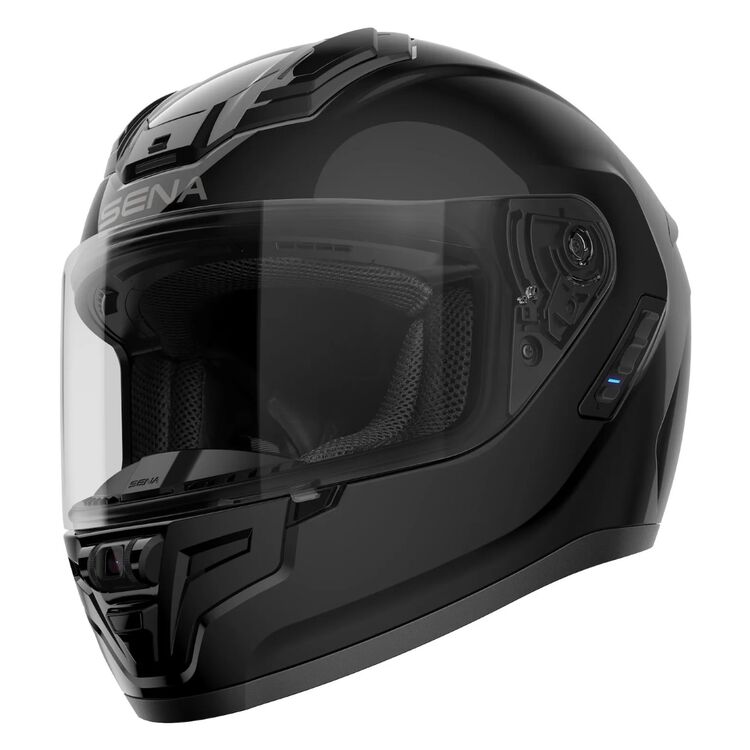
Not a budget helmet, but an incredible value. This quality helmet comes with a flagship Sena 60S communication system factory-installed, saving you hundreds compared to buying them separately. | Stay connected, ride safer, and enjoy premium sound with the Sena Phantom Smart Mesh Bluetooth Helmet. |
|
|
|
|
Not a budget helmet, but an incredible value. This quality helmet comes with a flagship Sena 60S communication system factory-installed, saving you hundreds compared to buying them separately.
- Seamless Mesh 3.0 intercom—connect unlimited riders
- Harman Kardon audio delivers clear, immersive sound
- Rear brake & running lights boost visibility
- Streamlined fit—no bulky external comm modules
- Rain may seep through upper visor seal in downpours
- Lacks built-in Bluetooth or FM radio options
Stay connected, ride safer, and enjoy premium sound with the Sena Phantom Smart Mesh Bluetooth Helmet.
- Bluetooth 5.3 and Mesh 3.0 technology for seamless group communication
- Built-in active noise cancelling and premium Harman Kardon audio
- Pinlock insert for fog resistance sold separately
- Can't upgrade the communicator
The Phantom ANC is worth the extra $150 to $200 over the Stryker if you ride enough highway miles for noise fatigue to matter.
At-a-Glance: Specs & Price
| Specs | Sena Stryker | Sena Phantom | Sena Phantom ANC |
|---|---|---|---|
| Weight (M, DOT) | 1,750 g (~3.86 lb) | 1,690 g (~3.73 lb) | 1,720 g (~3.79 lb) |
| Fit/Shape | Intermediate oval | Intermediate oval | Intermediate oval |
| Shell/Materials | Composite fiberglass | Composite fiberglass | Composite fiberglass |
| Safety/Cert | DOT or ECE 22.05 (region-specific) | DOT and ECE 22.06 | DOT and ECE 22.06 |
| Ventilation | Seven-vent design, drop-down sun visor, anti-fog coated shield (Pinlock-ready) | Top/chin vents, drop-down sun visor, Pinlock-ready shield | Top/chin vents, drop-down sun visor, Pinlock-ready shield |
| Comms platform | Sena 50S-based, Bluetooth 5.0, Mesh 2.0, FM radio | Sena 60S-based, Bluetooth 5.3, Mesh 3.0, Wave Intercom, AI Noise Reduction | Sena 60S-based, Bluetooth 5.3, Mesh 3.0, Wave Intercom, ANC + AINR |
| Battery (talk time) | Up to 18 hr Bluetooth / 10 hr Mesh | Up to 35 hr talk time | Up to 35 hr talk time |
| Lighting | Rear LED taillight (app configurable) | Front flashlight + rear running and brake-sensing taillight | Front flashlight + rear running and taillight (brake-sensing per Sena; not all reviewers confirm) |
| Speakers | Harman Kardon (1st gen) | 2nd-gen Harman Kardon, internal acoustic chamber | HD speakers with built-in ANC module, acoustic chambers |
| Warranty | 2 years (electronics) / 5 years (helmet) per manufacturer | 3 years | 3 years |
| Price (typical, as of May 2026) | $299–$499 (closeout at major US retailers) | ~$549 (US); ~£439 (UK) | ~$649–$699 MSRP |
Who Each Product Is Built For
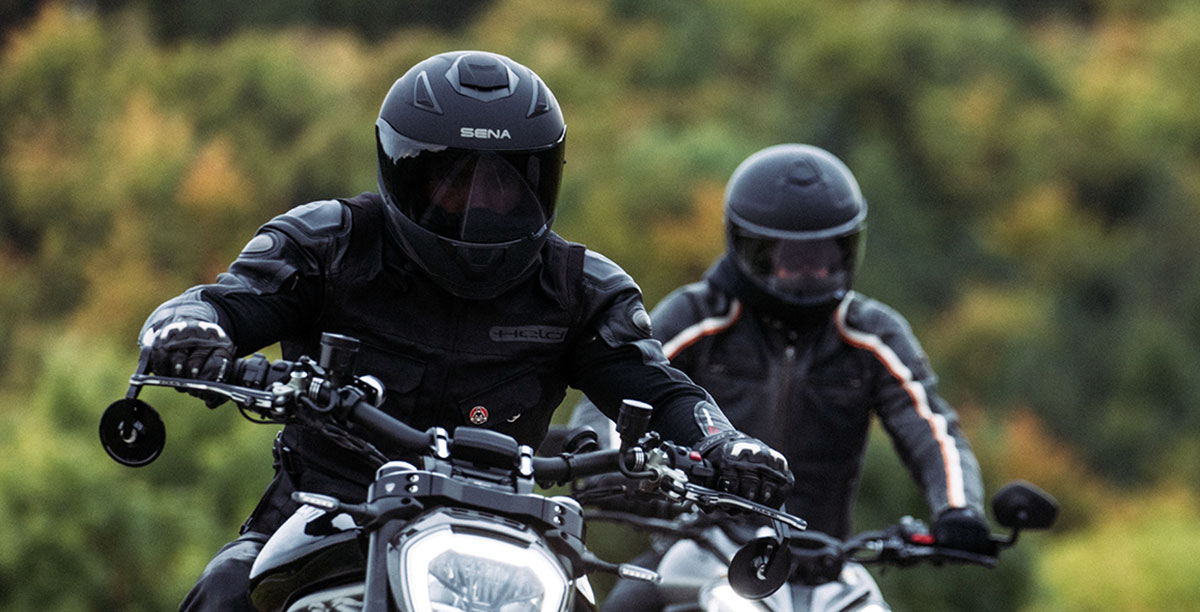
The Sena Stryker rider
- Most of your riding sits at city or B-road speeds, where wind noise is manageable with a snug fit.
- You group ride occasionally, and Mesh 2.0 with up to 24 riders in a private group covers your network just fine.
- You’d rather have one clean helmet with everything built in than wire a separate Bluetooth unit onto a different lid.
- Closeout pricing makes the all-in-one Sena experience hard to beat at this tier.
The Sena Phantom (and Phantom ANC) rider
- You log serious highway miles, the kind where wind drone becomes a fatigue problem after a couple of hours.
- You want Sena’s current platform: Bluetooth 5.3, Mesh 3.0, Wave Intercom, and AI noise reduction baked in.
- For the ANC version: you’ve considered earplugs and they bug you, or you wear them but still finish long rides feeling beaten up.
- You like that the front flashlight handles maps, luggage straps, or roadside checks without a phone in hand.

What Riders Report (Hands-on & Owner Feedback)
Sena Stryker owners love:
- Built-in comms that just work. In this hands-on Sena Stryker review, the reviewer called out how nice it is to skip the aftermarket unit entirely. Pair, ride, done.
- Visor seal and anti-fog behavior. Several weeks of UK rain riding produced no fogging, and the visor sealed tight enough to keep water out where a previous modular leaked.
- Battery that lasts. Sena’s 18-hour Bluetooth claim held up, with the reviewer charging once across multiple weeks of riding.
Sena Stryker owners flag:
- Mixed noise feedback. Our reviewer found the Stryker quieter than his previous modular, but a reader (Roy Moseley) pushed back in the comments and called it “noisy” at motorway speeds. It’s quieter than a poorly sealed modular, but it isn’t touring-grade silent.
- Setup friction. Firmware updates need the app plus Wi-Fi, and the app isn’t the most intuitive at first.
- Minor build quirks. A slightly off-center chin vent and early fraying near the sun visor slot showed up on our reviewer’s unit. Cosmetic, not structural, but worth noting at this price.
Sena Phantom (and ANC) owners love:
- Audio and intercom clarity. Independent reviewers single out the 2nd-gen Harman Kardon setup and 60S-based intercom as cleaner than the Stryker generation.
- The silence, in the right conditions. One independent reviewer stood on the pegs of his touring bike with ANC active and heard essentially nothing up to 70 mph. His Mesh partner thought his mic had cut out.
- Battery endurance. The Phantom family is rated up to 35 hours of talk time, and long-term owner reviews back up multi-day use without a recharge.
Sena Phantom (and ANC) owners flag:
- ANC isn’t earplug replacement. Multiple independent reviews note that ANC works best on steady low-frequency drone and falls off above 70–80 mph or in chaotic wind buffeting. Serious mile-munchers still wear plugs.
- Speaker size. The Phantom ANC uses 35 mm drivers. Rival ANC helmets with 53 mm speakers seem to do more of the heavy lifting in cancelling noise.
- Sun visor design (Phantom ANC). One tester found the drop-down sunshield fouled his glasses and stopped too high in his field of view. Try it on first.
- The non-ANC Phantom feels overshadowed. It earned three stars in one prominent review and was called “an immediate second fiddle” to the ANC version. Go ANC or stay with the Stryker.
Free Guide
Not Sure What Size to Order? Get Our Gear Fit Guide.
Sizing charts for helmets, jackets, gloves & boots — with brand-specific fit notes and pro tips so your gear fits right the first time.
- Helmet sizing by brand
- Jacket, glove & boot charts
- Head shape guide
- Between-sizes tips
No spam, ever. Unsubscribe anytime.
Head-to-Head by Category
Comms platform and intercom
The Stryker runs on Sena’s 50S-era platform: Bluetooth 5.0, Mesh 2.0, a four-rider Bluetooth intercom, and Open Mesh/Group Mesh (24 riders private). It’s been on the road for years and refined through multiple firmware updates.
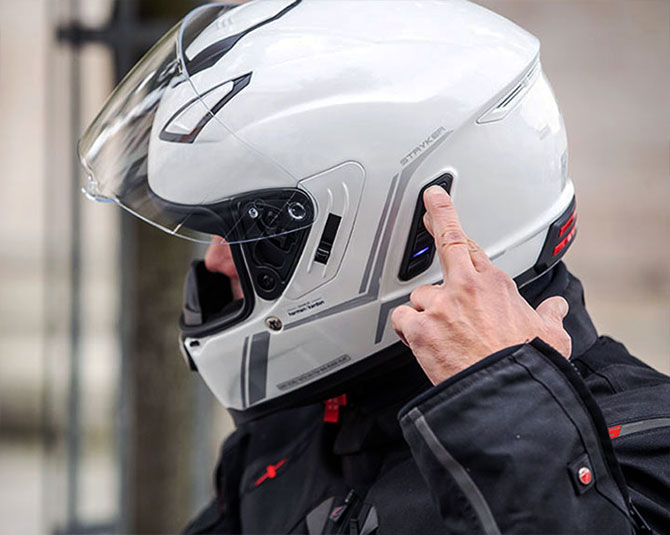
The Phantom and Phantom ANC both move to the 60S-based platform: Bluetooth 5.3, Mesh 3.0, and Wave Intercom (cellular extension for effectively unlimited range). You also get AI-based noise reduction on the outbound mic side, which makes your voice sound clearer to whoever you’re talking to.
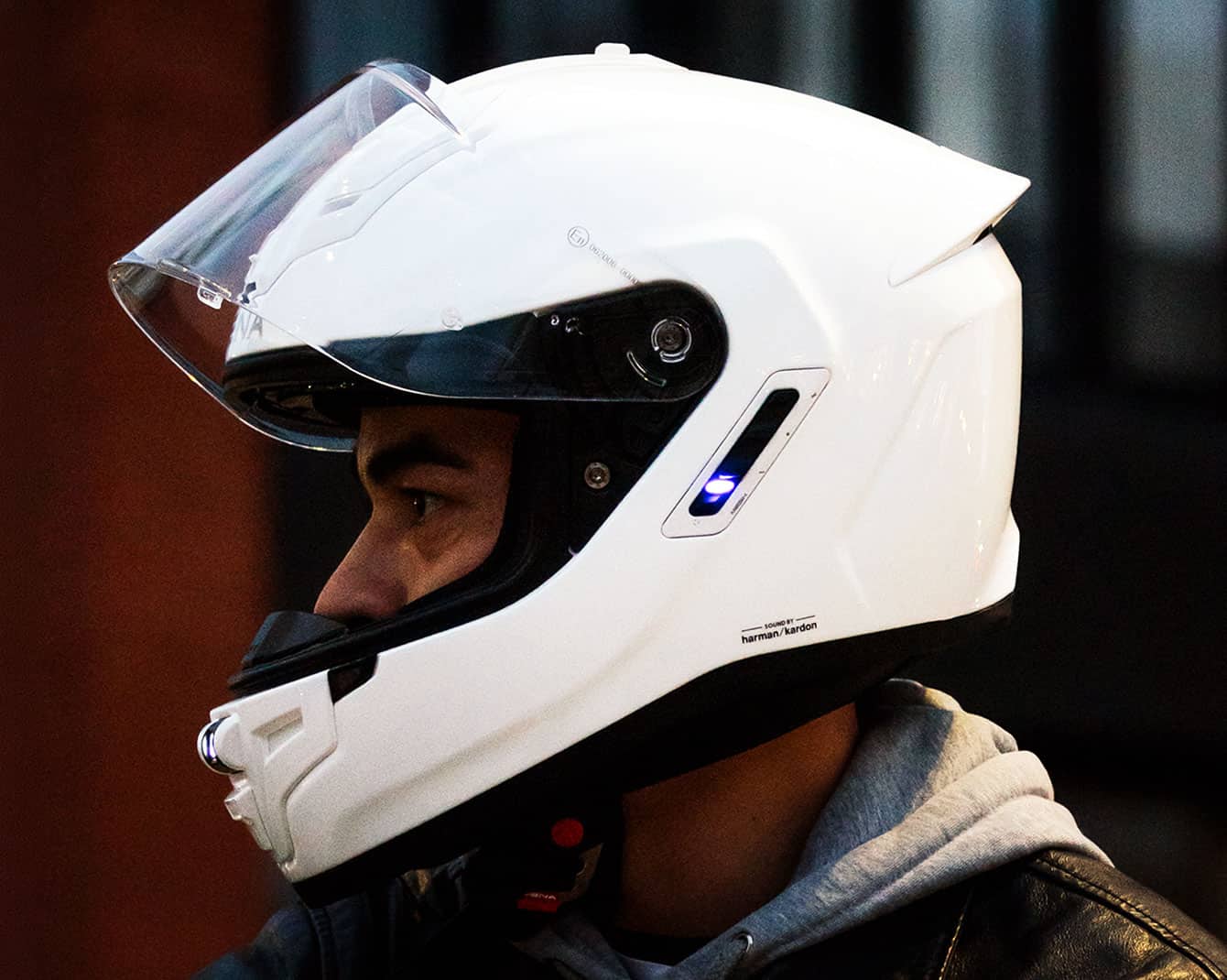
If your riding buddies are on older Sena hardware, the Stryker slots right in. If you want to be future-proofed for cross-brand Universal Intercom and the next few years of firmware updates, the Phantom platform is the right call.
Audio quality
Both helmets carry Harman Kardon branding, but the Phantom upgrades to 2nd-generation speakers in a purpose-built acoustic chamber. Independent reviewers note noticeably better bass response and clearer midrange than the Stryker, before any noise cancellation kicks in.
The Phantom ANC strips out low-frequency wind and engine drone before the speakers have to compete with it. The result in clean air below highway speeds is closer to wearing studio headphones than to riding a motorcycle.
The Stryker’s audio is still good. Harman Kardon was the headline feature when it launched, and it still beats most clip-on Bluetooth units. But it’s a generation behind in driver design and acoustic enclosure work.
Noise control
This is where the price gap becomes most defensible. The Stryker manages noise through traditional means: snug neck roll, tight liner, and a well-sealed visor. Our reviewer found it noticeably quieter than the modular it replaced; a reader pushed back in the comments and called it loud at motorway speeds. Both can be true depending on bike, screen, and rider height.
For the full road-test context, this Sena Stryker review goes deeper into the helmet’s noise, Harman Kardon audio, Mesh behavior, taillight, and everyday comfort.
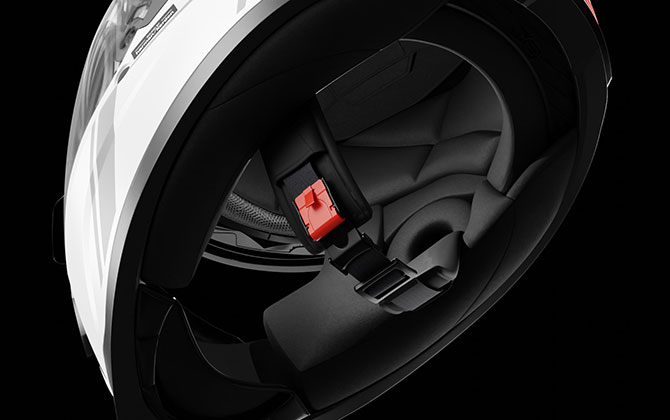
The Phantom (standard) does better than the Stryker on passive isolation thanks to the acoustic-chamber cheek pad design. Independent road testing has logged it around 99 dB. The Phantom ANC currently anchors our best noise cancelling motorcycle helmet guide for street riders.
The Phantom ANC adds 20 dB of claimed active reduction on top. Results are speed-dependent: very effective up to about 70 mph in clean air behind a small screen, less so above 80 or in chaotic buffeting. On a sport bike with no fairing in constant 75–85 mph crosswind, ANC alone won’t replace your earplugs. On a touring bike with a windscreen at sensible highway speeds, it’ll meaningfully cut fatigue.
Lighting and visibility
The Stryker has a customizable LED taillight on the rear spoiler, controlled through the Sena app. You can set it to flash, run as a steady light, or turn it off. That’s it.
The Phantom and Phantom ANC bring a fuller package: a forward-facing chinbar flashlight you can aim down for close-in tasks or out toward the road, rear running lights, and what Sena lists as a brake-sensing taillight (some independent testers report flashing-only behavior; worth confirming on current firmware).
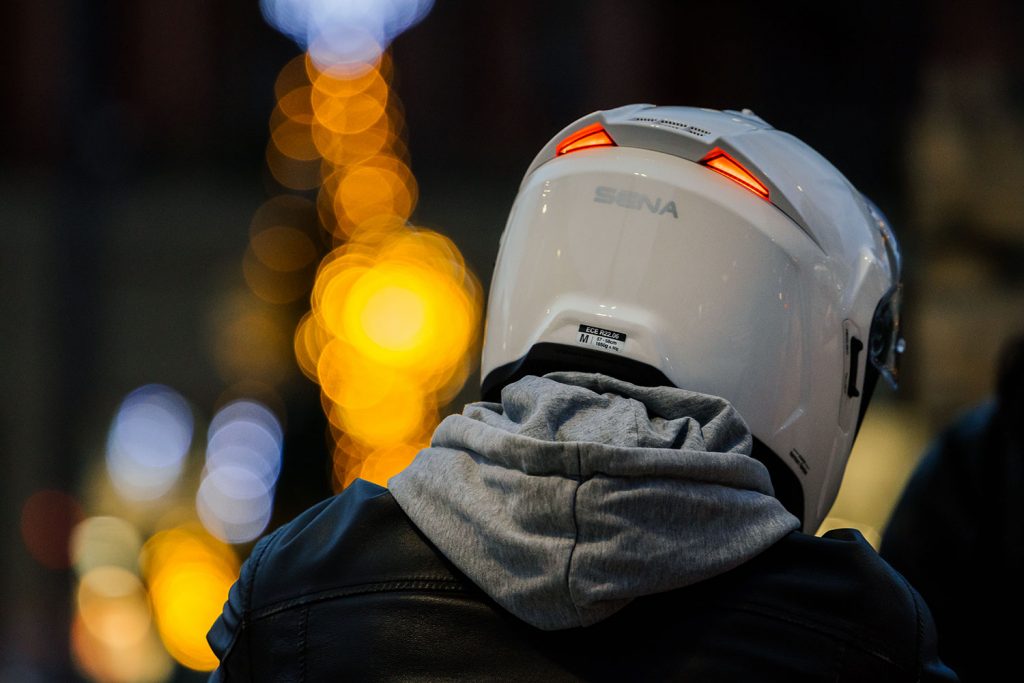
For dawn or dusk commutes, the front flashlight is genuinely useful and the rear running lights add a layer of visibility the Stryker doesn’t have. Our best Sena helmet roundup walks through how Sena treats lighting across the wider lineup if you want context.
Build, finish, and weight
Both shells are composite fiberglass with multi-density EPS underneath. The Stryker carries DOT and ECE 22.05 (region-specific versions); the Phantom and Phantom ANC carry DOT and the newer ECE 22.06.
Our Stryker reviewer flagged a slightly misaligned chin vent and minor fraying near the sun visor slot on his unit. Not safety-affecting, but a reminder Sena’s contract manufacturer’s QC isn’t on Arai or Shoei level. Independent reviewers describe Phantom shells as a step up in fit and finish.
The Stryker weighs about 1,750 g in a medium DOT version, the standard Phantom 1,690 g, and the Phantom ANC 1,720 g. Forty grams won’t break your neck on a long ride, but the Phantom feels more balanced compared to the older Stryker geometry.
Value for Money: Is the Upgrade Worth It?
The Stryker can currently be found on closeout for around $299–$499 in the US (depending on size and color availability), against an MSRP of $499. The standard Phantom sits around $549 (about £439 in the UK). The Phantom ANC is $649–$699 MSRP.
For the gap between Stryker and Phantom ANC, you’re getting:
- A newer comms platform (60S vs 50S, Bluetooth 5.3 vs 5.0, Mesh 3.0 vs 2.0, plus Wave Intercom).
- 2nd-generation Harman Kardon speakers in a purpose-built acoustic chamber.
- Active noise cancellation good for a claimed 20 dB drop at moderate highway speeds.
- A front flashlight and rear running lights on top of the taillight you already get on the Stryker.
- The newer ECE 22.06 safety certification and a 3-year warranty.
If you mostly commute and group-ride at moderate speeds, that bundle probably doesn’t justify $150–$200 over Stryker closeout pricing. Stay with the Stryker.
If you log serious highway miles, do long touring days, and have considered earplugs as a fatigue strategy, the ANC pays for itself in reduced fatigue across a riding season. The Phantom ANC is the upgrade worth making.
The standard Phantom (non-ANC) is the awkward middle: you pay roughly $50 more than current Stryker MSRP for newer comms but no ANC. Most independent reviewers, including ours, would say either go all the way to the ANC or save money with the Stryker.
Good Alternatives
Sena Impulse (~$549 MSRP). Sena’s modular answer for riders who want a flip-up chinbar with the same Mesh and Harman Kardon comms package. The right move if you ride glasses, beard, or just want easier on/off.

Sena Impulse DOT Flip Up Modular Bluetooth Helmet
Check Price on Revzilla
$599.00
A standout modular helmet with integrated Bluetooth communications, no dongle hanging off the side. Sound by Harman Kardon and 18+ hours of battery life.
Pros:
- Mesh & Bluetooth integrated communication
- Simple button controls on the left side
- 18+ hours of battery life (better than any other Bluetooth headset)
- Premium Harman Kardon speakers & microphone
- Multi-channel open mesh supporting unlimited riders
Cons:
- Can't connect over Mesh to non-Sena units
We earn a commission if you make a purchase, at no additional cost to you.
Sena Outforce (~$249 MSRP). The budget full-face Sena, with Bluetooth 5.0 only (no Mesh) and 12 hours of battery. Right if you want music and phone calls without group ride comms.
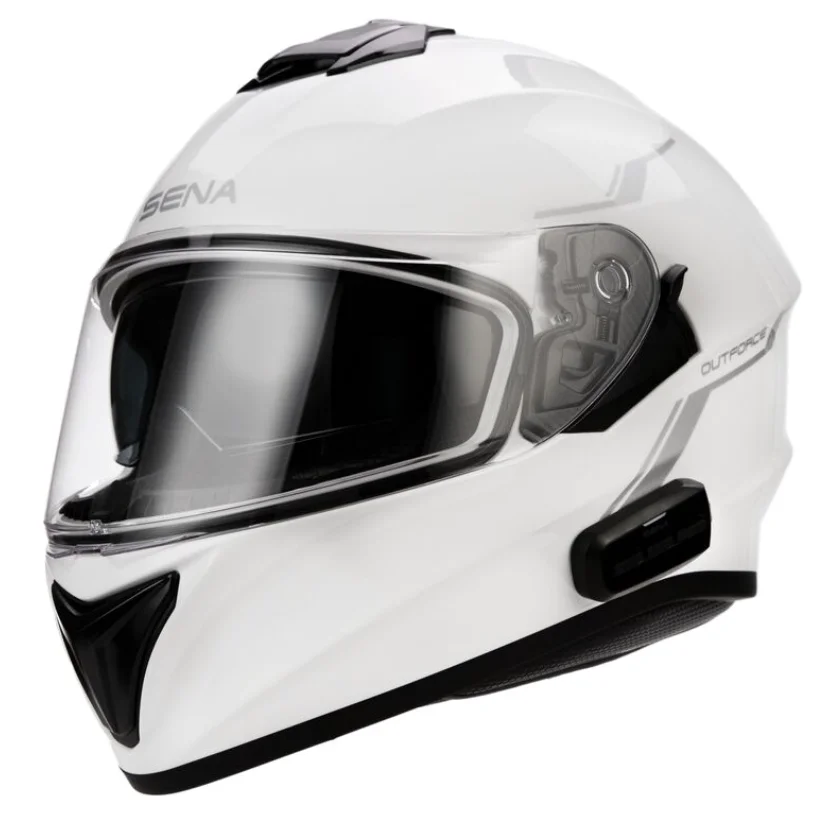
Sena OutForce Bluetooth Helmet
Check Price on Revzilla
$269.00
A budget full face option with integrated Sena comms.
Pros:
- Affordable
- Built-in Bluetooth
- Sun visor
Cons:
- No Mesh intercom
- Polycarbonate shell
- Basic audio
We may earn commissions if you make a purchase.
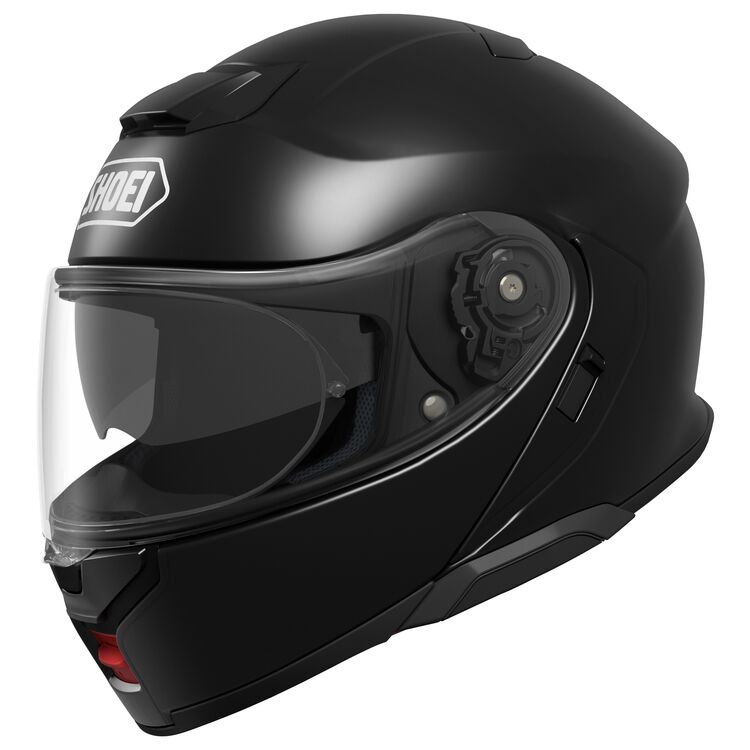
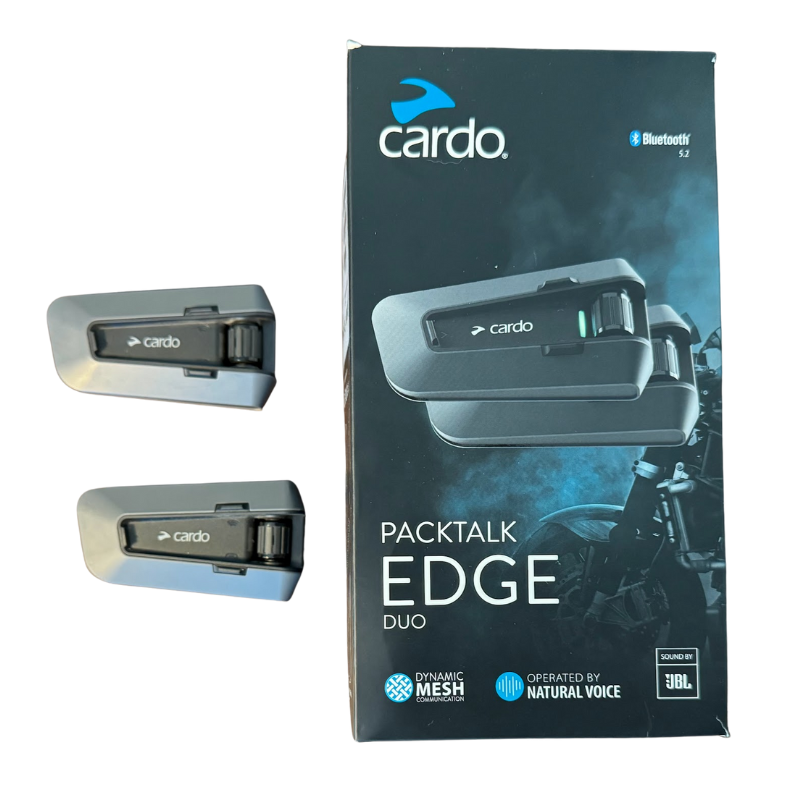
Shoei Neotec 3 with separate Cardo Packtalk Edge (~$1,070 combined). If silence and shell quality matter more than tidy integration, the Shoei Neotec 3 is one of the quieter touring helmets going, and the Cardo Packtalk Edge handles comms beautifully. You pay more, but the helmet and comms upgrade on separate cycles. If you want Cardo’s newest hardware, the Packtalk Pro pushes the combo past $1,200.
| 
|
A premium modular helmet built for long-distance comfort and low noise, with a smooth flip-up chin bar, tightly-sealing visor and wide drop down sun shade. | The Gold Standard in motorcycle communication units. Simple to use, rugged and reliable, with premium sound and long battery life. |
|
|
|
|
A premium modular helmet built for long-distance comfort and low noise, with a smooth flip-up chin bar, tightly-sealing visor and wide drop down sun shade.
- Comfortable wear all day
- Quiet, aerodynamic performance
- Flip-front convenience at stops
- Integrated comms & sun visor
- Faceshield lock is sometimes stiff
- Heavier weight may fatigue neck on long rides
The Gold Standard in motorcycle communication units. Simple to use, rugged and reliable, with premium sound and long battery life.
- 1.6 km (~1 mi) unit‑to‑unit range (works through obstacles, we've tested)
- Up to 8 km (5 mi) group range
- 13 hr battery life
- Magnetic Air‑Mount snaps securely
- Fiddly to remove with gloves
- Not ideal if your crew all use Sena
FAQ
Is the Sena Phantom ANC quieter than the Stryker?
Yes, by a meaningful margin under the right conditions. The Phantom shell isolates passive noise better than the Stryker thanks to acoustic-chamber cheek pads, and ANC adds up to 20 dB of active reduction on top. Most effective on touring bikes at sensible highway speeds; above 80 mph or with heavy buffeting, the gap narrows. Earplugs still beat both for outright noise reduction.
Can the Stryker and Phantom talk to each other on Mesh?
Yes. Sena’s Mesh Intercom is backward compatible, so a Stryker on Mesh 2.0 can ride with a Phantom on Mesh 3.0 in Open Mesh and Group Mesh modes. Some newer features like Wave Intercom won’t carry across, but voice-to-voice between riders works fine.
Does either helmet come with a Pinlock insert?
Both helmets ship Pinlock-ready, meaning the inner shield is pre-drilled for the insert. Whether the insert itself is included varies by retailer and region. Check the listing carefully. The Stryker’s visor is anti-fog treated, which our reviewer found effective even without a Pinlock installed.
How does the Phantom’s brake-sensing taillight actually work?
Sena lists rear running lights with brake-sensing functionality on both Phantom models, driven by an internal accelerometer. Some independent reviewers have reported the lights functioning as on/off/flash only on their test units, possibly a firmware variance. If brake-sensing visibility is a hard requirement, confirm with the retailer before buying.
Will the integrated comms become obsolete?
Eventually, yes. The Stryker runs 50S-generation hardware you can’t swap out. The Phantom and Phantom ANC are on the 60S generation and will see firmware updates for longer. If you keep helmets for 5+ years, the Phantom platform ages more gracefully. If you swap every 3 years, it’s a wash. For broader tips on making any helmet quieter without buying new tech, see our guide on how to make your helmet quieter.
Best for budget integrated comms
|
Best for modern integrated touring
|
Best for long-distance noise reduction
|
Top of the line Sena intercom, sound by Harman Kardon, sun visor, even a tail light... what's not to love? | Not a budget helmet, but an incredible value. This quality helmet comes with a flagship Sena 60S communication system factory-installed, saving you hundreds compared to buying them separately. | Stay connected, ride safer, and enjoy premium sound with the Sena Phantom Smart Mesh Bluetooth Helmet. |
|
|
|
|
|
|
Best for budget integrated comms
Top of the line Sena intercom, sound by Harman Kardon, sun visor, even a tail light... what's not to love?
- Mesh & Bluetooth built-in
- Harman Kardon speakers and mic
- Drop-down sun visor
- LED tail light
- 18 hour battery life
- Can't upgrade the communicator
Best for modern integrated touring
Not a budget helmet, but an incredible value. This quality helmet comes with a flagship Sena 60S communication system factory-installed, saving you hundreds compared to buying them separately.
- Seamless Mesh 3.0 intercom—connect unlimited riders
- Harman Kardon audio delivers clear, immersive sound
- Rear brake & running lights boost visibility
- Streamlined fit—no bulky external comm modules
- Rain may seep through upper visor seal in downpours
- Lacks built-in Bluetooth or FM radio options
Best for long-distance noise reduction
Stay connected, ride safer, and enjoy premium sound with the Sena Phantom Smart Mesh Bluetooth Helmet.
- Bluetooth 5.3 and Mesh 3.0 technology for seamless group communication
- Built-in active noise cancelling and premium Harman Kardon audio
- Pinlock insert for fog resistance sold separately
- Can't upgrade the communicator