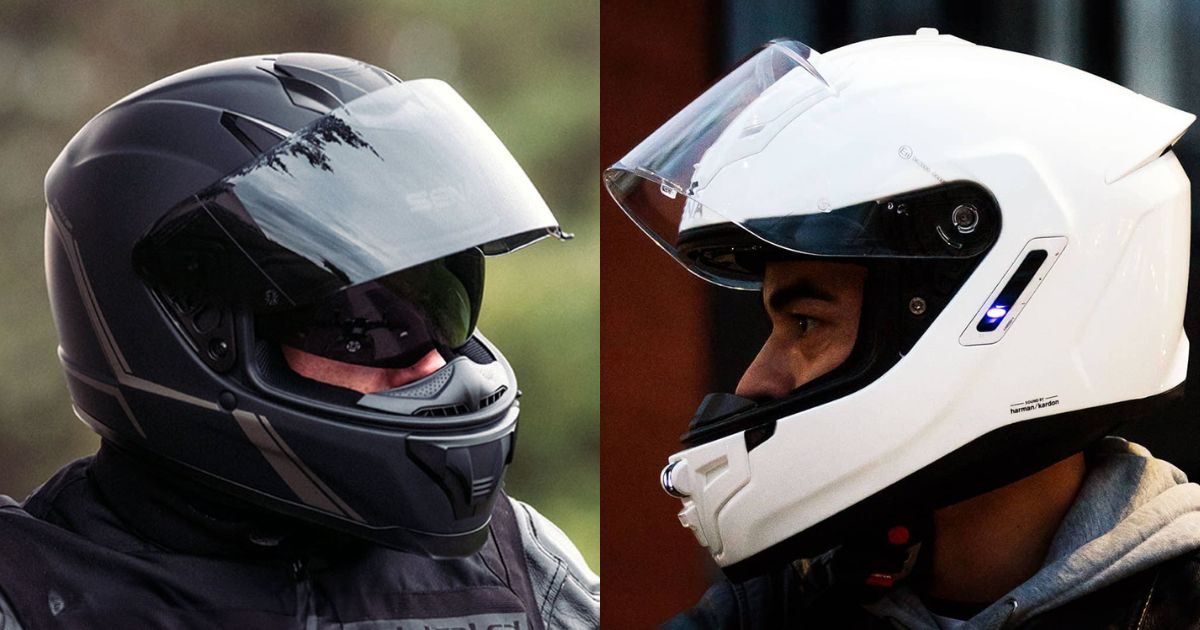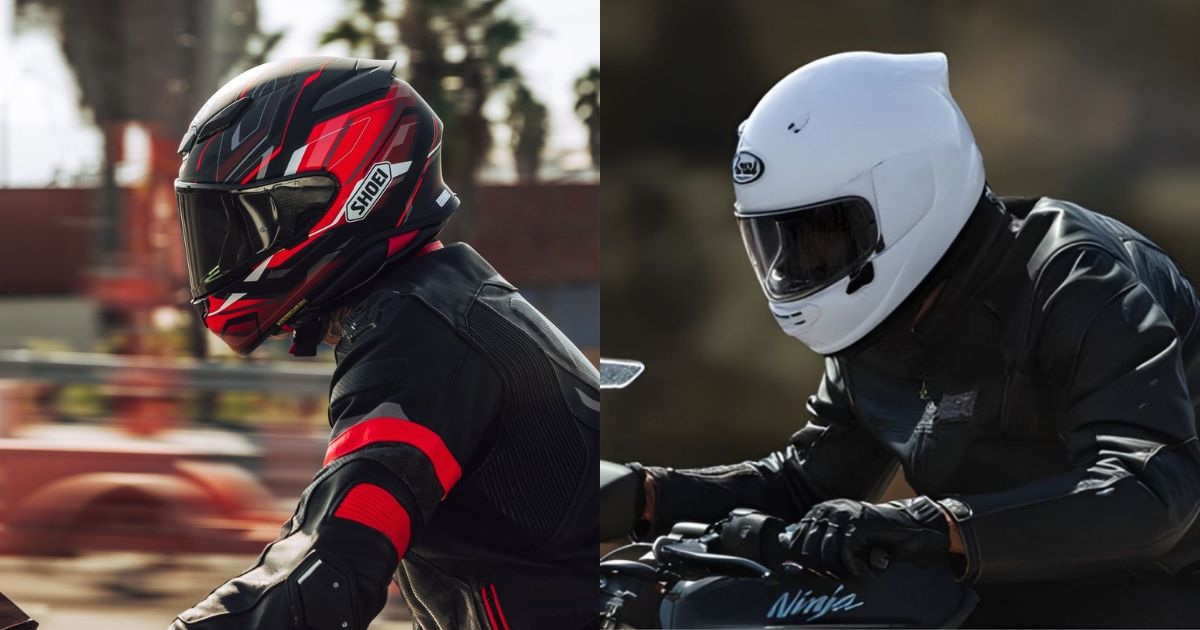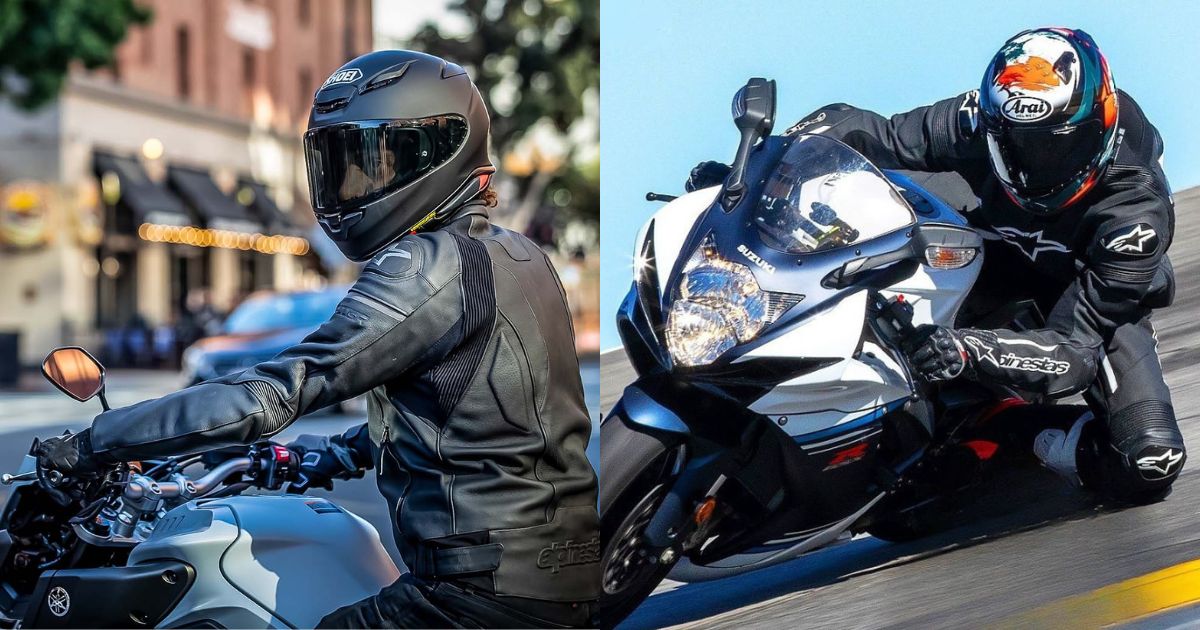
Best Full Face

Choose the Best Sena Helmet for You – Stryker, Phantom, Impulse, Surge, Cavalry 2 and More
 Evan Rally
Updated: May 30, 2026
Published: January 29, 2024
left for contents
Sena is the top motorcycle bluetooth communicator maker in the world – but did you know they also make smart helmets with their devices integrated right in? These helmets come pre-fitted with speakers, microphones, bluetooth connectivity and rider communication. The flagship of that integrated line is the Momentum series, and our Sena Momentum review walks through what each tier (Lite, INC, EVO) actually changes.
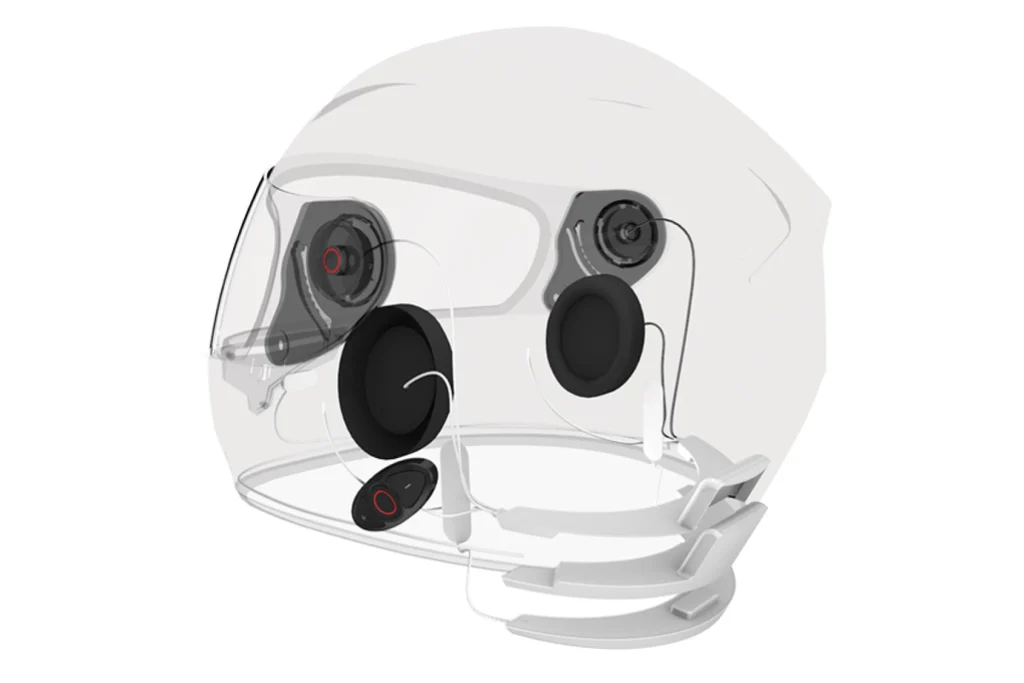
These helmets bring technology to you, so you don’t have to install it yourself or fiddle with a homemade headphones setup. No bulky, expensive rider communication unit hanging (and potentially flying!) off your helmet. Sena’s helmets also come in at an affordable price with multiple styles to choose from.
But the real question is…
Are Sena helmets good?
Sena helmets are excellent for riders who want to listen to music, make phone calls, hear GPS directions, or speak to other motorcyclists while on a ride. The benefits of an integrated Sena helmet are numerous: cost, comfort, better style and enhanced safety.
- Sena integrated helmets are cheaper than buying a standalone Sena: you’ll save almost half by buying an integrated helmet than installing a unit on another helmet.
- All helmet styles for all riders: Sena sells full-face, modular, adventure / dual-sport, open-face, and half-helmet styles, each with built-in Sena communication units and audio equipment.
- Emphasis on build quality: Sena outsourced the construction of their helmet lineup likely to MHR (aka LS2) – more on that later. This means a well-built helmet combined with the best in rider communication technology.
Read on to find out which Sena helmet is best for you.

Best Full Face
Best Audio Full Face
Best Noise-Canceling Full Face
Best Modular
Budget Full Face
Budget Modular
Premium Touring Modular
Best Adventure / Dual-Sport
Best Open Face
Best Half Helmet
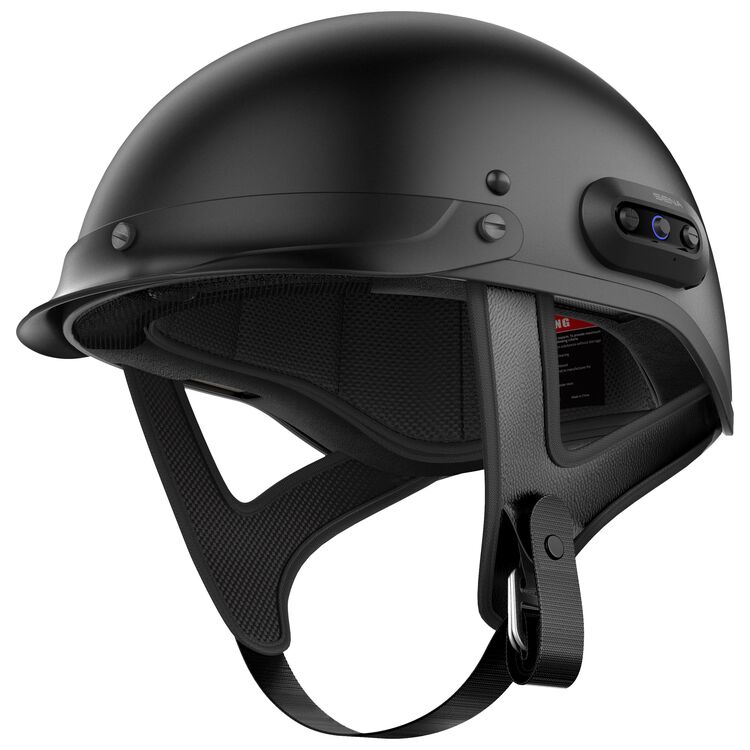
We’ll also cover Sena’s open-face and half-helmet options below. The old Savage and Cavalry models have been discontinued, but Sena now has newer replacements: the Sena Surge for riders who want a classic 3/4 open-face smart helmet, and the Sena Cavalry 2 for riders who want the same integrated comms idea in a half helmet. There’s a slim chance you can find them on eBay at the links below.
| Sena Savage | Sena Cavalry |
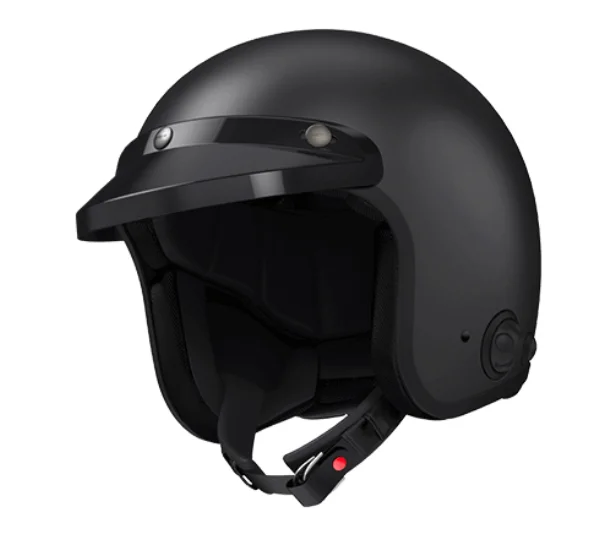 | 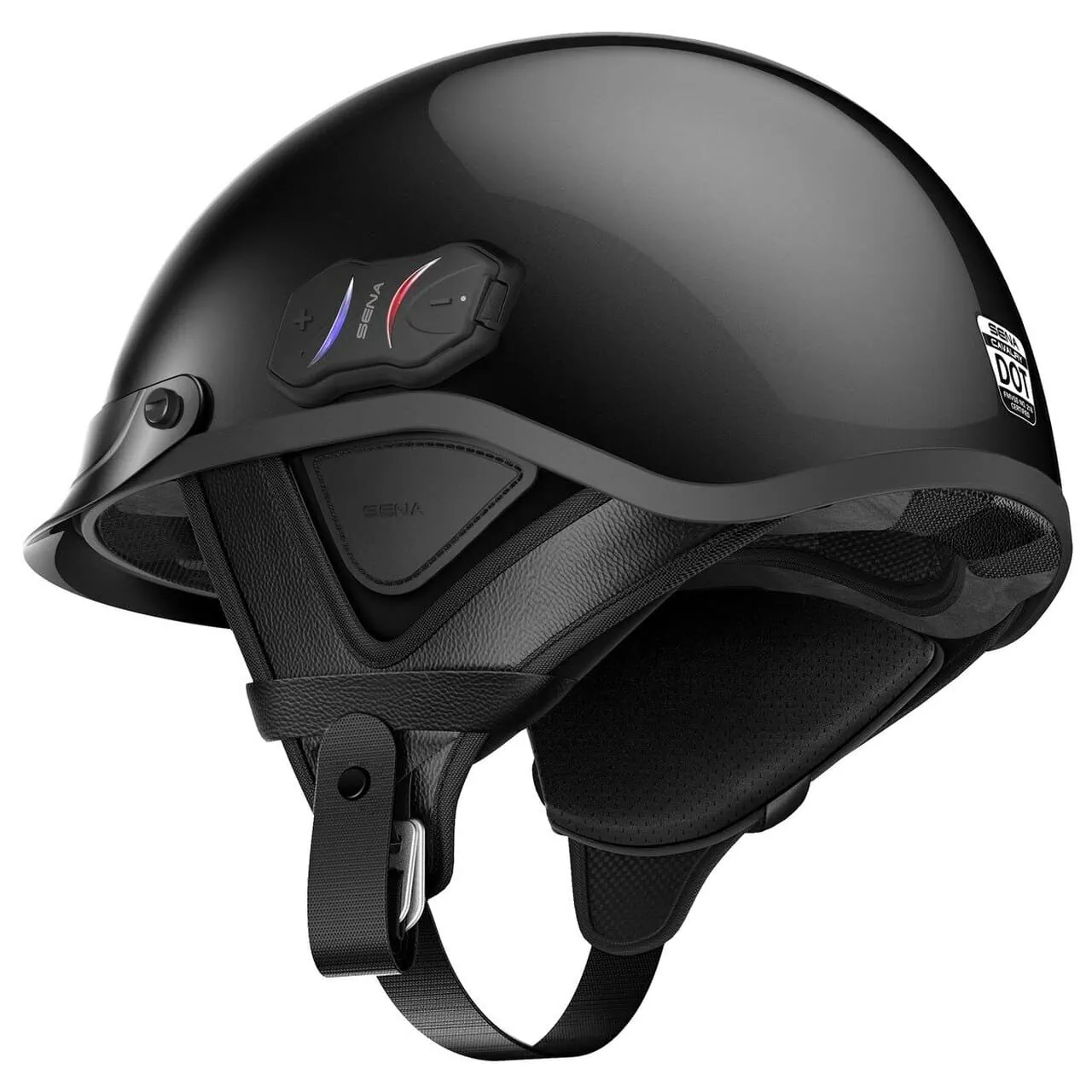 |
| Check on eBay | Check on eBay |
Sena Helmets – Which is Best for You?
We investigated each of Sena’s helmet offerings, scouring websites and forums for reviews plus talking with experts in motorcycle helmet design to get the lowdown on how these helmets perform in key areas:
- Technology
- Comfort, Visor, and Noise
- Safety and Quality
- Looks
As with all our reviews, we aim to give you the information you need to feel confident you’re getting the right helmet for your needs.
Here are the helmets we’ll be going through:
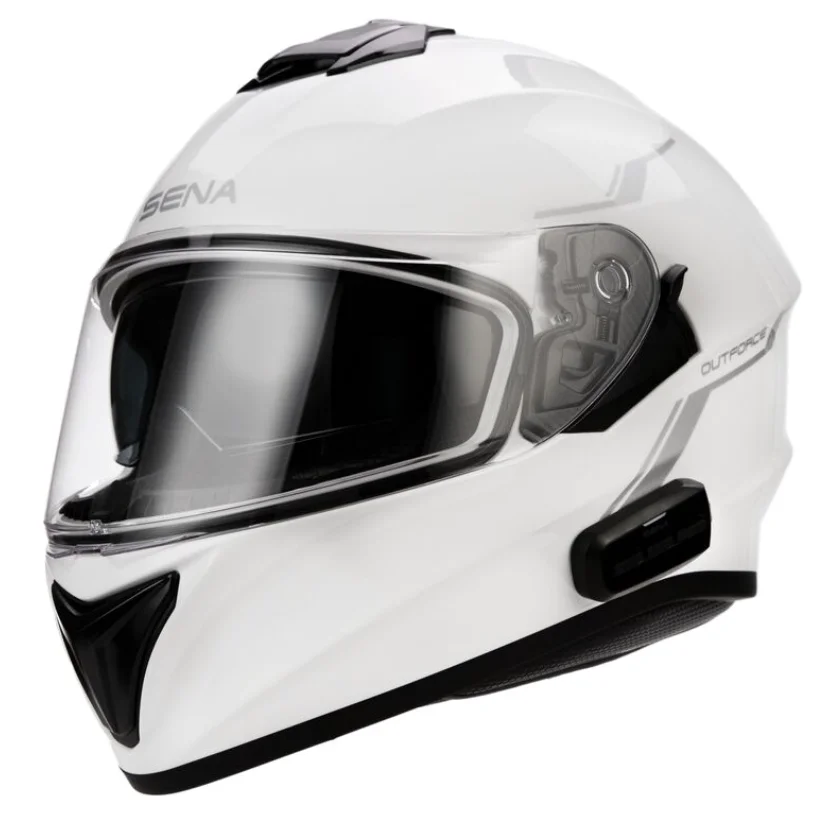
- Sena Stryker, Sena Phantom XB, Sena Phantom ANC, and Sena Outforce (Full Face)
- Sena Impulse, Sena Specter, and Sena Outrush 2 Mesh (Modular)
- Sena Outlander (Adventure / Dual-Sport)
- Sena Surge (¾, Open Face)
- Sena Cavalry 2 (Half Helmet)
Sena Stryker, Phantom XB, Phantom ANC, and Outforce Full Face Helmets
Sena broke up their full face and modular offerings in to two different price points in 2022, giving all riders a suitable option at an affordable price.
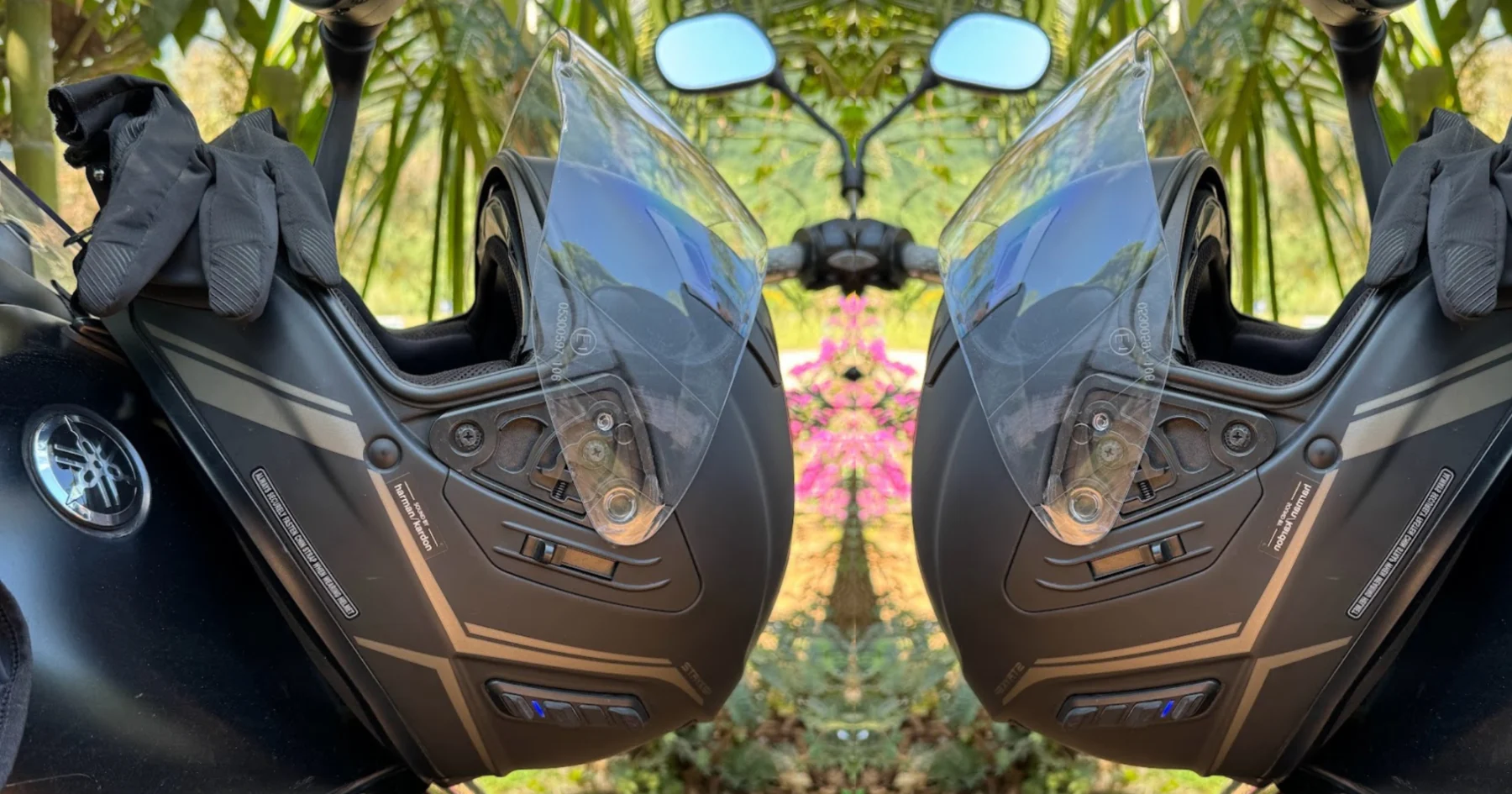
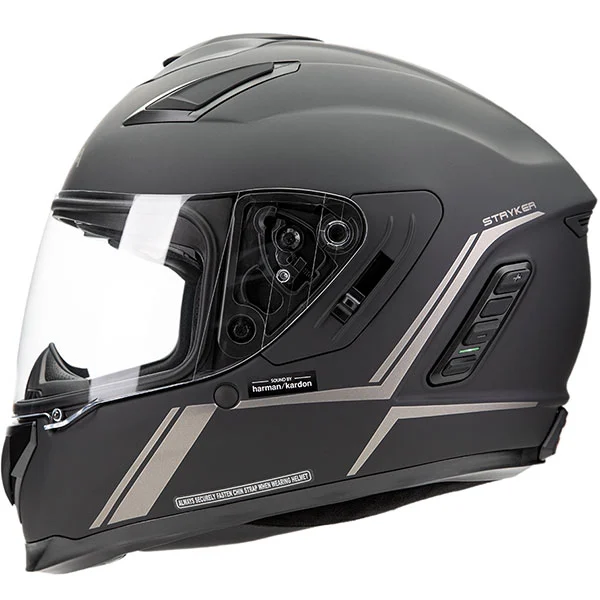
The Stryker is the premium full face lid from Sena, featuring Harman Kardon audio, a full fledged Bluetooth 5.0 and Mesh capable communications system, insane 18 hour battery life and even an integrated taillight. The Outforce is a full face option for those on a budget, still sporting a Bluetooth 5.0 unit but without Mesh connectivity or the taillight. For a long-form take on how those Stryker features hold up on the road, this hands-on Sena Stryker review walks through the Mesh 2.0 behavior, taillight visibility, and Harman Kardon audio in day-to-day use.
You may still be able to find some of Sena’s older Momentum lineup full face helmets on sale, including:
- EVO just means “evolution” – it’s the newest of the lot, and includes the new Mesh 2.0 communication technology.
- Lite has cheaper technology with only 4 riders able to talk at a time, and only 1 mile range.
- Pro includes an HD camera on top of the helmet – shooting 1080p at 60fps or 1440p at 30fps.
- INC stands for Intelligent Noise Control, Sena’s best noise-cancelling tech.
We’ll go over the Sena Stryker here primarily, and at the end we’ll cover the Outforce and its unique traits. Let’s go through the different areas of these helmets.
Technology
The Stryker sports traditional bluetooth phone connection and bluetooth rider comms, but it also comes with the new Mesh 2.0 communication protocol since the tech in this helmet is based on the Sena 50S standalone unit. This new protocol allows for much greater range and ease of use.
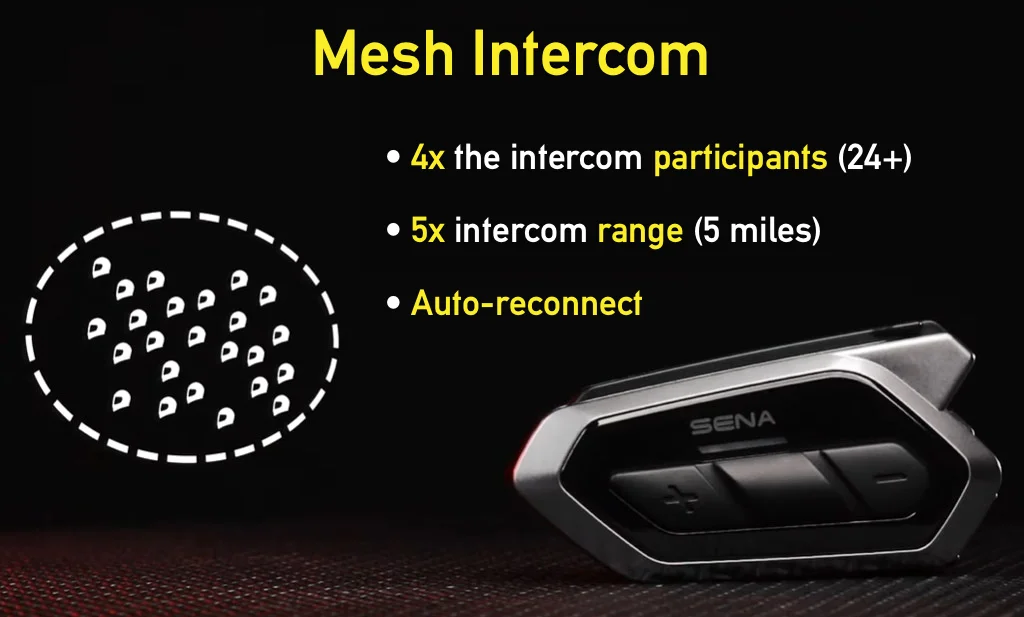
Why use Mesh 2.0 for rider communication?
- Range is almost 4x that of bluetooth
- Connections are ‘self-healing’ – don’t need to re-pair if someone goes out of range and comes back
- Greater number of riders – 16 in a private chat, virtually unlimited in Open Mesh mode
- One Drawback – battery life is about 40% less on Mesh than on Bluetooth
The tech in this helmet is top notch – allowing for full multimedia (GPS, music, calls) via your phone and rider to rider comms via Bluetooth or Mesh 2.0. Your range is up to 2 km (1.2 miles) on bluetooth, and up to 8 km (5 miles) on Mesh. The helmet auto-upgrades thanks to built in WiFi, and the charging cable attaches via magnetic contacts – so you’ll never break your charging if you accidentally pull the helmet while it’s plugged in. The battery holds a whopping 18 hours (11 hrs when using Mesh) and charges to full in just 2.5 hours.
Reviewers say the Harman Kardon speakers and microphone are great quality and well-placed – hidden but effective – and the buttons are seamlessly integrated on the sides of the helmet, each shaped uniquely for easy identification when riding and through gloves. The Advanced Noise Control on this helmet cuts out ambient noise as it elevates in volume, for a smooth audio experience.
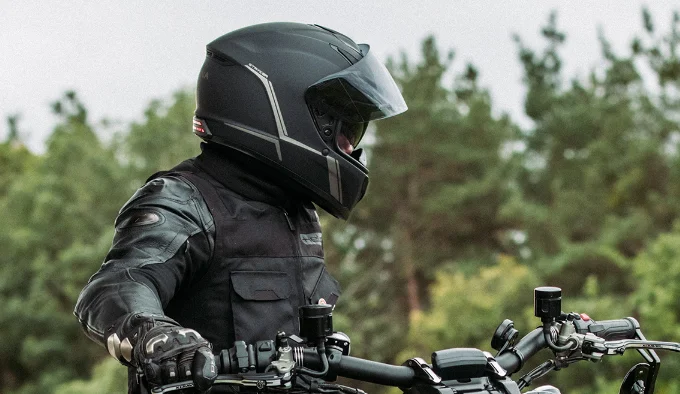
Plus, you can modify all the settings through the Sena Motorcycles App – even connect to other brands of intercoms using the Universal Intercom feature. That app can be used as a remote control for the helmet while riding, or you can use your phone’s voice assistant (Siri, Hey Google) to operate your phone while you’re riding.
This is the best technology we’ve seen in an integrated bluetooth helmet to date.
Comfort, Visor, and Noise
The Stryker improves upon the original Momentum helmet with an oval-shaped shell that Sena claims improves comfort and reduces wind noise. Thankfully, reviewers agree, commenting that comfort improves over time as the liners soften to fit the head. Sena also improved ventilation since their last flagship helmet, installing two vents on the side, one on the top, and one at the chin with three exhaust ports at the back. You’ll also get an integrated drop down sun visor in this helmet.
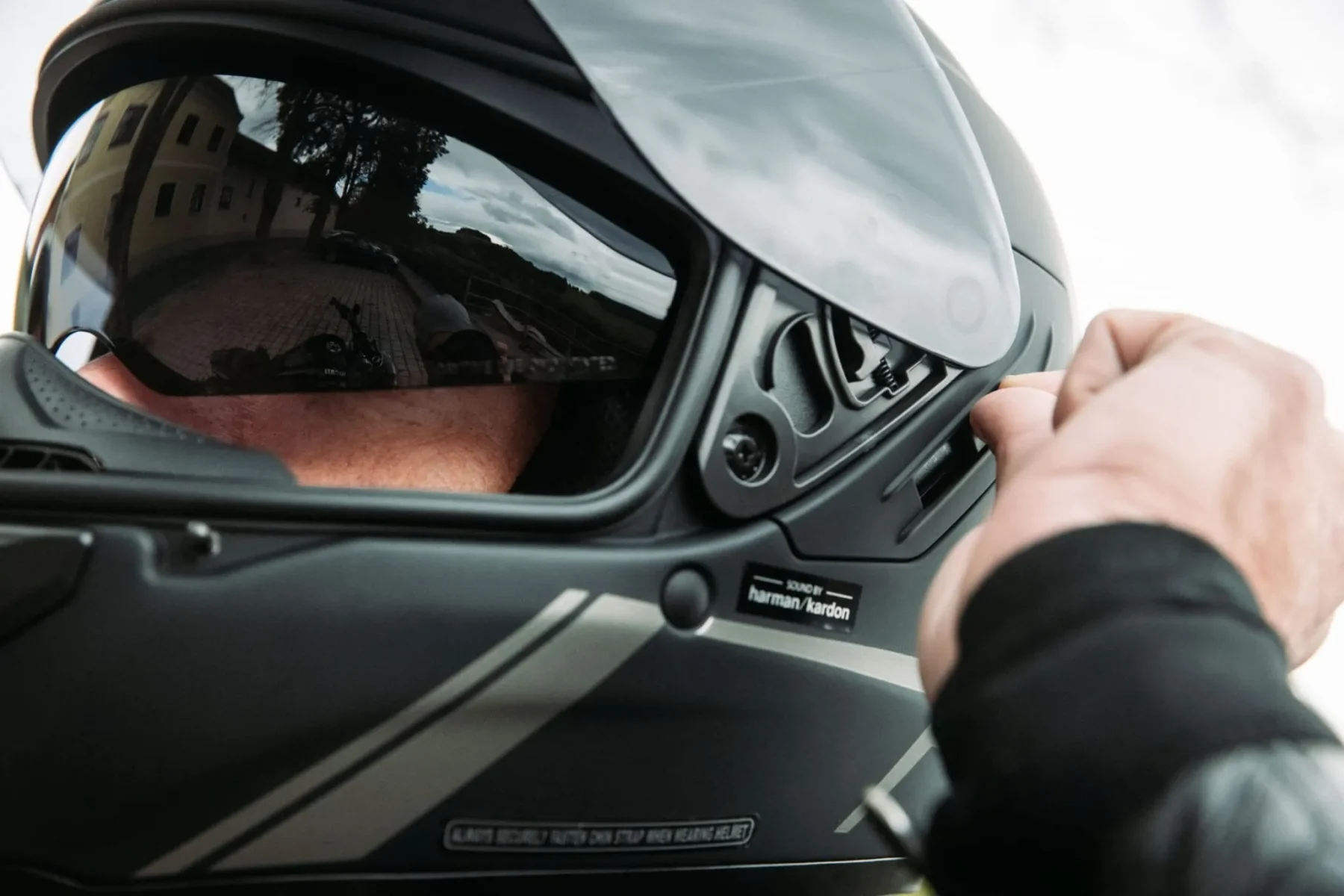
The helmet is still able to maintain low wind noise, with a tight neck roll fit and well-fitted liner isolating the ears. Just like any other modern helmet, the liner can be removed and washed easily.
The visor is wide and tall for great visibility and comes Pinlock-ready, with an anti-fog insert included in the box. One of the only drawbacks on this entire helmet is the visor detents, which allow you to lock the helmet at different heights to let just a little air in. The Stryker only has three positions – fully closed, fully open, and halfway. However, some quick googling and you might find a couple suggestions on how to modify and fix up detents on a helmet.
Safety and Quality
Sena – and whoever they partnered with to make the shell – paid attention to the details here. The helmet is clearly premium, as should be expected from a helmet in this price range. The addition of the customizable taillight on the rear is a very nice safety feature that should be on more lids.
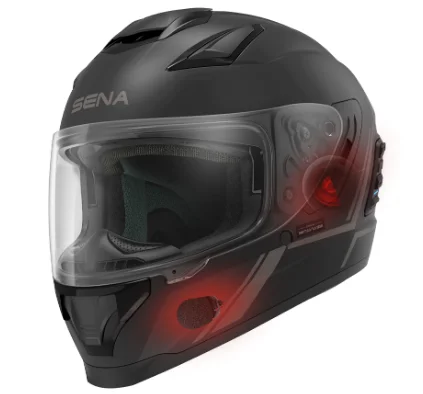
This lid is available DOT certified as standard, but also sports an ECE-rated version for the European market. Keep in mind many retailers are unclear about which version you’re buying – so if you’re interested in the more stringent ECE-rated helmet, make sure you ask the retailer before you buy.
Looks
This helmet isn’t a wild stunner, but it’s simple and clean. You’ll find it available in Matte Black and Glossy White. The helmet’s controls are smoothly integrated in to the lines of the helmet, unlike a bulky add-on bluetooth unit hanging off the side.
Is the Sena Stryker for me?
The Sena Stryker is a great all-around lid – somehow Sena managed to do everything pretty darn well, while keeping the price points affordable, especially considering the top-notch technology integration already packaged in.
If you want to listen to music, get GPS directions, effortlessly make and receive calls, and chat with your fellow riders without sacrificing comfort or letting in a lot of noise – the Sena Stryker is the helmet for you, and it won’t break the bank. Speaking of budget, we found the best price for you – just click below.
What Reviewers and Experts Say about the Sena Stryker
| Pros | Cons |
| Snug fit: a big improvement on the original Momentum lineup of helmets. The shells run a bit small, so go a size up. High quality tech: Sena’s 50S unit, pre-integrated into the Stryker, does it all. Long battery life: A big battery means this helmet will outlast any standalone bluetooth unit. Great price: Super affordable especially considering the tech already integrated. | Visor locking positions: The visor only has one locking position in between up and down positions, though you can fix this at home. |
Sena Phantom XB – The Premium Audio Full-Face Upgrade
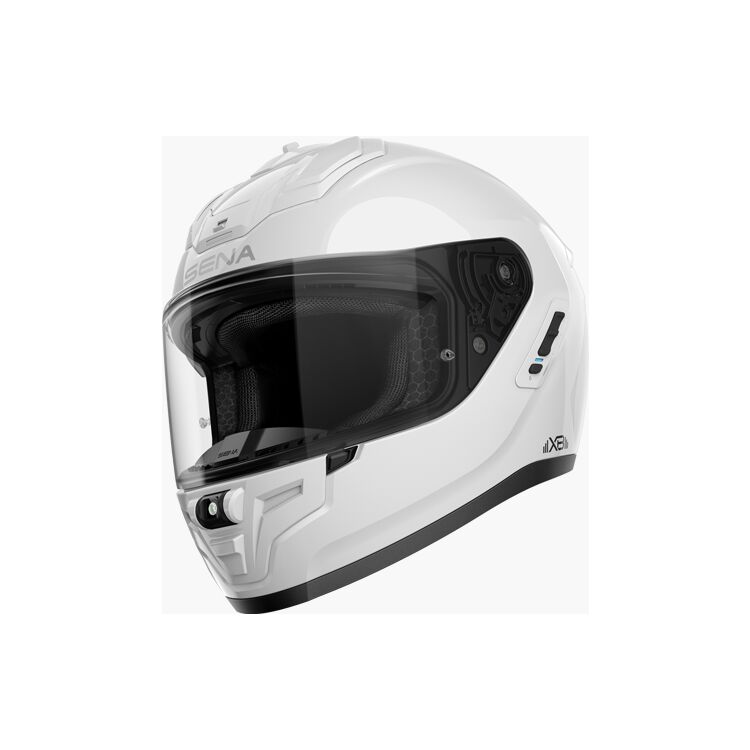
The Phantom XB is the Sena full-face helmet to look at if sound quality matters as much as communication. Where the Stryker is the cleaner all-around premium full-face pick, the Phantom XB leans harder into touring audio with Extreme Bass tuning, 2nd-generation Harman Kardon sound, acoustically engineered cheek pads, and an internal acoustic chamber built into the helmet. For the full audio-vs-comms trade-off broken out feature by feature, our Sena Stryker vs Sena Phantom head-to-head unpacks where the extra $50–$200 lands.
The tech package is also newer and more serious than a basic Bluetooth helmet. RevZilla lists the Phantom XB with an integrated Sena 60S-based communication system, Mesh Intercom 3.0, Wave Intercom compatibility, up to 35 hours of talk time, over-the-air firmware updates, and a 1.2-mile range in open terrain. It is built for riders who want music, GPS, calls, and Mesh group communication in one clean integrated setup without mounting a separate communicator to the shell.

As a helmet, the Phantom XB sits in the premium full-face touring lane. You get a fiberglass composite shell, premium EPS padding, a drop-down internal sun visor, moisture-wicking antimicrobial cheek pads, a Pinlock-ready face shield, DOT and ECE 22.06 approval, and integrated lighting. The rear spoiler has running lights and a brake-sensing taillight, while the front chinbar light can help with roadside checks, luggage, maps, or quick maintenance stops.
The main thing to know is that this is not a normal Bluetooth intercom helmet. RevZilla notes that the Phantom XB does not support basic rider-to-rider Bluetooth intercom. Rider-to-rider communication is handled through Open Mesh or Group Mesh, while Bluetooth is mainly for your phone, GPS, or smart device connection.
If you want the most music-focused Sena full-face helmet, the Phantom XB makes a lot of sense. If you want a proven all-around full-face Sena helmet with a slightly simpler pitch, the Stryker is still the safer mainstream pick. But for riders who care about bass, long battery life, integrated lights, and premium touring comfort, the Phantom XB adds a useful new option to the lineup.
What Reviewers and Experts Say about the Sena Phantom XB
| Pros | Cons |
| Audio-focused design: Extreme Bass tuning, Harman Kardon sound, and acoustic chambering make it the music-first Sena helmet. Long battery life: Up to 35 hours of talk time gives it stronger endurance than most integrated helmets. Premium shell and safety: Fiberglass composite construction with DOT and ECE 22.06 approval. Integrated visibility: Rear running lights, brake-sensing taillight, and front chinbar light add practical safety features. | Mesh-only rider intercom: It does not support basic rider-to-rider Bluetooth intercom. Expensive full-face option: At around $599, it sits above Sena’s budget helmets. Newer model: Real-world owner feedback is still limited compared with the Stryker. |
Free Guide
Not Sure What Size to Order? Get Our Gear Fit Guide.
Sizing charts for helmets, jackets, gloves & boots — with brand-specific fit notes and pro tips so your gear fits right the first time.
- Helmet sizing by brand
- Jacket, glove & boot charts
- Head shape guide
- Between-sizes tips
No spam, ever. Unsubscribe anytime.
Sena Phantom ANC – The Flagship Noise-Canceling Full-Face Helmet
The Phantom ANC is the full-face Sena helmet to look at if you want the most advanced smart helmet setup in the lineup. If the Phantom XB is the music-first option with Extreme Bass, the Phantom ANC is the quieter, more noise-control-focused version, built around active noise canceling, Mesh Intercom 3.0, flush-mounted controls, integrated antennas, and a large internal battery.
The biggest reason to pick the Phantom ANC is noise management. RevZilla lists it with active noise canceling and AI-based noise reduction designed to reduce background noise and help your voice come through more clearly in noisy riding environments. For touring riders, commuters, and anyone who spends long stretches inside a helmet, that is the main thing that separates it from the Phantom XB and Stryker.
The communication package is also top-tier. The Phantom ANC borrows tech from Sena’s 60S flagship communicator, with Mesh Bluetooth 5.3 firmware, Mesh Intercom 3.0, Open Mesh, Group Mesh, Wave Intercom compatibility, and a claimed 1.2-mile range in open terrain. Battery life is a major strength too, with up to 35 hours of talk time and a 2.5-hour charging time.
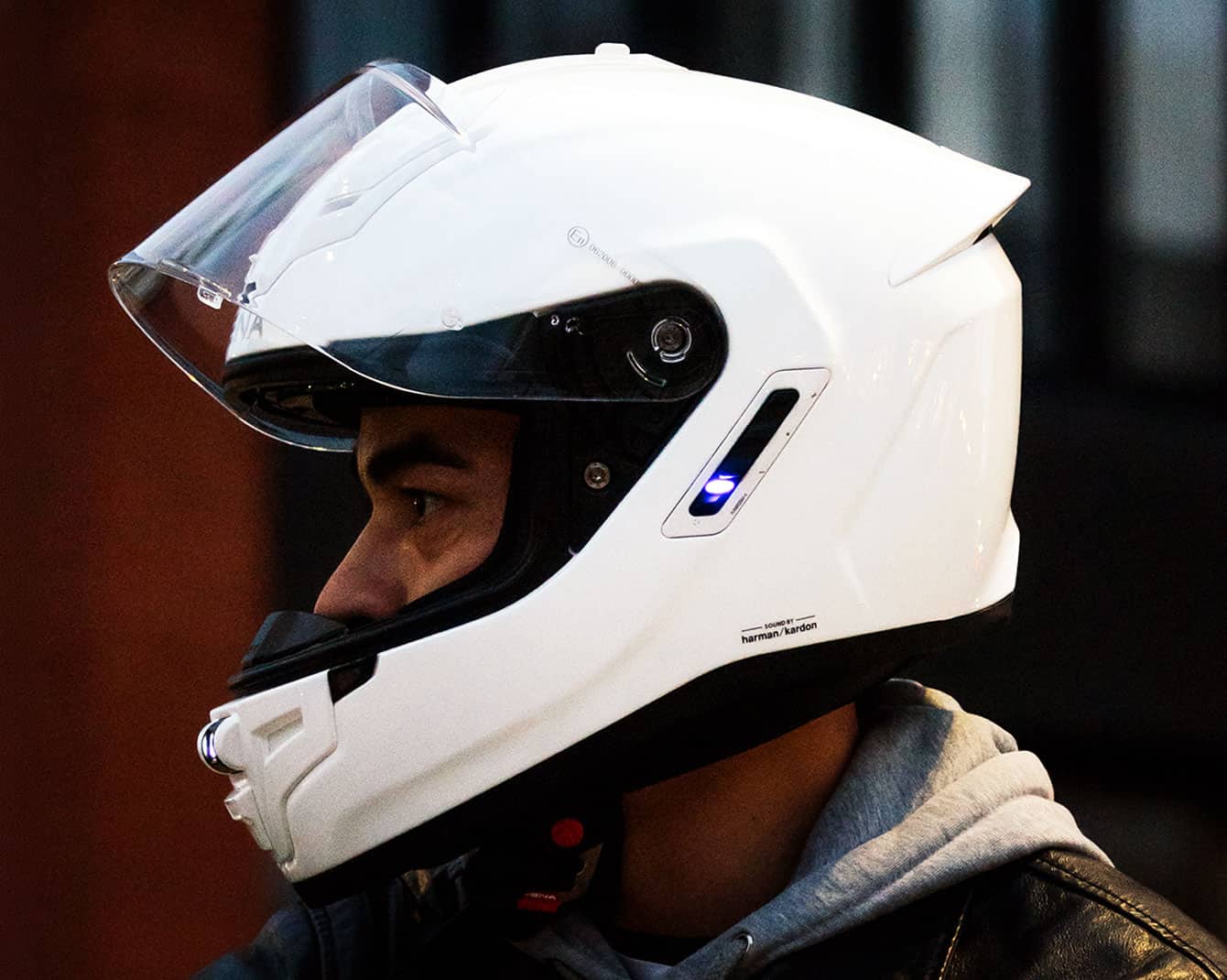
As a helmet, it sits firmly in the premium touring full-face lane. You get a fiberglass shell, drop-down internal sun visor, Pinlock-ready face shield, moisture-wicking antimicrobial cheek pads, integrated front flashlight, rear running lights, and a brake-sensing taillight. The controls and antennas are built into the helmet instead of hanging off the side, so the whole package looks cleaner than a normal helmet with an external comms unit attached.
The main catch is that this is not a basic Bluetooth intercom helmet. RevZilla notes that the Phantom only supports rider-to-rider communication through Open Mesh or Group Mesh. Bluetooth is still there for your phone, GPS, or smart device, but not for basic non-Mesh rider-to-rider Bluetooth communication.
If you want the most advanced noise-canceling full-face Sena helmet, the Phantom ANC is the one to choose. If your priority is bigger, bass-heavy audio, the Phantom XB is the more music-focused pick. If you want a proven all-around Sena full-face helmet without going all-in on the Phantom platform, the Stryker still makes sense.
What Reviewers and Experts Say about the Sena Phantom ANC
| Pros | Cons |
| Active noise canceling: Helps reduce background noise and improve voice clarity in noisy riding conditions. Flagship Sena tech: Uses 60S-based Mesh 3.0, Wave Intercom compatibility, and Bluetooth 5.3 firmware. Long battery life: Up to 35 hours of talk time makes it strong for long touring days. Integrated safety lighting: Front flashlight, rear running lights, and brake-sensing taillight add useful visibility. | Mesh-only rider intercom: It does not support basic rider-to-rider Bluetooth intercom. Premium price: It sits above Sena’s budget full-face options. Overlap with Phantom XB: Riders mainly focused on music may prefer the XB version. Pinlock insert sold separately: The shield is Pinlock-ready, but the insert is not included. |
Sena Outforce – The Budget Answer to the Stryker
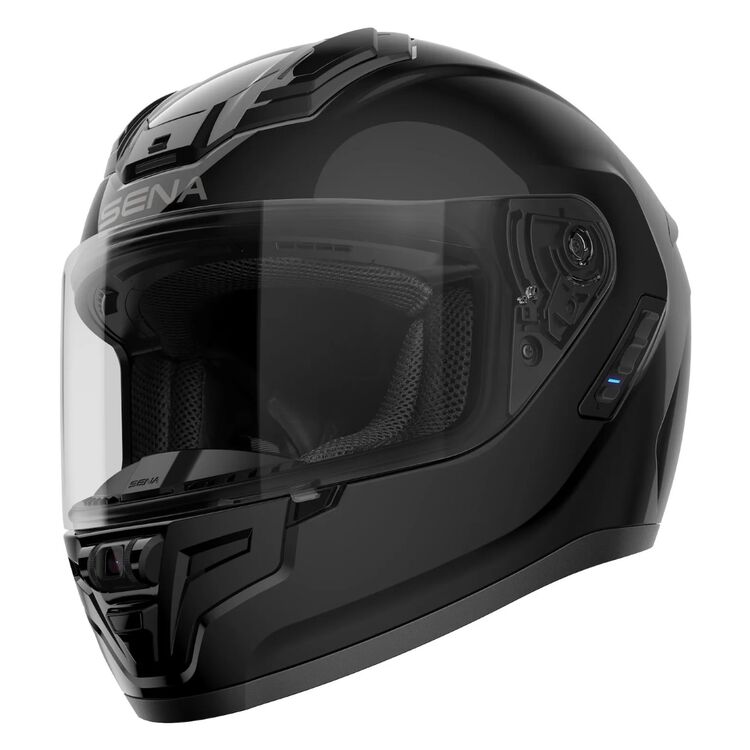
The Sena Outforce is Sena’s budget option in the full face category. At less than half the price of the Stryker, the Outforce still supplies you with a great helmet that packs Bluetooth 5.0 connectivity to speak with four riding buddies at one time with a range of 900 meters or 0.6 miles. You get 12 hours of battery time and a sun visor, though you do lose the taillight and some of the extra vents that make the Stryker so comfortable.
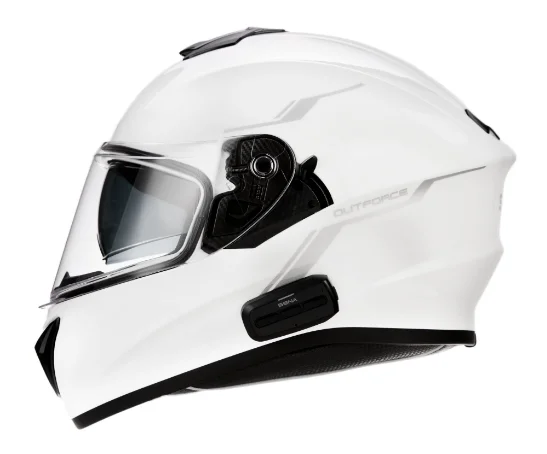
If you’re interested in the Outforce, check the link below.
Sena Impulse, Specter, and Outrush 2 Mesh Modular Helmet Reviews
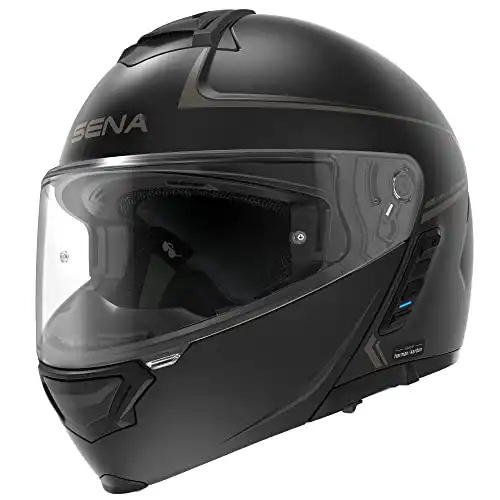
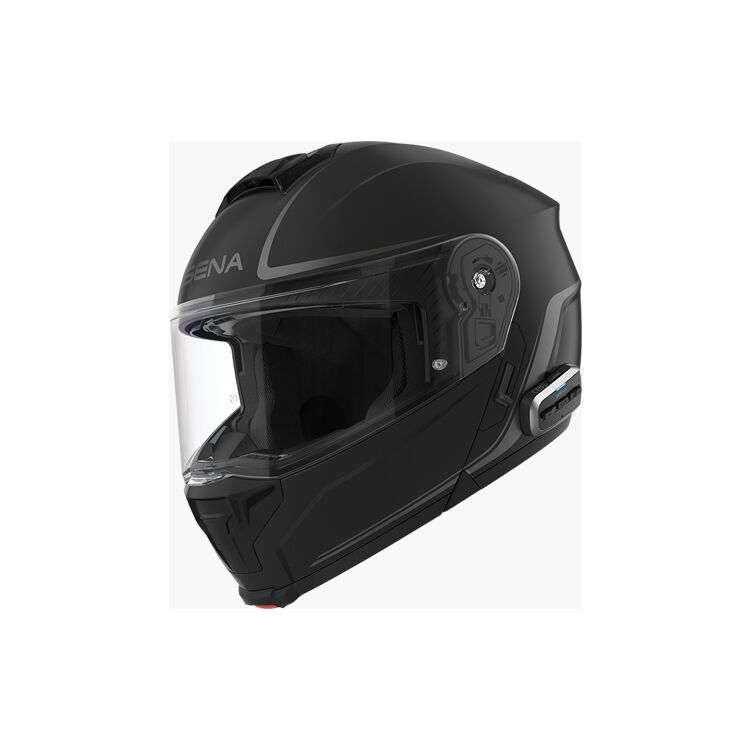
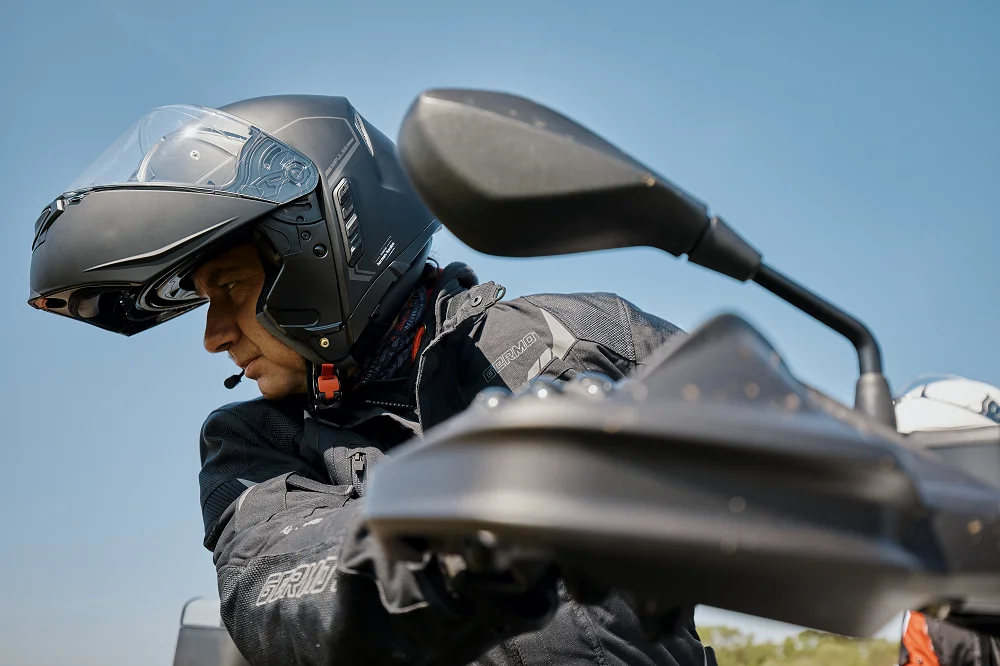
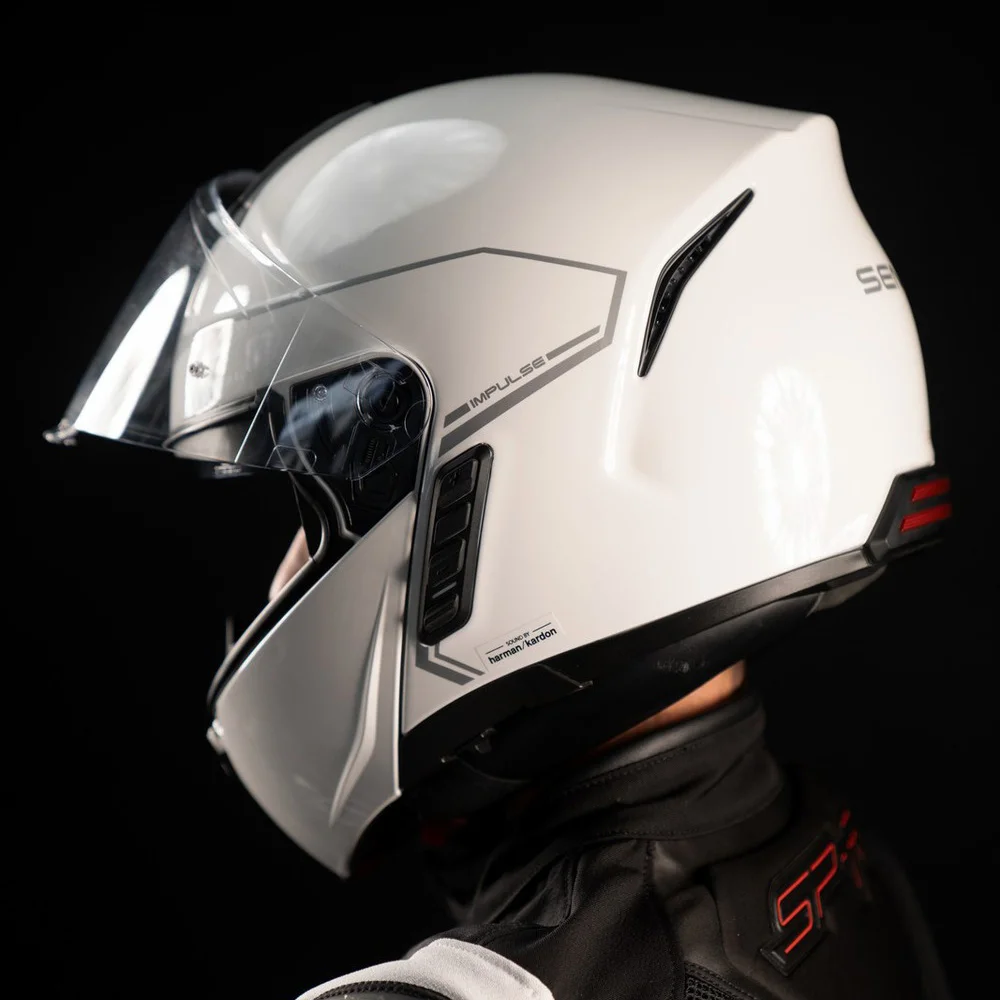
A new helmet from Sena in 2022, the Impulse is Sena’s iteration on their popular Outrush modular helmet (the front lid flips up, making it a ¾ helmet). As with Sena’s other helmets, you’ll get a big battery and slim controls integrated right into a very well-built helmet. This lid is pricey, but you get all the premium features included in the Stryker plus the ability to flip up your chin bar.
Technology
The technology in the Impulse is top notch, with a Bluetooth 5.0 and Mesh system capable of communicating across distances of 2 km or 1.2 miles on Bluetooth and 8 km or 5 miles on Mesh. The sound system and microphone in this lid were designed by Harman Kardon, providing stellar sound quality, reviewers note.
The speakers are well integrated, with a boom mic popping out right in front of your mouth. The helmet charges on the bottom via a magnetic cable, and the battery holds 18 hours of charge with just a 2.5 hour charge time.
Comfort, Visor, and Noise
Reviewers note this helmet satisfies in the comfort department, with a snug neck roll and intermediate oval fit that’s sized for the Western Europe and American markets. You’ll get a Pinlock 120 visor in the box so you can ride in any conditions. You’ll find a top vent and a chin vent on this helmet, providing ample ventilation for a modular.

You also get an internal sun visor with this lid, controlled by a lever on the bottom edge of the left side. Rather than a D ring, this helmet uses a ratchet strap – some people hate it, some love it. The liner can of course be removed and washed – no fiddling with electronics necessary.
Sound management is great according to reviewers – the neck roll seals sound well, leading to clear music and intercom.
Safety and Quality
This helmet checks all the boxes for safety, with DOT certification and multi-density EPS under a composite fiberglass shell. Sena also included a reflective safety patch on the bottom of the liner to ensure you’re seen if you go down. The integrated taillight is an incredibly nice safety feature, ensuring motorists see you from behind. At just 1,760 grams or 3.88 pounds, this helmet is also surprisingly light for a modular.
Looks
This lid is sleek with nice lines along the side. The only indication of the technology hiding within are four buttons on the left side that blend cleanly with the helmet. Just like Sena’s other helmets, you have a choice between Matte Black and Glossy White. You also get the integrated taillight with multiple flashing functions that’s present on Sena’s full face Stryker helmet.
Is the Sena Impulse for me?
If you’re looking for a top-of-the-line modular helmet that allows you to communicate with your group of riders, the Impulse is a perfect fit for you. While the price point is high, it’s still cheaper than buying a comparable helmet and slapping on a similar Bluetooth unit. With that setup, you’ll have less battery life without integrated controls and a taillight. If you’re interested, we found the best price for you – just click the link below.
What Reviewers and Experts Say
| Pros | Cons |
| Snug fit: Keeps out wind noise, stays put comfortably. Top-notch electronics: Bluetooth and Mesh capable, with 18 hours of battery life and an integrated taillight. Venting: Many modulars don’t vent well – this one is stellar, even in hot climates. | Unique charging cord: While Sena’s magnetic charging cord is very nice, if you lose it you’ll need to order another one from Sena. |
Sena Specter – The Premium Touring Modular Upgrade to the Impulse
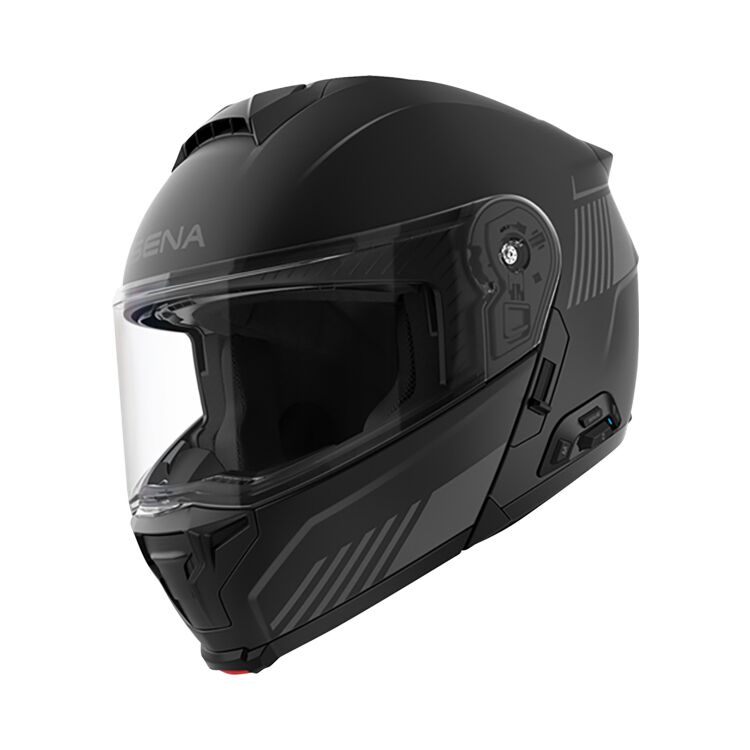
If the Impulse is the premium modular Sena most riders already know, the Specter is the newer long-distance touring upgrade. It keeps the same integrated smart helmet idea, but pushes the package further with Mesh Intercom 3.0, Wave Intercom, Bluetooth 5.3, AINR noise cancellation, and 2nd-generation Harman Kardon speakers built into the helmet from the start.
The big difference is how touring-focused the Specter feels on paper. RevZilla lists it with a fiberglass composite shell, multi-density EPS liner, P/J dual certification, a drop-down internal sun visor, Pinlock-ready shield, ratchet chin strap, rear LED taillight with brake-sensing functionality, and up to 30 hours of talk time. That makes it a stronger pick for riders who want a modular Sena helmet for long days, group rides, GPS, music, calls, and cleaner integrated comms without attaching a separate unit to the side.
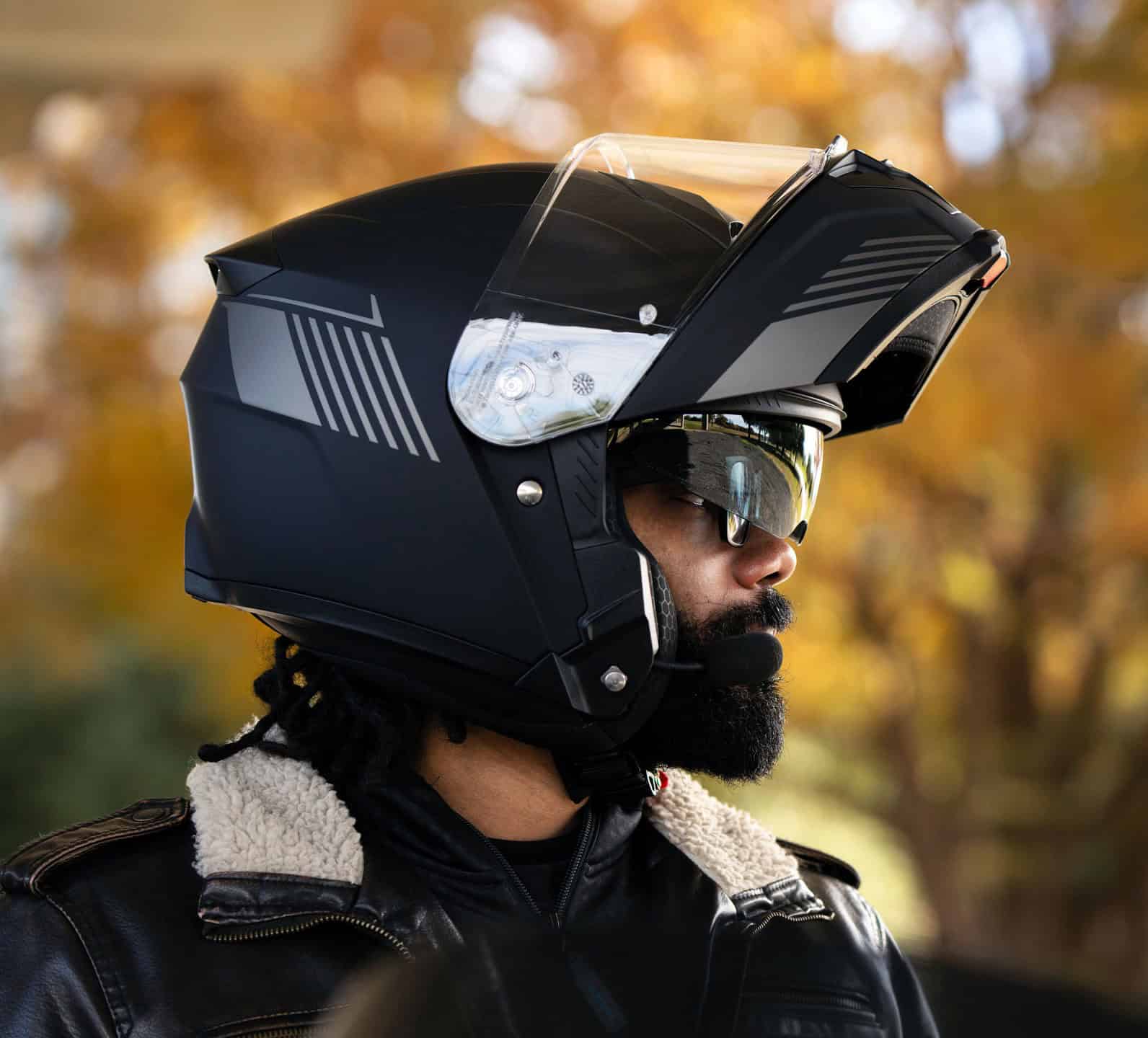
As a helmet, it sits above the Outrush 2 Mesh and feels more like a next-generation premium modular option than a budget commuter lid. You get the newer Mesh 3.0 system, better audio hardware, a lighter fiberglass-based shell, over-the-air updates, and a more touring-oriented feature set. The tradeoff is price: at around $649, it is not the affordable Sena modular pick. It is for riders who want the most current premium modular Sena package and are willing to pay for the newer tech.
If you want the latest Sena modular helmet for long-distance riding, the Specter is the one to look at. If you mainly want integrated Mesh comms at a lower price, the Outrush 2 Mesh still makes more sense as the budget modular choice.
What Reviewers and Experts Say
| Pros | Cons |
| Premium touring modular setup: Built-in Mesh 3.0, Wave Intercom, and Bluetooth 5.3 make it feel like Sena’s newer flagship modular option. Better long-ride audio: 2nd-generation Harman Kardon speakers and AINR noise cancellation are useful for touring, calls, music, and GPS. Fiberglass composite shell: A more premium construction than basic polycarbonate modular helmets. Strong battery life: Up to 30 hours of talk time makes it better suited to long-distance riding. | Expensive for casual riders: The premium tech package puts it above Sena’s budget modular options. Limited owner feedback: It is still a newer model, so reviews are limited. |
Sena Outrush 2 Mesh – The Budget Mesh Modular Answer to the Impulse
If you’re mainly interested in speaking with a passenger or small group of riders, listening to music, getting GPS directions, taking phone calls, and keeping everything integrated into a modular helmet, the Outrush 2 Mesh is the updated budget option in Sena’s lineup. It keeps the same basic idea as the Outrush R, but updates the package with newer integrated communication tech and a more modern feature set.
The big upgrade is the communication system. RevZilla lists the Outrush 2 Mesh with Sena Mesh Intercom 3.0 and Wave Intercom, giving riders smoother group connectivity and a more advanced setup than a standard Bluetooth-only helmet. It also includes Bluetooth 5.0, Advanced Noise Control, up to 12 hours of talk time, and a working distance of up to 900 meters in open terrain.
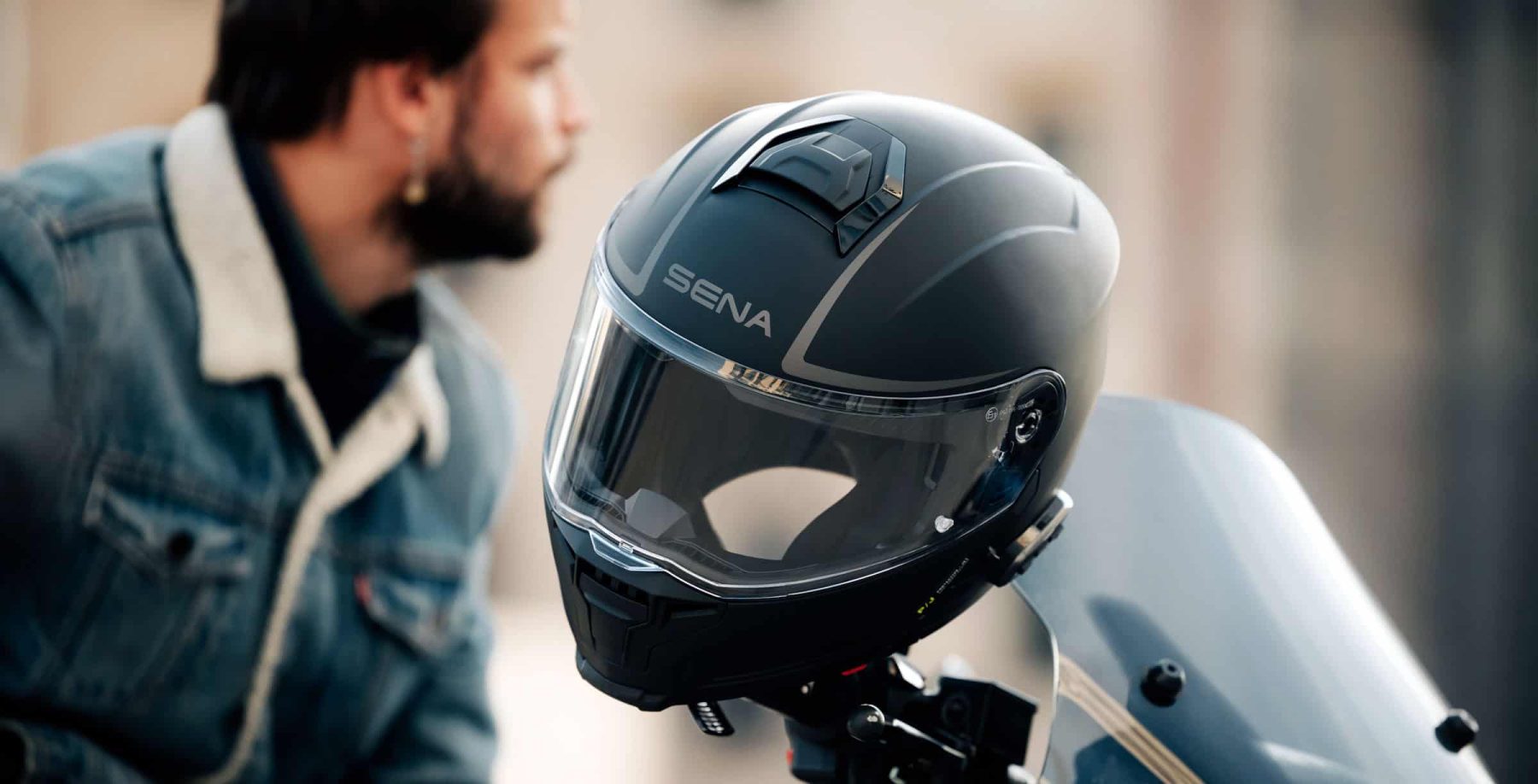
As a helmet, it stays practical and commuter-friendly. You get a modular polycarbonate ABS shell, multi-density EPS liner, scratch-resistant and UV-resistant clear face shield, drop-down internal sun visor, top and chin vents, rear exhaust port, and a removable quick-dry liner. It’s not as premium as the Impulse, and you don’t get the same Harman Kardon setup or flagship polish, but that’s the tradeoff for the lower price.
If you want a modular Sena helmet with integrated comms but don’t want to pay Impulse money, the Outrush 2 Mesh makes a lot more sense. It’s still the budget modular pick, just updated for riders who want newer mesh communication without buying a separate headset.
What Reviewers and Experts Say
| Pros | Cons |
| Budget-friendly modular Mesh option: Gives riders integrated Sena Mesh tech without going into premium helmet pricing. Good commuter convenience: Modular chin bar, internal sun visor, and built-in comms make daily riding easier. Useful for small groups: Mesh 3.0, Wave Intercom, and Bluetooth 5.0 cover passenger and group-ride communication well. Practical all-in-one setup: No need to mount a separate communicator on the outside of the helmet. | Polycarbonate shell: More practical than premium, but not as refined as Sena’s fiberglass options. Shorter battery than premium models: Up to 12 hours of talk time trails the Specter and Impulse. |
Sena Outlander Dual-Sport Helmet Review
The Outlander is Sena’s adventure-ready answer for riders who want integrated comms, but don’t want a purely street-focused full-face or modular helmet. Instead of choosing between a dual-sport lid and a separate communicator, the Outlander builds the whole setup into one helmet with Mesh Intercom 3.0, Wave Intercom, integrated lights, and noise cancellation already included.
Technology
The big story here is connectivity. RevZilla lists the Outlander with Mesh 3.0 Intercom, Wave Intercom, up to 20 hours of talk time, and a working distance of up to 2.5 kilometers or 1.2 miles in open terrain. That makes it a strong fit for group rides, mixed-surface touring, and adventure riders who need GPS, music, calls, and rider-to-rider communication without mounting a separate unit to the side of the helmet.
You also get AINR noise cancellation, over-the-air firmware updates, and a three-button plus joystick control layout. That last detail matters off-road, where glove-friendly controls are easier to live with than tiny buttons buried along the helmet shell.
Comfort, Visor, and Noise
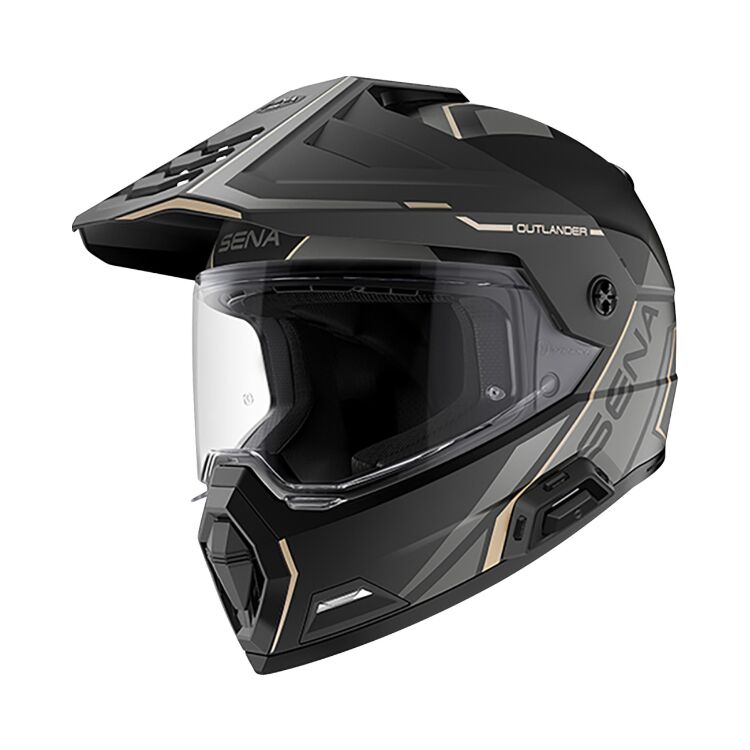
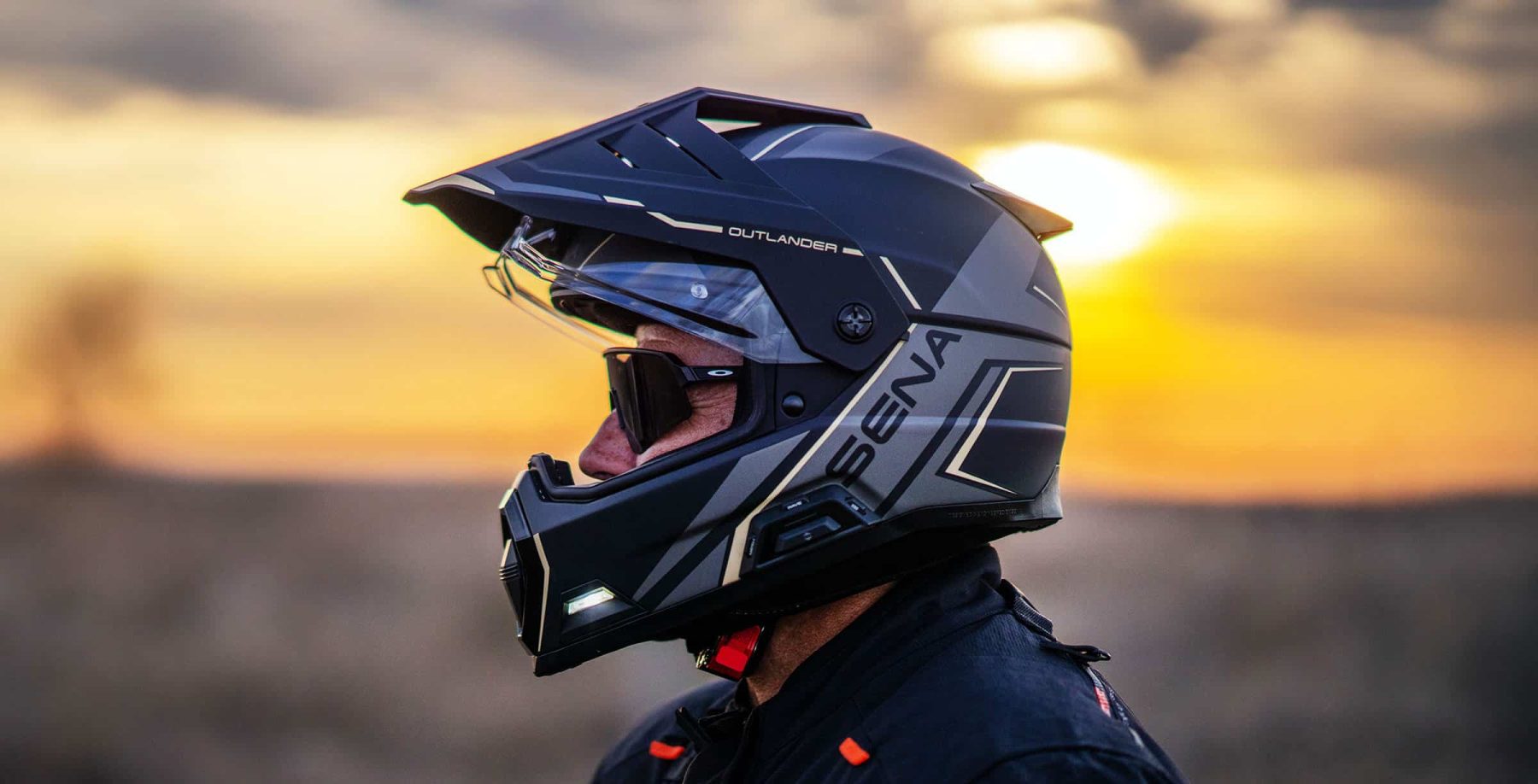
The Outlander is built around adventure use, so the peak visor is the key difference versus Sena’s street helmets. Sena says the peak is designed for off-road visibility and glare reduction, and the shield can be removed without tools. The helmet is also Pinlock-ready, and the shield can be removed for use with off-road goggles.
Ventilation is handled by top and chin vents with a rear exhaust port, while the removable quick-dry liner should help on longer, warmer rides. Sena also describes the interior as semi-oval and designed for all-day comfort, which makes sense for a helmet aimed at both trails and touring.
Safety and Quality
The Outlander uses a fiberglass composite shell with a multi-density EPS liner, so it sits above basic polycarbonate budget helmets in construction. RevZilla lists it as DOT certified, with a ratchet chin strap and integrated lighting built into the shell.
The lighting is one of the most interesting safety features. You get integrated LED headlights up front and a rear LED taillight with running and brake-sensing functionality. For riders moving between pavement, trails, low light, dust, and traffic, that extra visibility is a real advantage.
Looks
The Outlander has the ADV shape you’d expect: a peak visor, tall shield, and a more rugged profile than the Stryker, Impulse, or Outforce. It is not the sleekest Sena helmet in the lineup, but that is the point. It looks like it belongs on a dual-sport or adventure bike, not just a commuter or touring setup.
Is the Sena Outlander for me?
The Outlander is the Sena helmet to look at if your rides involve more than pavement. If you want integrated Mesh comms, long battery life, a peak visor, lighting, and better trail visibility in one package, this makes more sense than trying to adapt a street helmet to adventure riding.
It is not the budget pick, and it is not the cleanest-looking street helmet in Sena’s lineup. But for dual-sport riders who want a connected helmet without bolting a communicator onto the side, the Outlander gives Sena a category it was missing.
What Reviewers and Experts Say
| Pros | Cons |
| Adventure-ready design: Peak visor, removable shield, and goggle-friendly setup make it better suited to mixed-surface riding. Modern Sena comms: Mesh 3.0, Wave Intercom, and up to 20 hours of talk time give it strong group-ride tech. Integrated safety lighting: LED headlights and a brake-sensing taillight add useful visibility on roads and trails. Fiberglass shell: A stronger premium construction than basic budget polycarbonate lids. | New model: There are still no customer reviews on RevZilla yet, so owner feedback is limited. |
Sena Surge Open Mesh Helmet Review
The Sena Surge feels like the natural replacement for riders who liked the old Savage. It keeps the classic 3/4 open-face look, but brings the tech up to date with Mesh Intercom 3.0, Bluetooth 5.2, built-in HD speakers, a hidden microphone, and a cleaner two-tone style.
If you ride a cruiser, cafe racer, or retro standard and hate the look of a big communicator hanging off the side of your helmet, this is where the Surge makes the most sense. Everything is tucked into the helmet already, so you get music, GPS directions, phone calls, and rider-to-rider communication without ruining the classic profile.

Technology
The biggest upgrade over the old Savage is Mesh. The Surge uses Mesh Intercom 3.0 with Open Mesh and Group Mesh, so it is much easier to connect with other Sena riders than an older Bluetooth-only system. Sena lists the range at up to 1 mile in open terrain, with Group Mesh support for up to 24 riders.
You also get Bluetooth 5.2, Advanced Noise Control, over-the-air updates, and a claimed 21 hours of talk time. That is a pretty strong package for an open-face helmet, especially when the whole point is avoiding a bolt-on comms unit.
Comfort, Visor, and Noise
The Surge uses a fiberglass composite shell with an EPS liner, removable and washable interior, double D-ring closure, and a removable snap-on sun peak. It is still an open-face helmet, so do not expect full-face quiet or protection, but the hidden mic and built-in HD speakers help keep the riding experience cleaner than a normal helmet with an add-on unit.
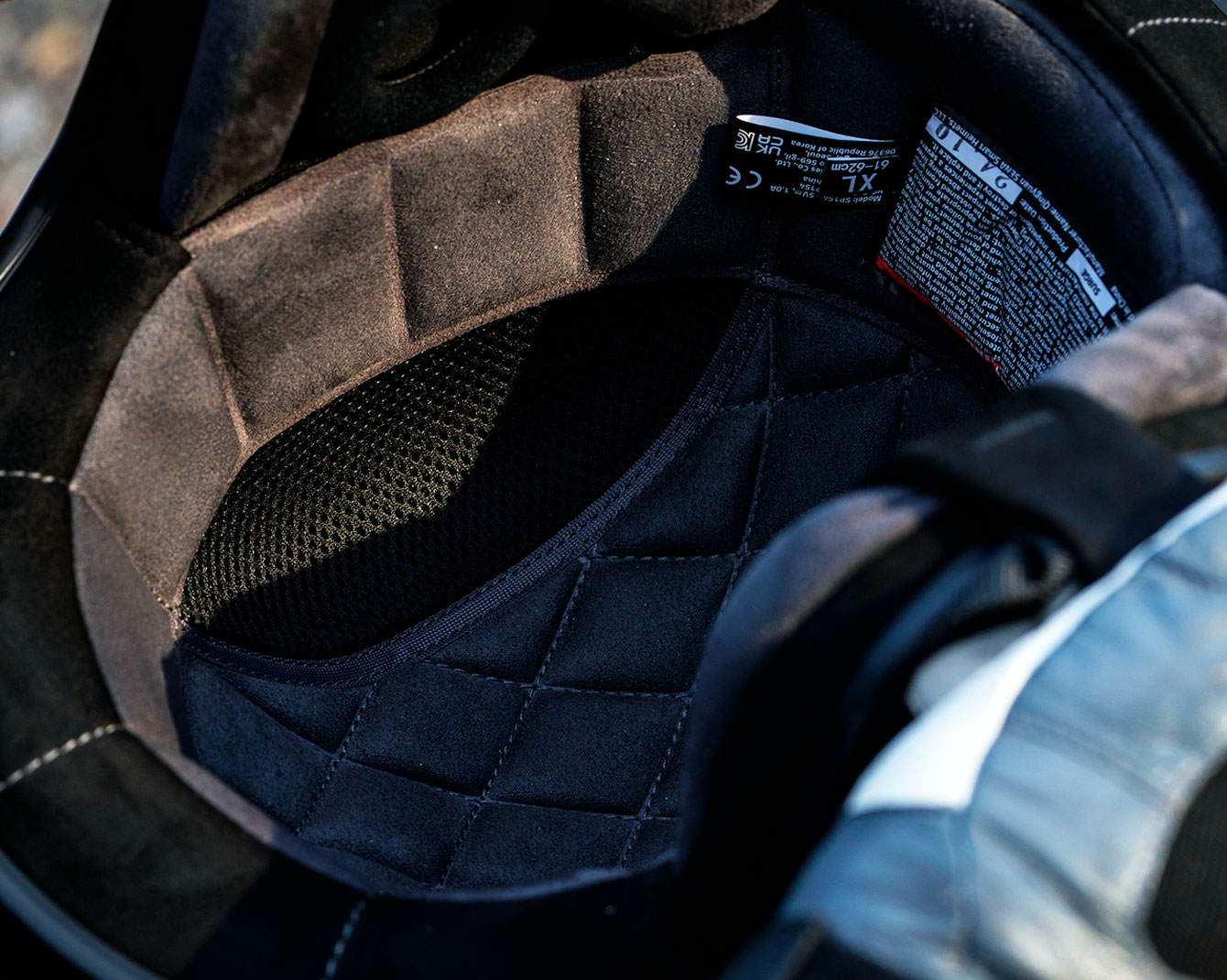
This is still best for relaxed street riding, cruising, and riders who care about style as much as connectivity. If you spend most of your time on the highway, a full-face Sena like the Stryker or Phantom will be quieter and more protective.
Safety and Quality
The Surge is DOT certified and uses a fiberglass composite shell, which is what you want to see on a premium open-face smart helmet. The build is aimed at riders who want a classic helmet shape, but do not want to give up modern comms, music, GPS, and app-based settings.
Looks
This is where the Surge really earns its spot. It has the clean open-face shape that made the Savage appealing, but the two-tone color schemes make it feel more current. The integrated controls and hidden mic also keep the shell from looking cluttered.
Is the Sena Surge for me?
The Surge is the Sena helmet to get if you want a classic open-face lid with modern Mesh communication already built in. It is not the safest or quietest option in Sena’s lineup, but for cruiser, cafe, and retro riders who want clean integrated comms without a bulky side unit, it is the new open-face pick.
If you’re comparing this style against other half and open-face comms options, our Bluetooth open-face helmet guide breaks down the best built-in and comms-ready choices.
What Reviewers and Experts Say
| Pros | Cons |
| Classic open-face style: Keeps the retro look without a bulky external communicator. Modern Mesh tech: Mesh 3.0 is a big upgrade over the old Savage’s Bluetooth setup. Built-in HD speakers: Music, GPS, calls, and comms are integrated cleanly. Strong battery life: Up to 21 hours of talk time. | Open-face protection: Not as protective as a full-face or modular helmet. Wind noise: Still an open-face lid, so highway noise will be more noticeable. Limited use case: Best for cruiser, cafe, and casual street riders. |
Sena Cavalry 2 Half Helmet Review
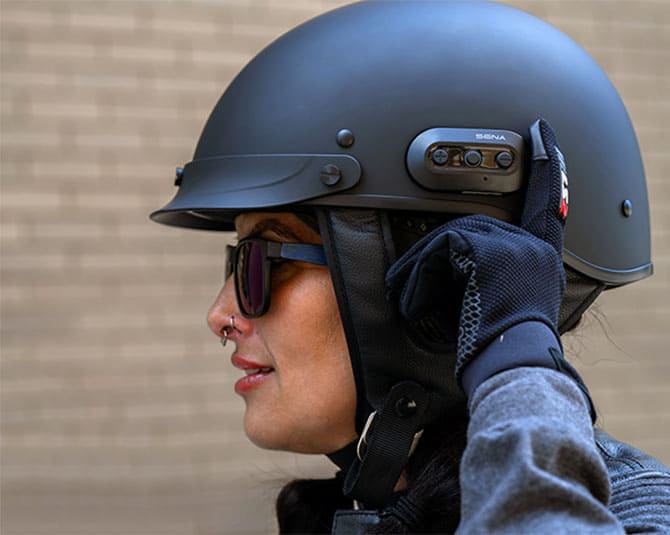
The Sena Cavalry 2 brings back one of Sena’s most interesting ideas: a half helmet with the speakers, microphone, and communication system already built in. The original Cavalry was discontinued, but the Cavalry 2 updates the formula with Mesh Intercom 3.0, Bluetooth 5.2, a fiberglass composite shell, and a cleaner modern setup.
This is still a half helmet, so it is not trying to compete with the Stryker, Phantom, Impulse, or Outlander on protection. It is for riders who already know they want a half helmet, but do not want to mess with speaker pockets, boom mics, wire routing, or a communicator stuck to the side.
Technology
The Cavalry 2 is much more current than the original Cavalry. Sena lists Mesh Intercom 3.0, Wave Intercom, Bluetooth 5.2, Advanced Noise Control, and up to 0.8 miles of Mesh range in open terrain. Group Mesh supports up to 24 riders, while Open Mesh is designed for easier click-to-connect group riding.
The microphone is hidden in the helmet, and the speakers are built in, so the whole system feels more natural than trying to retrofit comms into a half shell. You still get the normal phone features too: music, GPS directions, calls, and app-based settings through the Sena Motorcycles App.
Comfort, Visor, and Noise
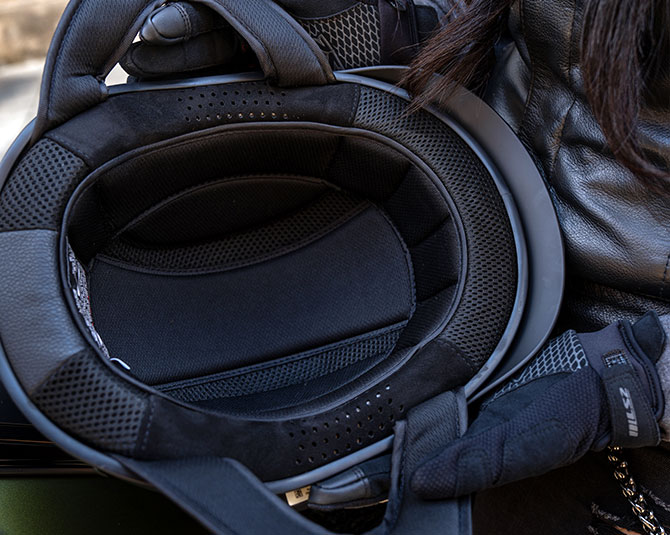
As a half helmet, the Cavalry 2 is light and simple. Sena lists the medium at about 950 grams, with a composite fiberglass shell, double D-ring chin strap, and removable sun peak.
The big comfort win is that there is no boom mic in your face and no speaker install to fiddle with. That said, half helmets are always more exposed to wind, so audio quality will depend heavily on speed, bike setup, windshield, and riding conditions.
Safety and Quality
The Cavalry 2 is DOT certified and uses a composite fiberglass shell with an EPS liner. That is solid for a half helmet, but the usual half-helmet caveat still applies: it gives you less coverage than a full-face, modular, or even open-face helmet.
Looks
The Cavalry 2 keeps the low-profile half-helmet look. The buttons are built into the shell cleanly, the removable peak gives it a little classic cruiser style, and the hidden mic keeps the whole thing from looking like a tech experiment.
Is the Sena Cavalry 2 for me?
The Cavalry 2 is the Sena helmet to get if you want a half helmet first and integrated comms second. It is not the most protective helmet here, and it is not the best choice for high-speed touring, but for cruiser riders who want music, calls, GPS, and Mesh comms in the cleanest half-helmet package Sena makes, it fills a slot no other Sena helmet really covers.
What Reviewers and Experts Say
| Pros | Cons |
| Clean half-helmet setup: No external unit, boom mic, or messy speaker install. Modern Mesh comms: Mesh 3.0 and Bluetooth 5.2 bring the Cavalry up to date. Hidden mic and speakers: Keeps the look simple while adding real connectivity. Lightweight feel: Much lighter than Sena’s full-face and modular helmets. | Half-helmet protection: Less coverage than every other Sena helmet here. Wind exposure: Audio clarity will depend on speed and bike setup. Narrow audience: Best for riders already committed to half helmets. |
FAQs about Sena Helmets
How much is a Sena helmet?
Sena helmets are surprisingly affordable, especially when compared to the cost of buying a similar-quality helmet and integrating a Sena unit on top. Prices range from around the mid-$300s for the Cavalry 2 half helmet to $500+ for Sena’s premium full-face and modular helmets like the Stryker, Phantom, and Impulse.
Compare that to integrating a $200 – $400 Sena unit on to a $200 – $400 helmet from Shoei, Arai, or Bell – and you’re getting something like a 50% discount along with better sound sealing and no bulky unit hanging off your helmet!
Who manufactures Sena helmets?
Sena keeps this quiet – neither Sena nor any of their retailers commented on this when contacted about it. Some reviewers of Sena helmets speculate it could be HJC, another Korean company, or a Chinese company called MHR judging by the look.
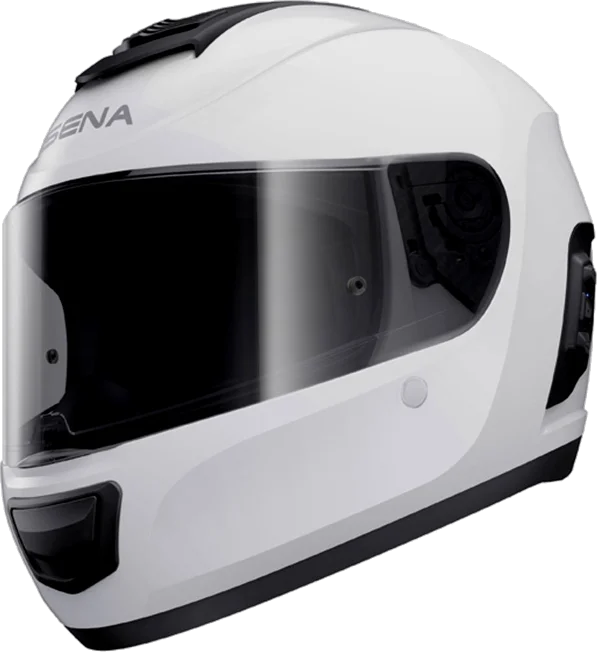
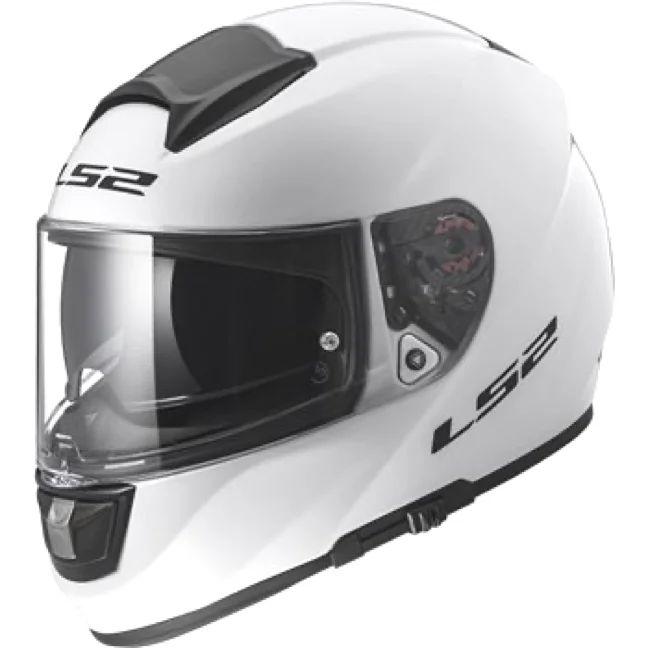
My bet is on MHR, which also owns and manufactures the popular LS2 brand. Why? Sena’s flagship bluetooth helmet line used to be under the name “Momentum” and Revzilla casually mentions that “Sena collaborated with LS2 on the Momentum series of helmets” on a replacement face shield page. Another retailer selling visors for the LS2 FF397 helmet mentions that they’re also compatible with the Sena Momentum, calling it model MHR-80. Take a peek at the FF397 vs the Sena Momentum – very similar style.
How do you use the Sena app for bluetooth helmets?
The Sena Utility app available for Android and iOS allows you to modify settings on your Sena helmet after pairing the helmet to your smartphone. From the app, you can:
- Easily manage group intercom – it makes pairing a breeze with a QR-code scan system.
- Save favorite intercom groups – no fussing about before your rides, just join up with one tap and go.
- Set speed dial numbers
- Set your favorite FM radio stations
- Read the full user’s guide on your helmet