
Shoei RF-1400 vs Arai Corsair-X: Which Is Better for Sport Riding?
 Evan Rally
left for contents
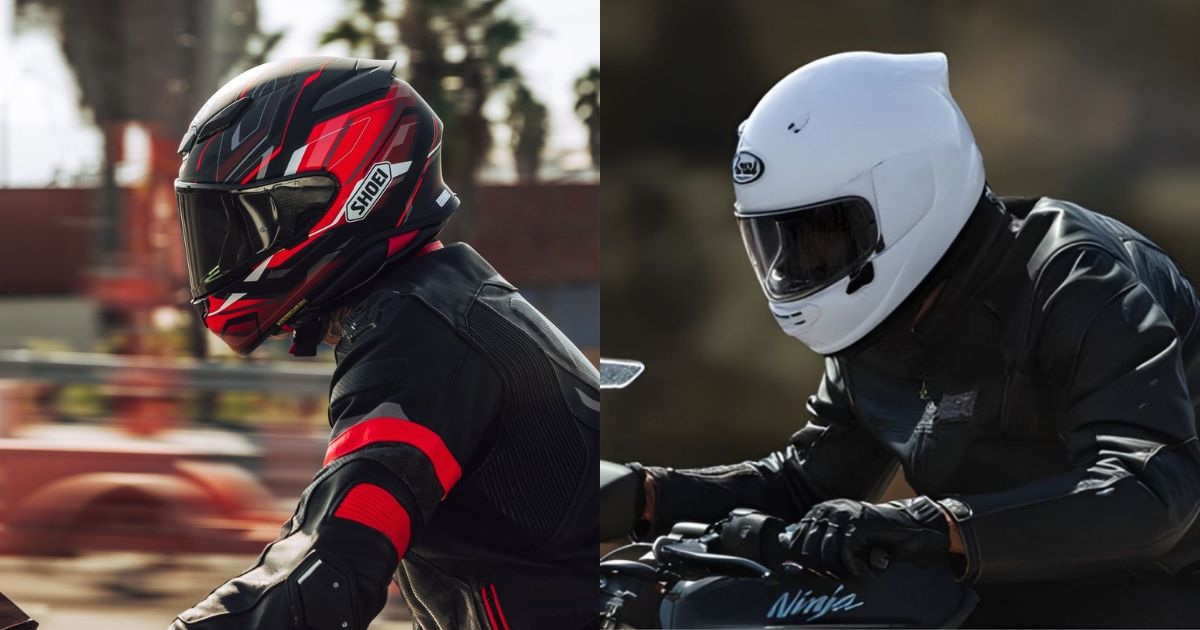
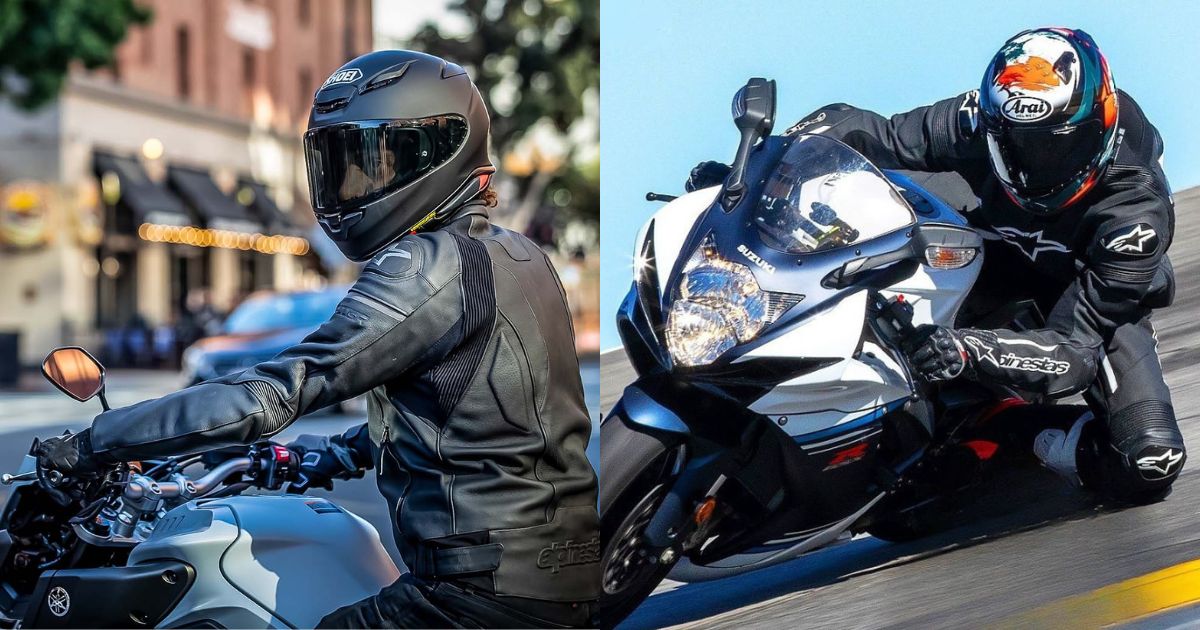
You’ve narrowed your premium full-face hunt down to two Japanese heavyweights. Both wear Snell ratings, both fit intermediate-oval heads, and both are built by hand. The Corsair-X runs roughly $250 more, and it’s tuned for a different kind of sport riding. This breakdown shows you which one matches the way you actually ride.
Buy the Shoei RF-1400 if you:
- Spend most of your time on the street and want the quietest premium helmet you can buy
- Mix canyon carving with highway commuting and want one helmet that does both well
- Want top-tier Snell M2025 protection without crossing the $700 line
I personally own this lid and love it. I upgraded from my Shoei RF-SR, which was also a standout lid (sadly it seems the RF-SR is soon to be discontinued)
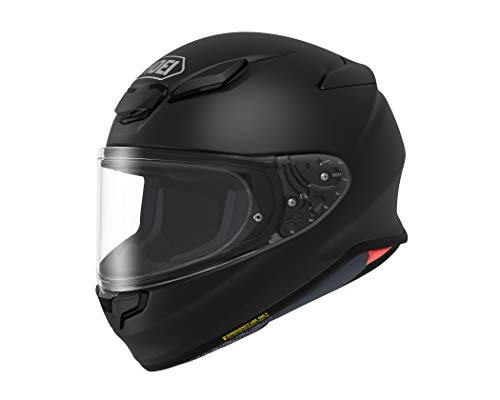
One of the top motorcycle helmets for street riding due to its incredible safety ratings, solid build construction, versatile shell for street and track riding, and reasonable price. Long term review here.
- Staff pick at Revzilla
- Quietest helmet on the market
- Excellent build quality
- Thick noise-sealing cheekpads
- Visor seal built like Fort Knox
- Snell certified for track use
- Lacking touring comfort features like drop down sun shield

Buy the Arai Corsair-X if you:
- Do real track days or trackday-style riding in a tuck behind a windscreen
- Care more about glance-off impact geometry and a rounder, smoother shell than highway quiet
- Want a hand-built race helmet you can also wear on the street, and the price isn’t the issue
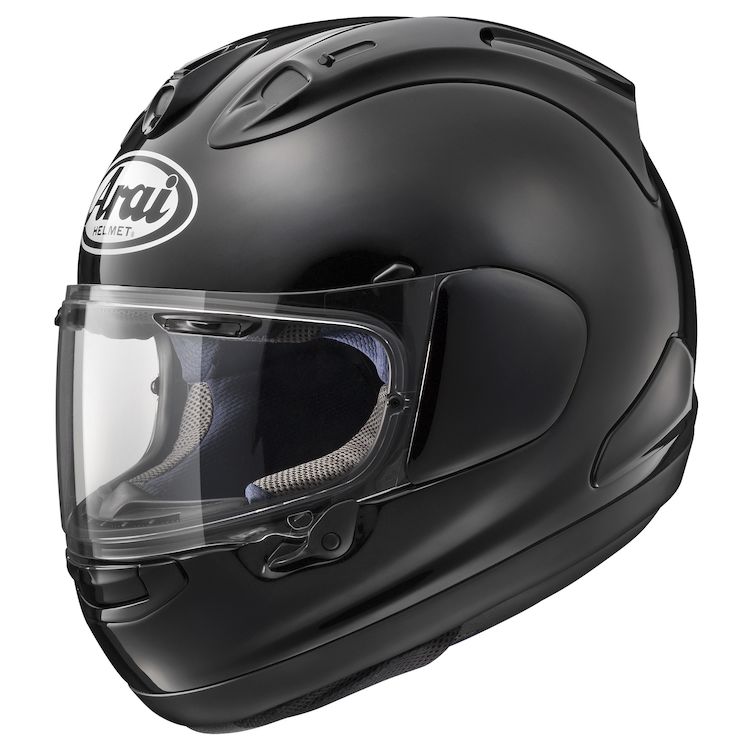
Arai’s flagship race helmet built for maximum protection and high-speed stability. Delivers aggressive airflow, premium materials, and a locked-in fit for serious riding.
- Race-level protection with premium shell materials
- Excellent airflow for hot, aggressive riding
- Stable at speed with minimal lift or buffeting
- Top-tier build quality and finish throughout
- Tight fit makes daily on/off less convenient
- Wind noise higher than touring-focused helmets
The Corsair-X is worth the extra $250 if you care most about race-bred shell shape and trackday-grade ventilation. For most sport-riding street use, the RF-1400 wins on noise, comfort, and value.
At-a-Glance: Specs & Price
| Specs | Shoei RF-1400 | Arai Corsair-X |
|---|---|---|
| Weight (size M) | 3.64 lb (3 lb 10 oz) | 3.55 lb |
| Head Shape | Intermediate oval | Intermediate oval |
| Shell Sizes | 4 | 5 |
| Shell Construction | Multi-Ply Matrix AIM+ (fiberglass composite) | PB e-cLc (Peripherally Belted e-Complex Laminate) |
| Safety Certifications | Snell M2025D, DOT-218 | Snell M2020, DOT |
| Ventilation | 6 intakes, 4 exhaust outlets | Type 12 diffusers, multiple intakes, 7 exhaust ports |
| Face Shield | CWR-F2 with center lock, Pinlock EVO | VAS Max Vision with Pinlock |
| Internal Sun Visor | No | No |
| Comms-Ready Speaker Pads | Yes, recessed pockets, removable ear pads | Yes, 5mm peel-away ear pocket padding |
| Emergency Cheek Release | E.Q.R.S. | Yes, dual-function lever |
| Warranty | 5 years | 5 years |
| Price (solids, May 2026) | $679.99 (graphics $750–$800) | $929.95 (graphics $1,069–$1,199) |
Who Each Product Is Built For
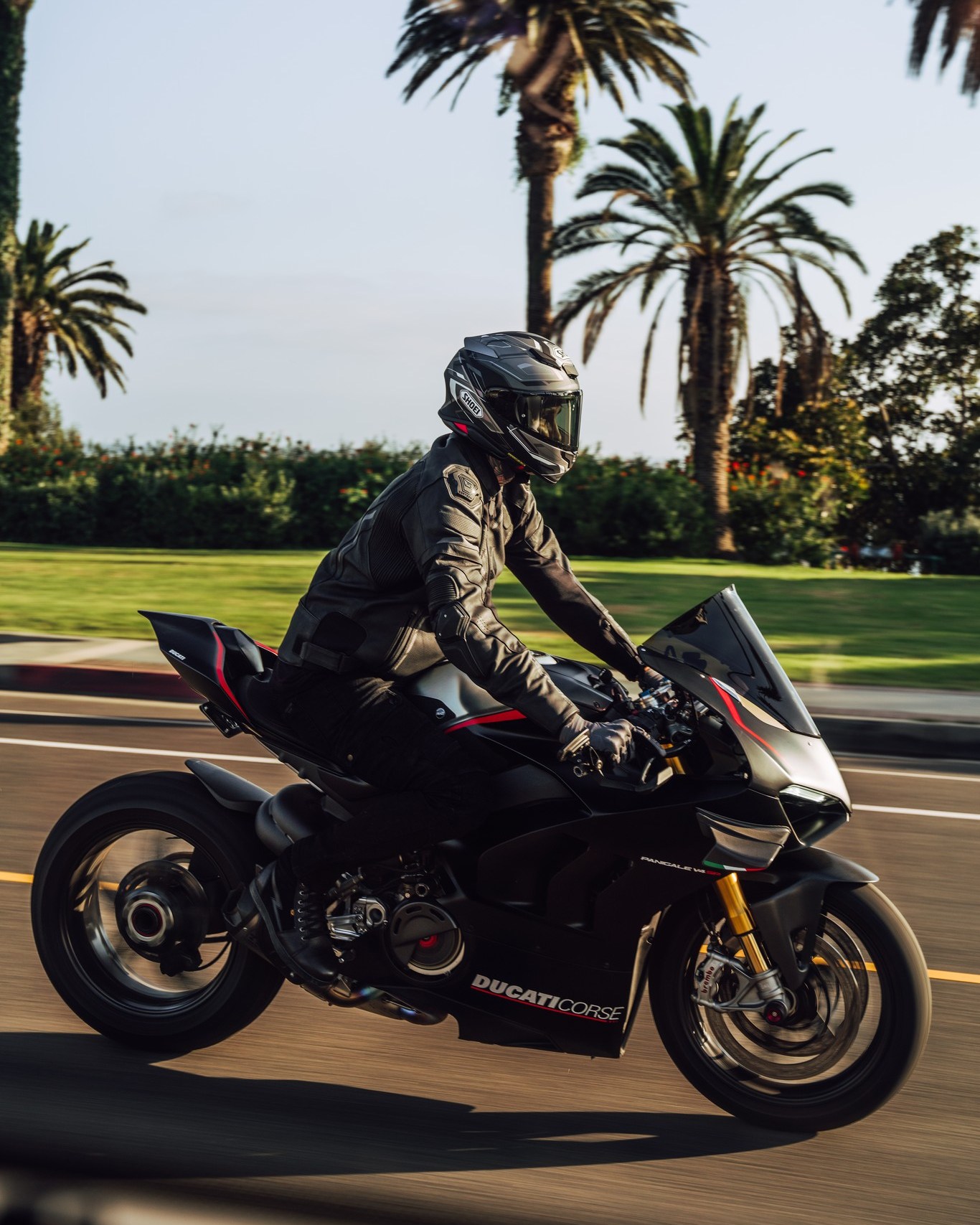
The Shoei RF-1400 rider
- You log most of your miles on backroads, highways, and city streets, with the occasional trackday weekend
- You want a quiet ride more than maximum airflow, and you’ll close vents on the freeway anyway
- You ride year-round in cold rain, hot humidity, and everything between
- You’re a sport-tourer at heart who wants race-adjacent build quality at a sane price
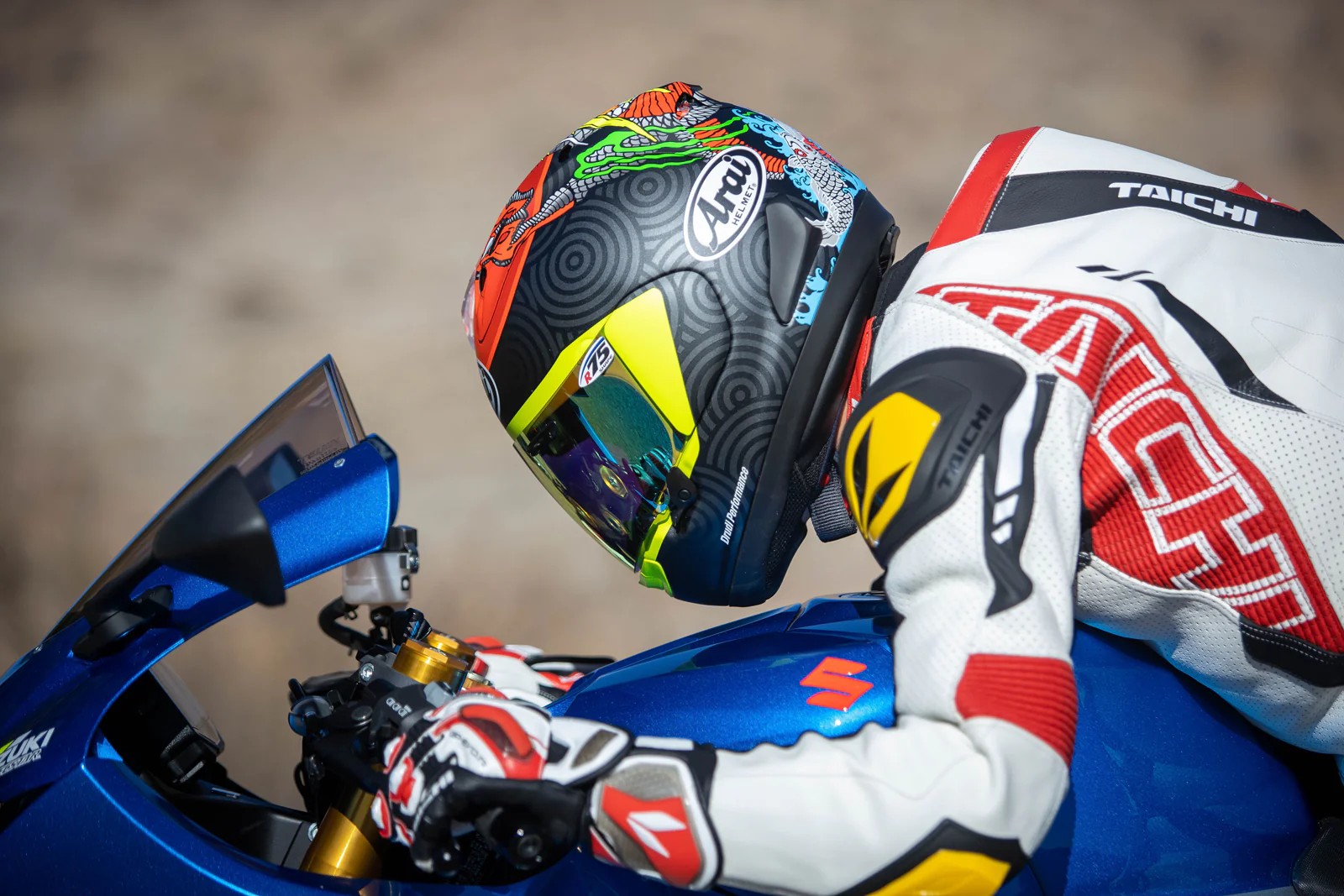
The Arai Corsair-X rider
- You spend real time on a track, or you ride a sportbike hard enough that you’re constantly in race posture
- You care about Arai’s glance-off shell philosophy and the R75 shape more than most spec-sheet items
- You want maximum ventilation when moving fast, even if it means more wind noise at lower speeds
- You want a hand-built lid you can customize through Arai’s peel-away cheek foam and dealer fitting program
What Riders Report (Hands-on & Owner Feedback)
Shoei RF-1400 owners love:
- Wind noise control. Our contributor Carl Magnusson, who has worn his RF-1400 daily for four years, calls it the quietest helmet he has ridden in. The airtight window beading, plush cheek pads, and vortex generators along the visor edges work together to keep the roar down at 75 mph.
- All-day comfort. Owners report 6-plus-hour rides without hot spots once the cheek pads break in. Carl puts it bluntly: the helmet “disappears” on his head.
- Visor system. The CWR-F2 with its center lock seals tight in heavy rain, holds detents at speed, and ships with a Pinlock EVO insert that keeps fog away in cold weather.
Shoei RF-1400 owners flag:
- Stuffy at a stop. A few owners report the helmet feels suffocating in dead-stopped traffic with all vents open. It’s fine moving; static, it can feel hot.
- No internal sun visor. By design, because Snell certification doesn’t tolerate the void an internal visor needs. You’re planning for sunglasses or a tinted shield.
- Snug cheek pads out of the box. “Chipmunk cheeks” is the recurring phrase. They break in within a couple of weeks.
Arai Corsair-X owners love:
- Ventilation at speed. Reviews and owner forums describe airflow that beats anything in the sport-touring category once you’re moving. Type 12 diffusers and eye-port vents move serious air across your scalp on hot days.
- Glance-off shell philosophy. Hand-laid Super Fiber construction with an R75 shape and lowered VAS side pods. The European-market RX-7V twin earned 5 stars from SHARP.
- Customizable interior. Adjustable temple pads, peel-away cheek foam in 5mm layers, and Arai’s dealer fitting program let you dial fit in beyond just picking a size.
Arai Corsair-X owners flag:
- Wind noise at street speeds. Independent reviews and owner posts agree it’s not a quiet helmet. Quieter than the older Corsair-V, but not in the RF-1400’s league. Earplugs are basically mandatory.
- Visor changes are fiddly. The VAS pivot system is excellent for safety reasons, but swapping shields takes practice. Reviewers describe it as over-engineered.
- Chin vent design. A long-running complaint across Corsair generations: the chin vent can close itself when bumped.
- Fogging at a stop. Some owners report the shield fogs the moment they stop moving, even with Pinlock.
Not Sure What Size to Order? Get Our Gear Fit Guide.
Sizing charts for helmets, jackets, gloves & boots — with brand-specific fit notes and pro tips so your gear fits right the first time.
- Helmet sizing by brand
- Jacket, glove & boot charts
- Head shape guide
- Between-sizes tips
Head-to-Head by Category
Noise at Highway Speeds
This is the biggest functional difference, and it goes one way: the RF-1400 wins clearly.
Shoei built the RF-1400 around noise reduction. Spring-loaded base plates, airtight window beading, vortex generators on the visor edges, plush cheek pads, and a sealed visor lock add up to a helmet you can ride a sportbike on the freeway without raising your voice on a Bluetooth call.
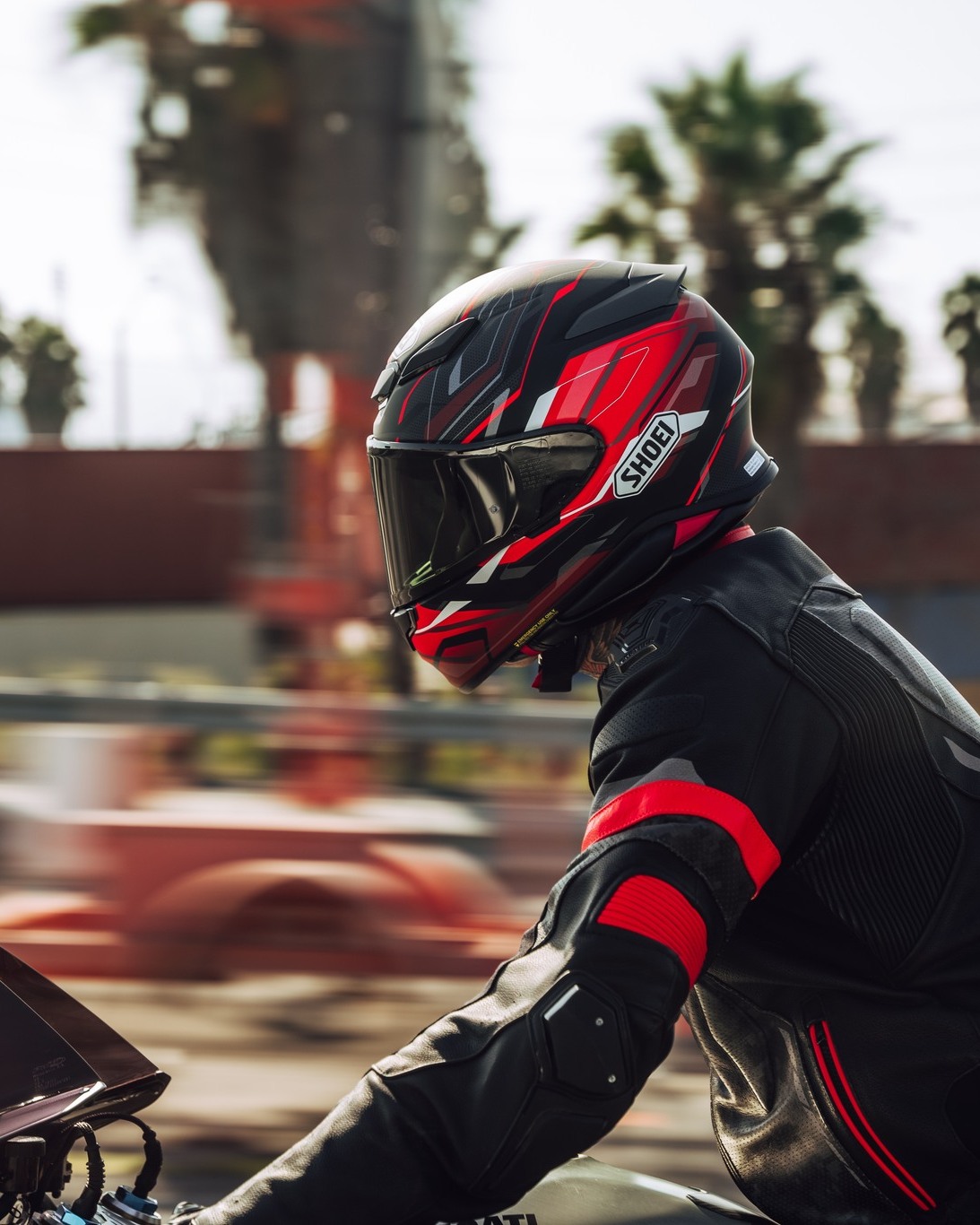
The Corsair-X takes the opposite approach. Arai prioritized ventilation and shell shape, and more vents working harder means more turbulence and more noise. Independent tests put it in the average-to-slightly-loud category for a premium full-face. You can quiet it down with vents closed and the chin curtain seated, but it’s not the Shoei’s league. If you spend hours on the highway, this category alone may tip you toward the RF-1400.
Ventilation Under Sport Riding
Reverse the noise verdict. The Corsair-X wins clearly once you’re moving fast. Arai’s Type 12 diffusers are 20mm longer than the previous Corsair-V design and take in 19% more air. Add eye-port vents (a feature you usually only see on race helmets), seven exhaust ports, and a chin vent positioned to scavenge air through the chin bar. The helmet is engineered to keep a hard-riding rider cool in a tuck.
The RF-1400 ventilates well for a street helmet. Six intakes, four exhaust outlets, three-position shutters. It’s enough for Carl Magnusson in Philadelphia summers and a fast canyon run. It’s not enough to match the Corsair-X under sustained sport pace in 95°F heat.
Shell Construction and Safety Philosophy
Both helmets are hand-laid composite fiberglass shells with multi-density EPS liners and emergency cheek pad release systems. Both are Snell certified and have 5-star SHARP ratings on their European-market twins (the RF-1400 as the Shoei NXR2, the Corsair-X as the Arai RX-7V). Either will protect your head in a serious crash.
The difference is philosophy. Shoei builds a rounded shell tuned in their own wind tunnel, with the AIM+ matrix designed to flex and absorb. Arai builds an even rounder R75-spec shell built around the idea that the helmet should glance off objects in a tumble, pairing a harder outer shell with softer multi-density EPS to spread impact forces.
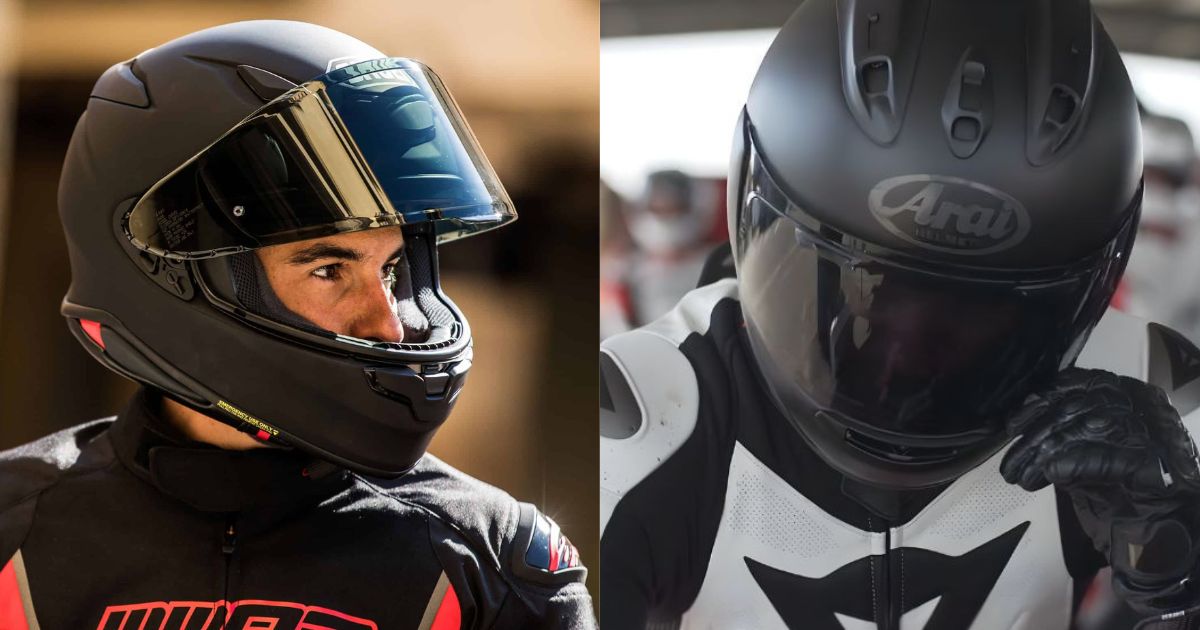
Neither philosophy is objectively better; they’re different bets. The Corsair-X is built for harder, multi-impact crashes (the kind you see in racing). The RF-1400 is built for the broader range of single-impact street and trackday crashes.
The RF-1400 carries the newer Snell M2025D certification while the Corsair-X is on Snell M2020; both are current. The Corsair-X is lighter on paper (3.55 lb vs 3.64 lb), but the difference is small enough that most riders won’t feel it. Arai’s five shell sizes (vs Shoei’s four) means slightly less “bobblehead” effect at the extremes if you wear an XS or 2XL.
Face Shield and Comms Integration
Both helmets give you a wide eye port, distortion-free optics, and a Pinlock anti-fog insert in the box. Where they differ is shield operation. Shoei’s center-mounted lock is one of the easiest-to-use designs out there with gloves on: thumb to open, snap to close. Arai’s VAS shield is a marvel of engineering and a pain to use. The shield is captured in side pods that have to be released with a lever before you can swap. The low pivot improves side-impact safety scores, but the average rider rarely swaps shields, so you paid for engineering you don’t use.
For Bluetooth comms, both have molded speaker recesses and removable ear pads. The RF-1400 has slightly deeper, more precisely shaped pockets (Shoei updated this generation specifically for comms) and a cleaner side-mount profile.
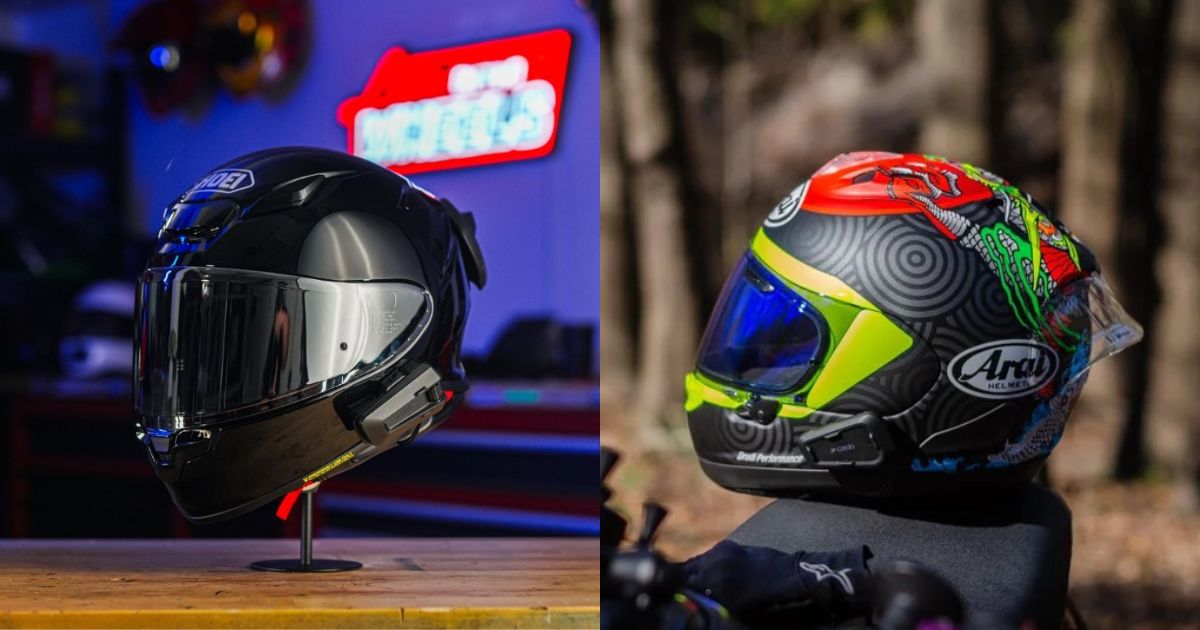
Neither helmet has an internal drop-down sun visor; Snell certification doesn’t accommodate the void one would require. Sunglasses, a tinted shield, or a photochromic shield in both cases.
Value for Money: Is the Upgrade Worth It?
Solid-color pricing in May 2026 sits at about $679.99 for the RF-1400 and $929.95 for the Corsair-X, a $250 gap. Graphics stretch it further: RF-1400 colorways run $750-$800, Corsair-X graphics run $1,069 to $1,199. Prices vary by retailer; we anchored to RevZilla.
Here’s what the extra $250 buys you on the Corsair-X side:
- Hand-laid PB e-cLc shell with R75 glance-off geometry
- Type 12 diffusers and eye-port vents tuned for trackday airflow
- Five shell sizes instead of four
- Peel-away cheek pad foam in 5mm layers for fine-tuning fit
- VAS shield with lower pivot point and improved Snell side-impact performance
Here’s what the RF-1400 wins for $250 less:
- Significantly better wind noise control
- Easier shield operation with center lock
- Cleaner Bluetooth comm integration
- Snell M2025D certification (the newer Snell standard)
- A more refined daily-driver experience
Spend the extra $250 if you ride hard in a tuck, do real trackdays, or specifically want Arai’s shell philosophy. Save the $250 if you ride mixed street, value quiet, or you’d rather put the difference toward a Sena 50S, a tinted shield, and a tank of premium fuel.
Good Alternatives
Shoei X-Fifteen (around $900). Shoei’s actual race helmet, with race-tuned ventilation and aerodynamics. Pick this for trackday focus inside the Shoei lineup.
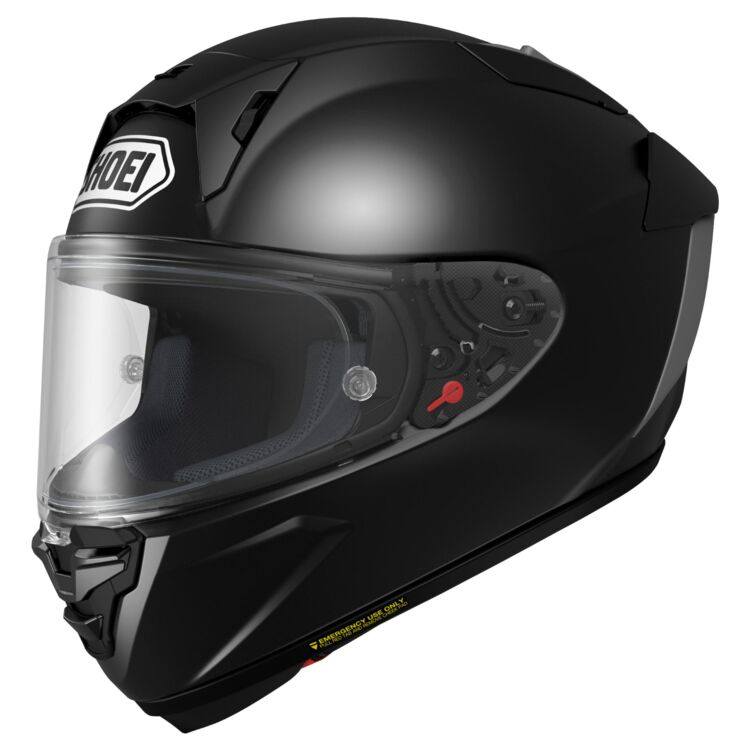
A race-bred sport helmet with Shoei’s AIM+ shell, refined aerodynamics, strong ventilation, and DOT/Snell certification for serious street and track riders.
- Exceptional aerodynamics at speed
- Strong ventilation for track riding
- Wide visor gives clear upward view
- Adjustable liner helps fine-tune fit
- Heavier than many carbon helmets
- FIM approval varies by market/version
Arai Quantum-X (around $770-$900). Arai’s intermediate-oval all-rounder. Less aggressive than the Corsair-X, easier to live with on the street. Our Arai Regent-X vs Quantum-X comparison goes deeper.
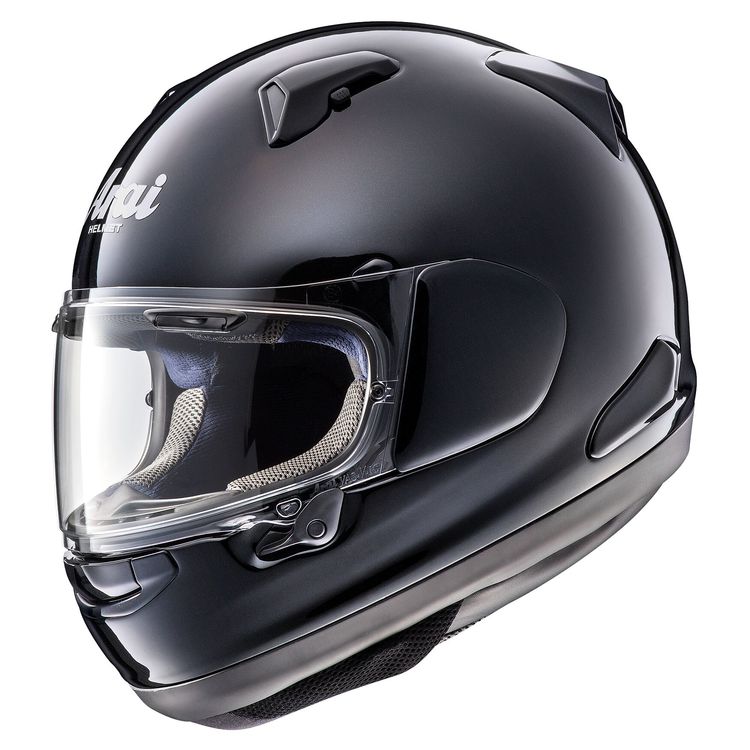
Arai Quantum-X Helmet delivers premium protection and comfort for riders with a round-oval head shape.
- Snell 2025 and DOT approved for top-tier safety
- Advanced ventilation system for superior airflow
- Removable, odor-resistant liner for a fresh, customized fit
- Premium price may not fit all budgets
AGV K6 S (around $500-$600). Ultra-light composite shell with strong ventilation and Pinlock included. ECE/DOT only, no Snell. Pick this if weight is your top priority.
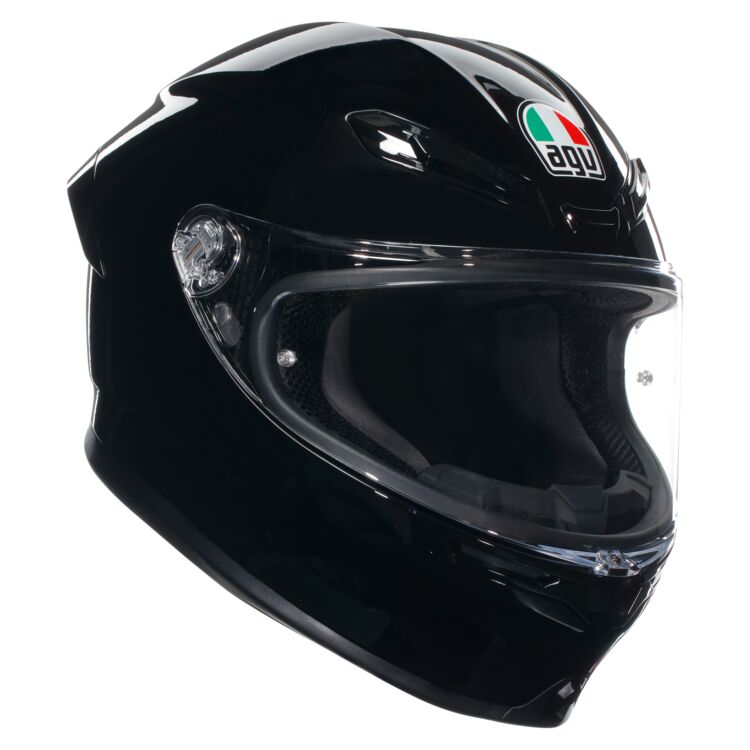
A lightweight and aerodynamic helmet designed for ultimate comfort and protection, inspired by MotoGP technology.
- Ultra-light composite shell reduces fatigue
- 190° field of view enhances road awareness
- Aerodynamic design with low wind noise
- Excellent ventilation with multi-vent airflow
- Eyeglass-friendly interior and comms-ready
- Vent sliders can be fiddly with gloves
- Compact sizing—double-check shell fit
FAQ
Is the Arai Corsair-X really a track helmet I can wear on the street?
Yes, but understand what you’re choosing. The Corsair-X is built for sustained high-speed riding in a tuck, where airflow matters more than wind noise. You can wear it daily, but you’ll notice the noise on the highway, and at low speeds it feels less refined than something purpose-built for the street like the RF-1400.
Will my Sena or Cardo fit in either helmet?
Yes. Both have molded speaker recesses and removable ear pads. The RF-1400 has a slight edge for clean integration because Shoei designed the cheek pad pockets around modern comm units.
Which one fits a round head better?
Neither, honestly. Both are designed for intermediate-oval head shapes. If your head is genuinely round, look at the Arai Quantum-X (built for slightly rounder heads in the Arai lineup) or the HJC RPHA 71. If you’re not sure of your head shape, use our helmet size calculator and try both helmets in person before buying.
How long should I expect either helmet to last?
Manufacturers recommend replacing a helmet every 5-7 years regardless of use, because EPS foam and adhesives degrade over time. Both Shoei and Arai back their helmets with 5-year warranties. Carl Magnusson has four years on his RF-1400 and reports everything still feels like new. Replace either helmet after a crash, full stop.
Why is the Corsair-X so much more expensive than the RF-1400?
Two reasons. The Corsair-X uses a more labor-intensive hand-laid shell (PB e-cLc with F1-derived synthetic fibers) and Arai’s R75 glance-off geometry, which adds manufacturing complexity. And Arai’s flagship status and racing pedigree carry a brand premium. Whether the difference is justified depends on whether you’ll actually use the trackday-grade features.
Best for quiet sport-touring street use
|
Best for hard sport and trackday riding
|
One of the top motorcycle helmets for street riding due to its incredible safety ratings, solid build construction, versatile shell for street and track riding, and reasonable price. Long term review here. | Arai’s flagship race helmet built for maximum protection and high-speed stability. Delivers aggressive airflow, premium materials, and a locked-in fit for serious riding. |
|
|
|
|
One of the top motorcycle helmets for street riding due to its incredible safety ratings, solid build construction, versatile shell for street and track riding, and reasonable price. Long term review here.
- Staff pick at Revzilla
- Quietest helmet on the market
- Excellent build quality
- Thick noise-sealing cheekpads
- Visor seal built like Fort Knox
- Snell certified for track use
- Lacking touring comfort features like drop down sun shield
Arai’s flagship race helmet built for maximum protection and high-speed stability. Delivers aggressive airflow, premium materials, and a locked-in fit for serious riding.
- Race-level protection with premium shell materials
- Excellent airflow for hot, aggressive riding
- Stable at speed with minimal lift or buffeting
- Top-tier build quality and finish throughout
- Tight fit makes daily on/off less convenient
- Wind noise higher than touring-focused helmets