
Shoei Hornet X2 vs Klim Krios Pro: Which Is Better for Adventure Riding?
 Evan Rally
left for contents
The Shoei Hornet X2 and Klim Krios Pro both sit at the top of the adventure helmet market, but they get there differently. The Hornet X2 bets on a fiberglass AIM+ shell and Snell certification for planted, quiet highway stability. The Krios Pro goes all-in on carbon fiber and Koroyd for featherweight off-road agility. With both priced within about $50 of each other (as of early 2026), the decision comes down to how you ride, not how much you spend. Arai’s XD-5 is another top-of-class ADV option – our Arai XD-5 vs Klim Krios Pro comparison covers the Krios Pro against that rival.
Buy the Shoei Hornet X2 if you:
- Spend most of your saddle time on highways and want a quiet, stable helmet that barely moves at speed.
- Want Snell M2020D + DOT certification and the peace of mind that comes with it.
- Have an intermediate oval head shape and want one of four shell sizes dialed to your fit.
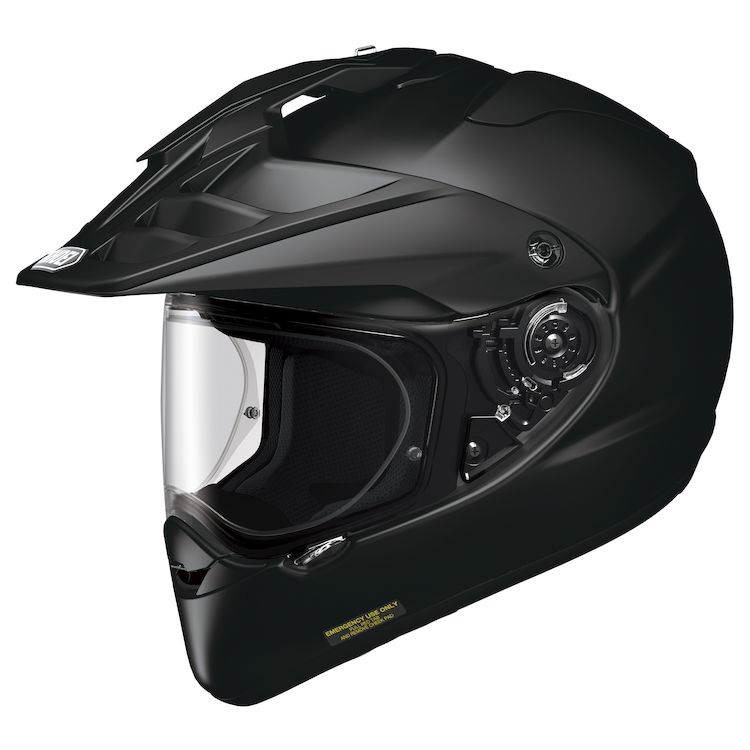
Shoei Hornet X2 Adventure Helmet delivers the perfect blend of on-road comfort and off-road capability for serious adventure riders.
- Lightweight AIM+ shell for superior protection and aerodynamics
- Advanced ventilation system for optimal airflow in all conditions
- Emergency Quick-Release System for enhanced rider safety
- Runs small, sizing up is recommended
Buy the Klim Krios Pro if you:
- Ride technical off-road sections where every ounce on your head matters.
- Want a Transitions photochromic visor, a clear shield, and a Pinlock insert included in the box.
- Need four ride modes (street, adventure, dirt, trail) for true multi-surface versatility.
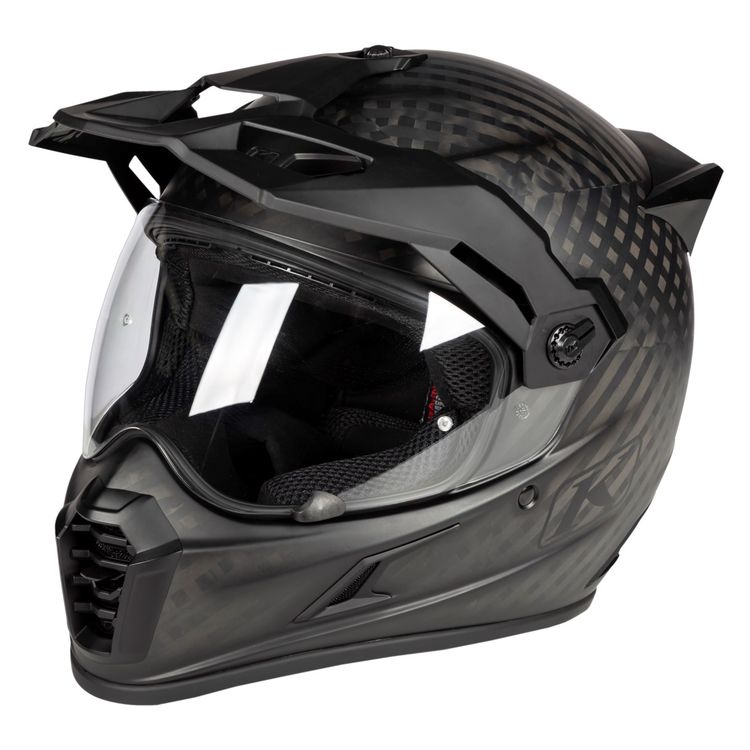
Lightweight adventure helmet with versatility for street, light adventure, and hard enduro riding.
- Carbon fiber shell for ultra-lightweight durability
- Quick release (no tools) shield and visor. Supports goggles.
- Big forehead vent
- Transitions photochromic face shield included
- DOT and ECE 22.06 certified
- Noticeable road noise at high speeds
- Transitions lens can be sluggish entering tunnels
Bottom line: The Krios Pro is worth the extra ~$50 if you prioritize weight and bundled extras. The Hornet X2 earns its price through quieter highway performance, Snell certification, and four shell sizes for a more precise fit. If those Hornet X2 strengths appeal but you’d trade the fixed chin bar for modular touring convenience, our Hornet X2 vs Schuberth E2 comparison runs through that trade.
At-a-Glance: Specs & Price
| Specs | Shoei Hornet X2 | Klim Krios Pro |
|---|---|---|
| Weight | 3.99 lbs / ~1,810 g (size M) | ~3.3–3.4 lbs / ~1,350–1,500 g (varies by size) |
| Fit/Shape | Intermediate oval, 4 shell sizes (XS–XXL) | Runs slightly large, 2 shell sizes (SM–MD, LG–3XL) |
| Shell/Materials | AIM+ (fiberglass + organic fibers), dual-layer multi-density EPS | Hand-laid carbon fiber, Koroyd + EPS |
| Safety/Cert | DOT + Snell M2020D | DOT + ECE 22.06 |
| Ventilation | Upper, chin, and rear exhaust vents; channels in EPS liner | Adjustable 3-position chin vent, forehead vent; Koroyd airflow channels |
| Shield/Visor | CNS-2 shield + V-460 peak; Pinlock insert included | Transitions photochromic shield + clear shield + Pinlock insert included |
| Comms Readiness | Recessed speaker pockets; clamp-on/adhesive compatible | Sena 10U compatible; Fidlock magnetic chin strap |
| Warranty | 5 years (from purchase) / 7 years (from manufacture), whichever is first | 5 years + Gear Protection Guarantee (crash replacement within 5 years) |
| Price (typical) | $700–$720 (as of early 2026) | $725–$750 (as of early 2026) |
Who Each Product Is Built For
The Shoei Hornet X2 Rider
- You clock long highway days on a GS, V-Strom, or Ténéré and want a helmet that stays planted behind a tall windscreen. The V-460 peak and low-drag shell reduce lift and buffeting where other ADV lids start wobbling.
- You’re particular about fit. Four shell sizes across XS–XXL, plus 3D-shaped cheek pads available in multiple thicknesses, let you dial in exactly how the helmet sits on your head. Use our helmet size calculator to start narrowing it down.
- You value quiet over all else. Owner reports consistently rank the Hornet X2 among the quietest ADV helmets available. The cheek pad seal, chin curtain, and smooth chin bar shape keep wind noise manageable. More on the X2 in our Shoei helmet breakdown.
- You ride in mixed conditions but rarely stray into gnarly single-track. The Hornet X2 handles light dirt and gravel without complaint, but it’s at its best eating up tarmac miles.
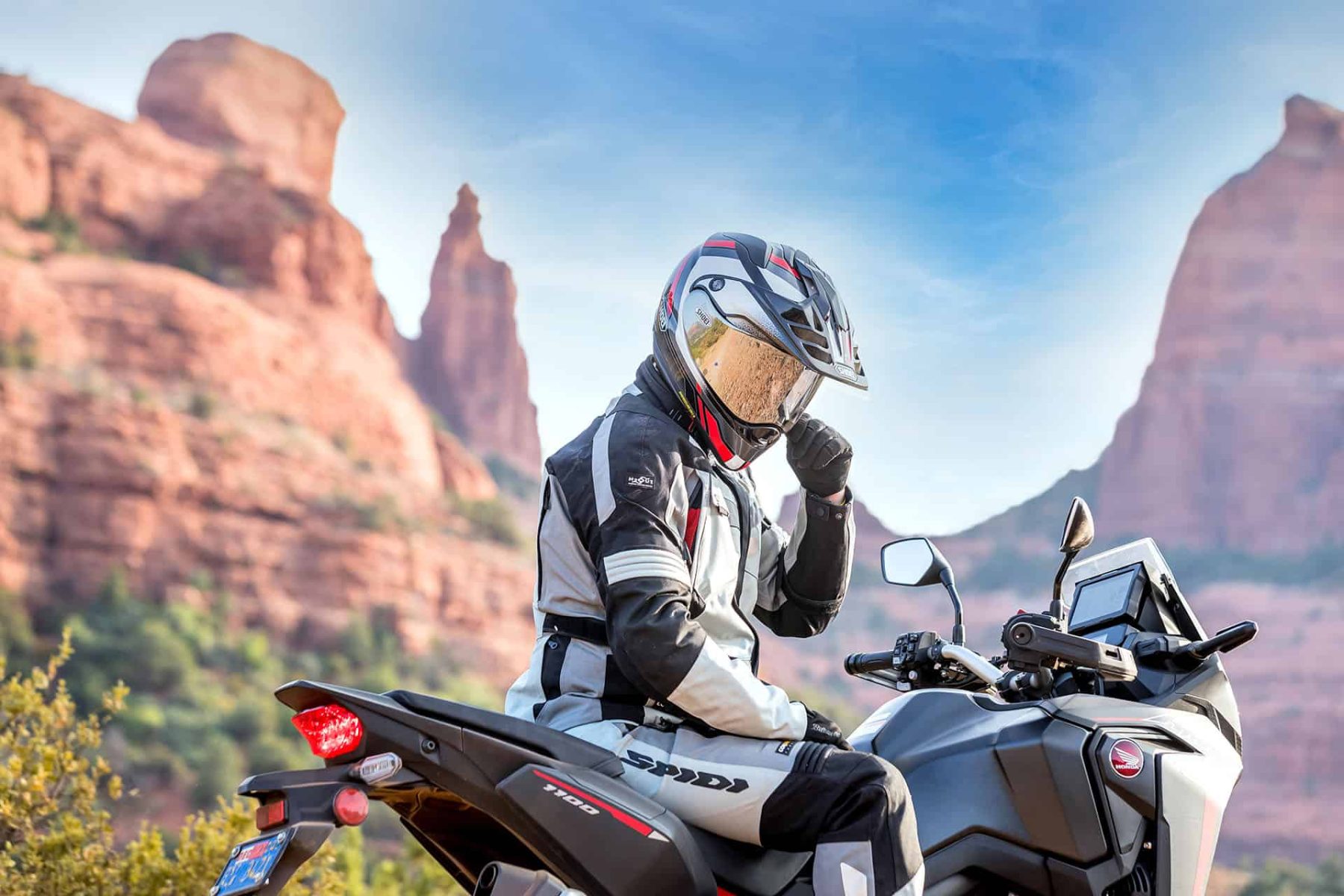
The Klim Krios Pro Rider
- You split your time between highways and technical off-road and need a helmet that doesn’t punish your neck by mid-afternoon. At roughly 3.3 lbs, the Krios Pro is about 0.6 lbs lighter than the Hornet X2. That gap shows after hour four of constant head movement on single-track.
- You ride through variable light conditions and hate swapping shields. The included Transitions photochromic visor darkens in bright sun and clears in shade. You also get a clear shield and Pinlock insert, all in the box, saving you $100–$150 over buying those extras separately.
- You want to swap between street, adventure, dirt, and trail configurations without tools. Quarter-turn mechanisms let you pull the peak and shield in seconds, so you can go from a road setup to a goggle-ready dirt setup at a trailhead.
- You ride in hot climates where ventilation matters as much as protection. The Koroyd liner is 95% air by structure, which means airflow through the helmet is less restricted than a traditional EPS-only design.
What Riders Report (Hands-on & Owner Feedback)
Hornet X2 owners love:
- Highway quiet. Long-term owners call it one of the quietest ADV helmets they’ve worn. Several report comfort without earplugs up to about 60 mph. Check our tips for making any helmet quieter.
- Fit consistency. Shoei’s intermediate oval shape works for a wide range of heads. If you know your Shoei size, you can buy with confidence.
- Peak stability. The V-460 stays planted at highway speeds, unlike many ADV peaks that catch wind during shoulder checks.
- Shield quality. The CNS-2 seals tightly, ratchets positively, and provides a wide, distortion-free field of view.
Not Sure What Size to Order? Get Our Gear Fit Guide.
Sizing charts for helmets, jackets, gloves & boots — with brand-specific fit notes and pro tips so your gear fits right the first time.
- Helmet sizing by brand
- Jacket, glove & boot charts
- Head shape guide
- Between-sizes tips
Hornet X2 owners flag:
- Weight. At nearly 4 lbs, riders doing serious off-road notice the mass during constant head movement.
- Low-speed ventilation. Excels at speed but moves less air in stop-and-go. Removing the chin curtain helps but trades noise.
- No internal sun visor. Many competing ADV helmets include one in 2026. The Hornet X2 does not.
Krios Pro owners love:
- Weight savings. The most mentioned positive. One reviewer rode 8+ hour days across Ecuador and credited the light weight for avoiding neck strain.
- Bundled Transitions visor. A $100+ add-on elsewhere, included here. Works well in most conditions with a slight delay from bright sun to dark tunnels.
- Quick-swap versatility. The tool-free quarter-turn system for the peak and shield earns high marks from road-to-dirt riders.
- Fidlock strap. Riders in cold climates or bulky gloves praise the magnetic closure.
Krios Pro owners flag:
- Noise. The most common criticism. The Koroyd’s open-cell structure lets in more wind noise than dense EPS. One test measured roughly 98 dB inside. Plan on earplugs at highway speeds.
- Fit runs large, only 2 shell sizes. Several owners sized down. Two shells across the full range means the helmet can look bulky on smaller heads.
- Transitions visor quirks. Slightly too dark for night riding and patchy when the peak casts partial shadow.
Head-to-Head by Category
Weight and Fatigue
At roughly 3.3 lbs versus the Hornet X2’s 3.99 lbs, the Krios Pro saves over half a pound. Strap that to your head for 6 hours of mixed terrain riding and you’ll feel the difference.
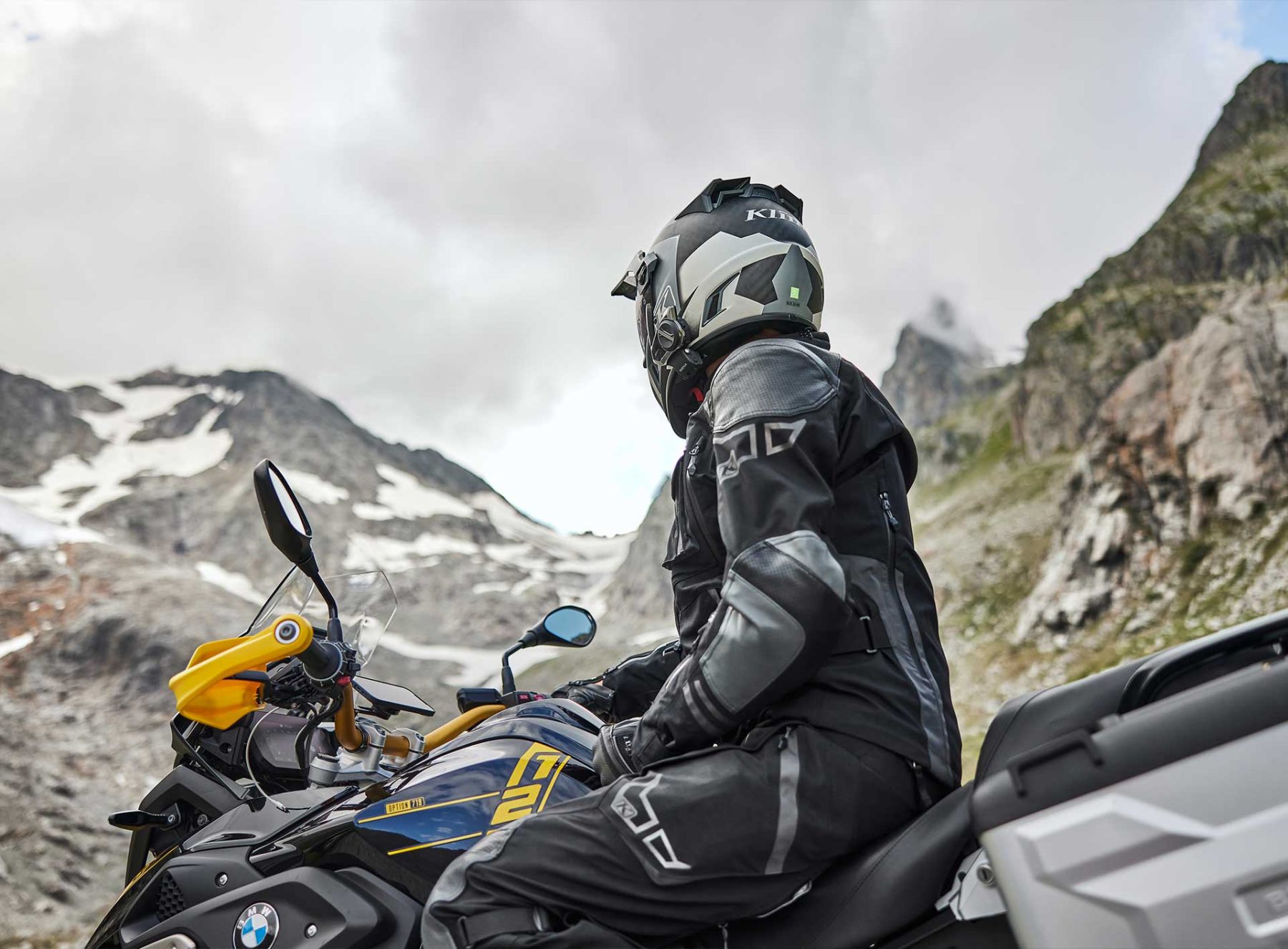
The Hornet X2 compensates with excellent weight distribution. Shoei tuned the balance so the mass spreads evenly, and riders report it feels lighter than the scale suggests. But during technical off-road sections with constant head movement, the Krios Pro has a meaningful advantage. If your riding is 80% highway, the Hornet X2’s weight is manageable. If you lean off-road, the carbon fiber shell earns its keep. If carbon’s weight saving feels essential, Nexx’s X.WED3 carbon goes lighter still at a lower price – our Hornet X2 vs Nexx X.WED3 comparison covers that composite-vs-carbon decision.
Noise at Highway Speeds
The Hornet X2 wins this one convincingly. The sealed chin bar, chin curtain, and V-460 peak keep wind roar lower than most ADV helmets.
The Krios Pro isn’t loud by adventure standards, but the Koroyd’s open-cell structure doesn’t dampen sound as well as dense EPS. For long highway stretches without earplugs, the Hornet X2 leaves you fresher. Either way, earplugs are recommended. See how we compared the Hornet X2 against the Arai XD-5 for more on noise.
Ventilation in Heat
The Hornet X2 uses a chin vent, forehead vent, and top crown vent feeding channels through the EPS liner. It moves air well at speed but drops off at low speeds. Removing the chin curtain helps.
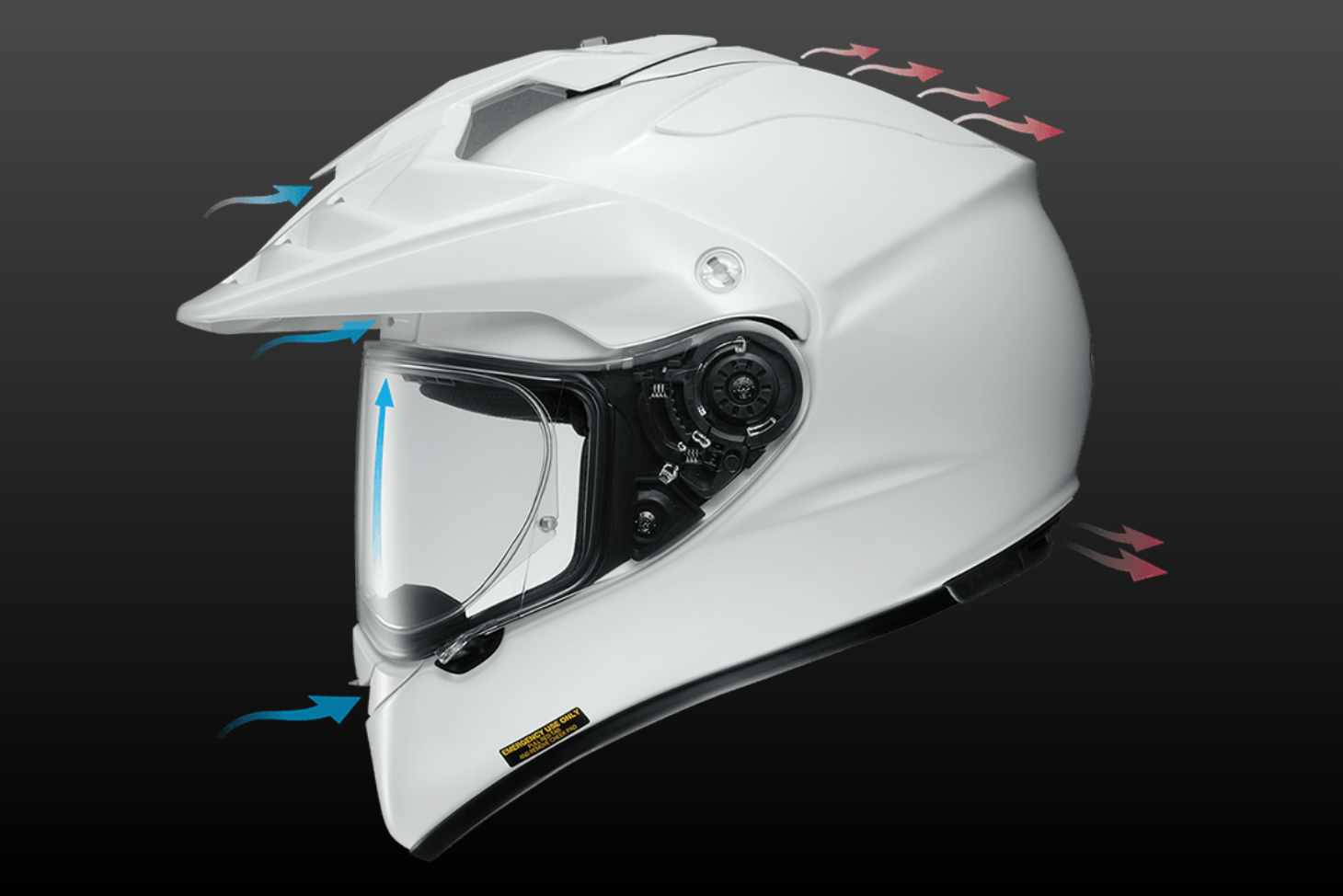
The Krios Pro’s Koroyd liner is 95% air by structure, so airflow is less restricted than traditional EPS. Combined with a three-position chin vent and forehead vent, it flows more air at low speeds. For slow off-road grinds in heat, the Krios Pro wins. At highway pace, both perform well.
Shield and Visor System
The Krios Pro leads on out-of-box value: Transitions photochromic shield, clear anti-scratch shield, and Pinlock insert, all included. The Hornet X2 comes with a CNS-2 clear shield and Pinlock but no photochromic option and no internal sun visor.
The Hornet X2 fights back on sealing. The CNS-2 gasket pulls the shield tight when closed, creating a strong barrier against wind, rain, and dust. The Krios Pro’s shield works well, but owners note the seal isn’t as tight. For variable-light riding, the Krios Pro wins. For all-weather sealing, the Hornet X2.
Build Quality and Fit Precision
Shoei’s craftsmanship shows throughout the Hornet X2. Four shell sizes keep proportions right across XS–XXL. The liner, shield mechanism, and E.Q.R.S. cheek pads all feel refined.
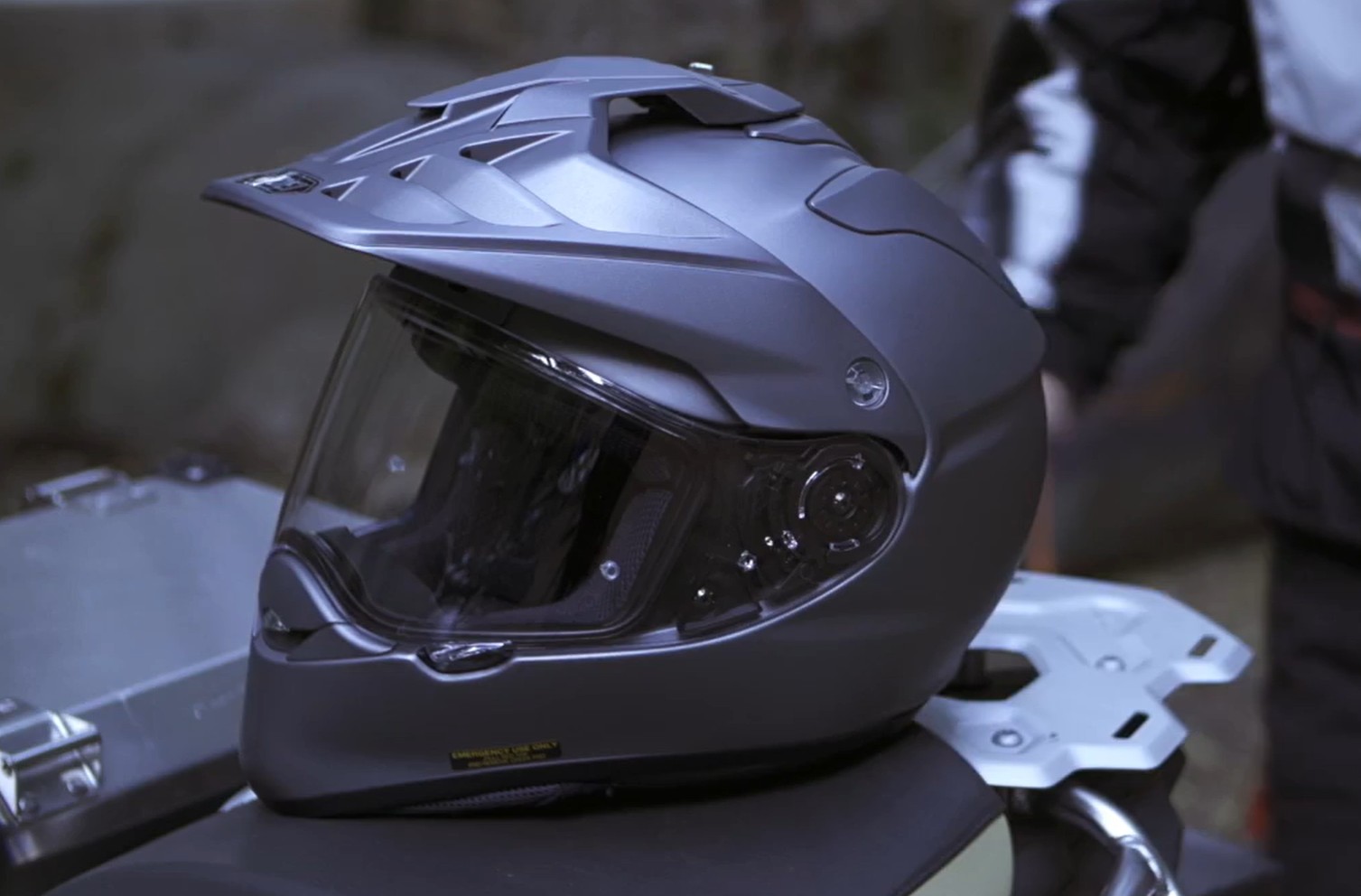
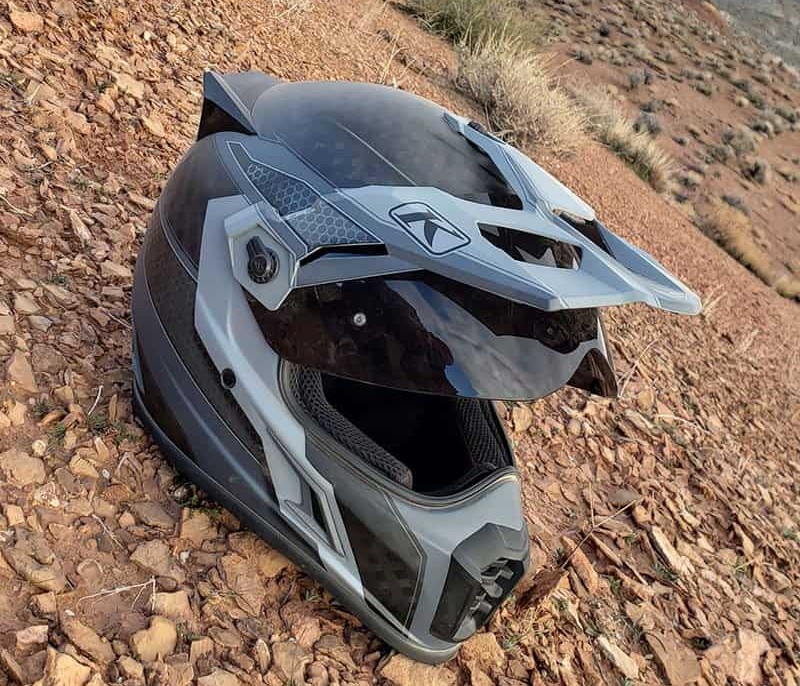
The Krios Pro is well-made with striking carbon fiber weave and a practical Fidlock magnetic strap. But two shell sizes means less tailored fit. Riders on the boundary between shells report mixed results. If fit precision matters most, the Hornet X2 wins. Use our helmet size calculator before buying either.
Safety Certifications
Both meet DOT. The Hornet X2 adds Snell M2020D (more demanding impact tests, including repeated strikes to the same spot). The Krios Pro adds ECE 22.06 (Europe’s latest standard, includes rotational impact testing). Neither is objectively “better” since they test different things. Independent lab data hasn’t been published for the Krios Pro’s Koroyd liner yet.
Value for Money: Is the Extra $50 Worth It?
The price gap here is narrow. The Hornet X2 runs $700–$720, the Krios Pro $725–$750 (as of early 2026). For that extra $30–$50, the Krios Pro gives you a carbon fiber shell (half a pound lighter), a Transitions photochromic visor (worth $80–$120 alone), a clear spare shield, and four ride mode configurations.
The Hornet X2 counters with Snell certification, four shell sizes, measurably lower highway noise, and Shoei’s handmade-in-Japan build quality.
Spend the extra on the Krios Pro if: Weight, bundled tech, and off-road versatility top your list.
Take the Hornet X2 if: Highway quiet, Snell certification, and precise fit matter most.
For a broader look at the ADV helmet category, see our best adventure helmets roundup.
Good Alternatives
Arai XD-5 (~$1,000): Triple certified (Snell + ECE 22.06 + DOT), the quietest ADV helmet available, and Arai’s custom-adjustable liner. Worth it if noise suppression is your top priority. Check out this in-depth review of this helmet.
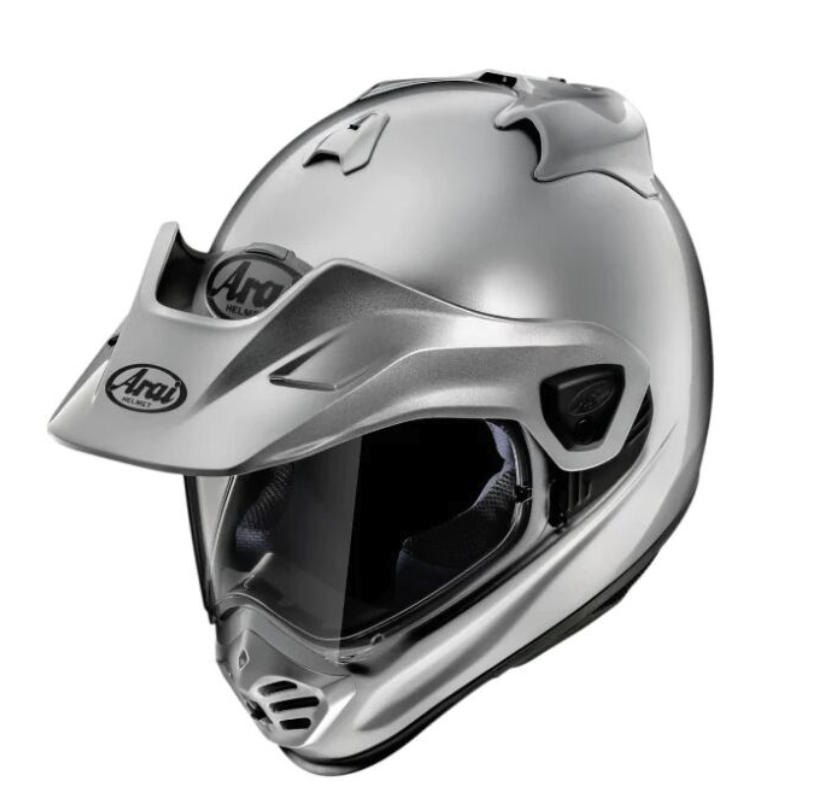
The sequel to the legendary XD-4 helmet, this lid improves in every way from its round shell design to its versatility and comfort whether you're thrashing trails or cruising on the highway.
- Quietest ADV helmet
- Removable peak
- Tons of ventilation
- Can use with googles (visor can be removed)
- DOT and Snell approved (ECE in Europe)
- None - one of the best ADV and touring helmets
Nexx X.WED3 (~$450–$660 composite, $775–$900 carbon): Seven intake vents, internal sun visor, and four ride configurations at a lower price. Strong value pick. I own this helmet, see my personal review here.
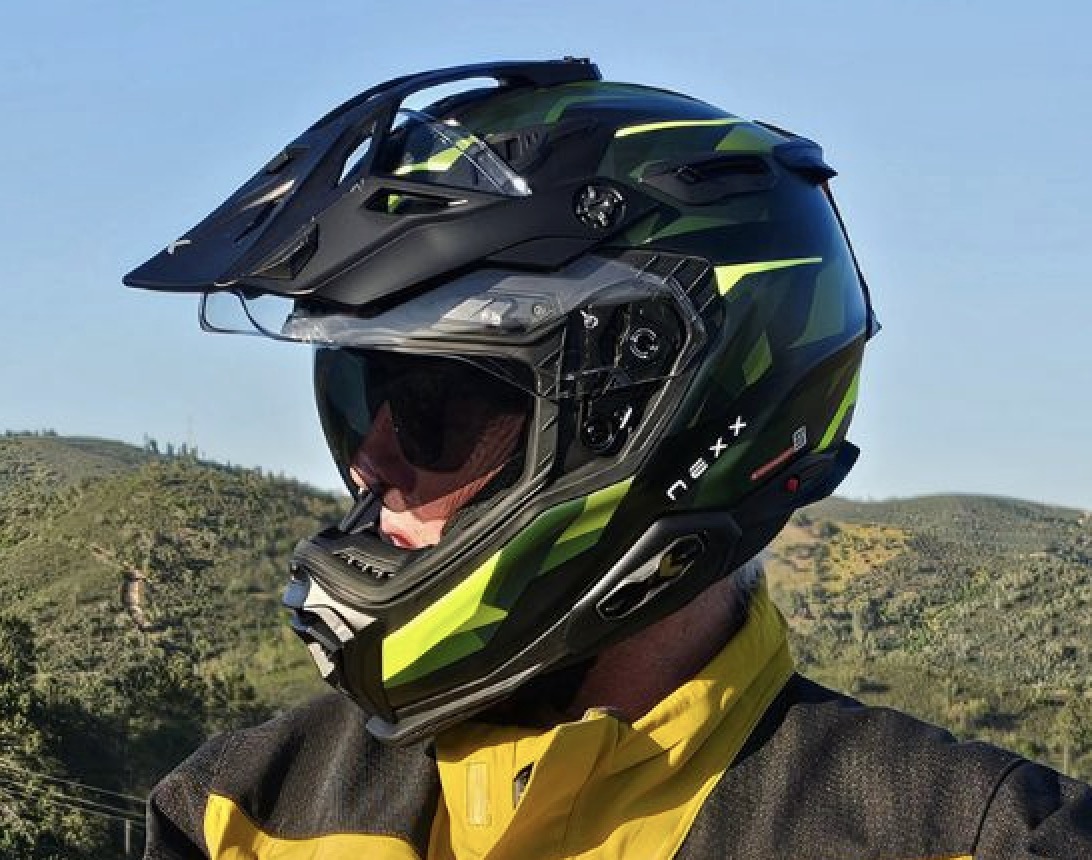
A premium helmet at midrange price: advanced composite or full carbon fiber shell, flexible ventilation system, integrated comms, and versatile street + off-road design that doesn't require tools to switch. Long term review here.
- Big eyeport
- Lightweight
- Anti-vibration system
- So popular it's often out of stock
Scorpion EXO-AT960 (~$300–$315): Modular chin bar, drop-down sun visor, DOT + ECE at less than half the price. Heavier, but modular convenience is hard to beat. Our Krios Pro vs AT960 comparison.

A do-everything helmet, it's as comfortable on trails as the highway - though not as solid as premium competitors like the Arai XD-5. One of the rare modular ADV helmets, it's also it's DOT and ECE approved.
- Modular chinbar (rare in ADV helmet)
- Removable peak
- Decent airflow
- Drop down sun shade
- DOT and ECE 22‑06 approved
- Susceptible to visor leaks and fogging in heavy rain
- Sun peak vibrates noticeably at highway speeds
FAQ
Is the Shoei Hornet X2 a quiet helmet?
Yes. Owners and reviewers consistently rank it among the quietest ADV helmets available. The sealed chin bar, chin curtain, and aerodynamic V-460 peak all reduce wind noise. You should still wear earplugs on long rides, but it’s noticeably quieter than most dual-sport competitors.
Does the Klim Krios Pro work with Cardo units?
Klim designed it for Sena 10U integration, but owners have mounted Cardo PackTalk units with adhesive mounts successfully. The speaker recesses aren’t as deep as some helmets, so you may need thinner speakers or pads. Check your Cardo model’s mounting requirements before buying.
Can you use goggles with both helmets?
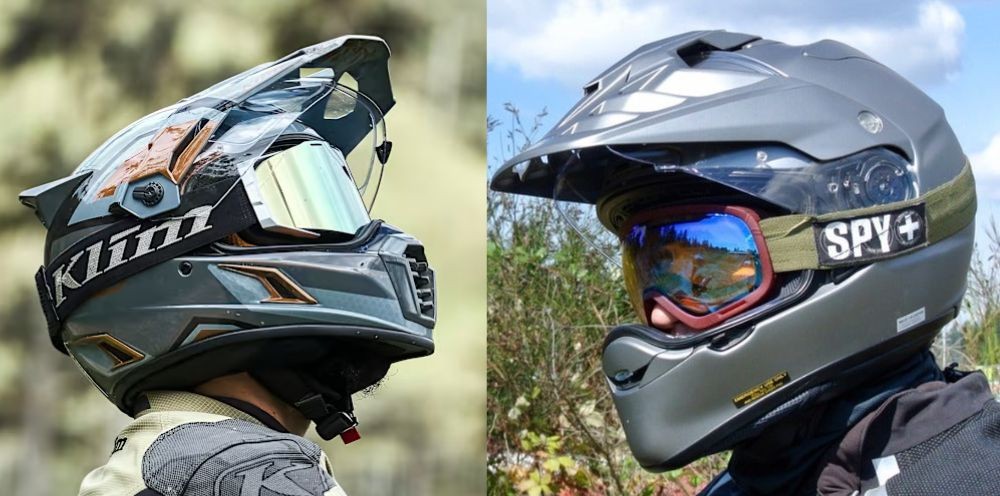
Yes. Both accommodate goggles with the shield removed. The Krios Pro has a dedicated “dirt” ride mode with a goggle strap guide. The Hornet X2 has a wide eye port and goggle groove, though the swap is less streamlined than the Krios Pro’s quarter-turn system.
Which helmet fits better for larger heads?
The Hornet X2 goes up to XXL with four shell sizes, keeping proportions reasonable even in larger sizes. The Krios Pro goes to 3XL but uses only two shells, so bigger sizes can look bulky. If you’re XL or above, try both on.
Are Koroyd helmets actually safer than EPS?
Klim claims Koroyd absorbs 48%–78% more energy than EPS and performs consistently across temperatures where EPS can harden or soften. Independent lab data hasn’t been published for the Krios Pro yet. Both helmets meet rigorous standards, so either provides strong crash protection.
How long do these helmets last?
Both carry 5-year warranties, and manufacturers recommend replacement after 5 years of use. Klim also offers a Gear Protection Guarantee that replaces your helmet free if you crash within 5 years, a strong perk for ADV riders pushing into riskier terrain.
Best for quiet highway touring
|
Best for lightweight off-road versatility
|
Shoei Hornet X2 Adventure Helmet delivers the perfect blend of on-road comfort and off-road capability for serious adventure riders. | Lightweight adventure helmet with versatility for street, light adventure, and hard enduro riding. |
|
|
|
|
Shoei Hornet X2 Adventure Helmet delivers the perfect blend of on-road comfort and off-road capability for serious adventure riders.
- Lightweight AIM+ shell for superior protection and aerodynamics
- Advanced ventilation system for optimal airflow in all conditions
- Emergency Quick-Release System for enhanced rider safety
- Runs small, sizing up is recommended
Lightweight adventure helmet with versatility for street, light adventure, and hard enduro riding.
- Carbon fiber shell for ultra-lightweight durability
- Quick release (no tools) shield and visor. Supports goggles.
- Big forehead vent
- Transitions photochromic face shield included
- DOT and ECE 22.06 certified
- Noticeable road noise at high speeds
- Transitions lens can be sluggish entering tunnels