
Shoei GT-Air 3 vs HJC RPHA 91: Which Is Better for Touring?
 Evan Rally
left for contents
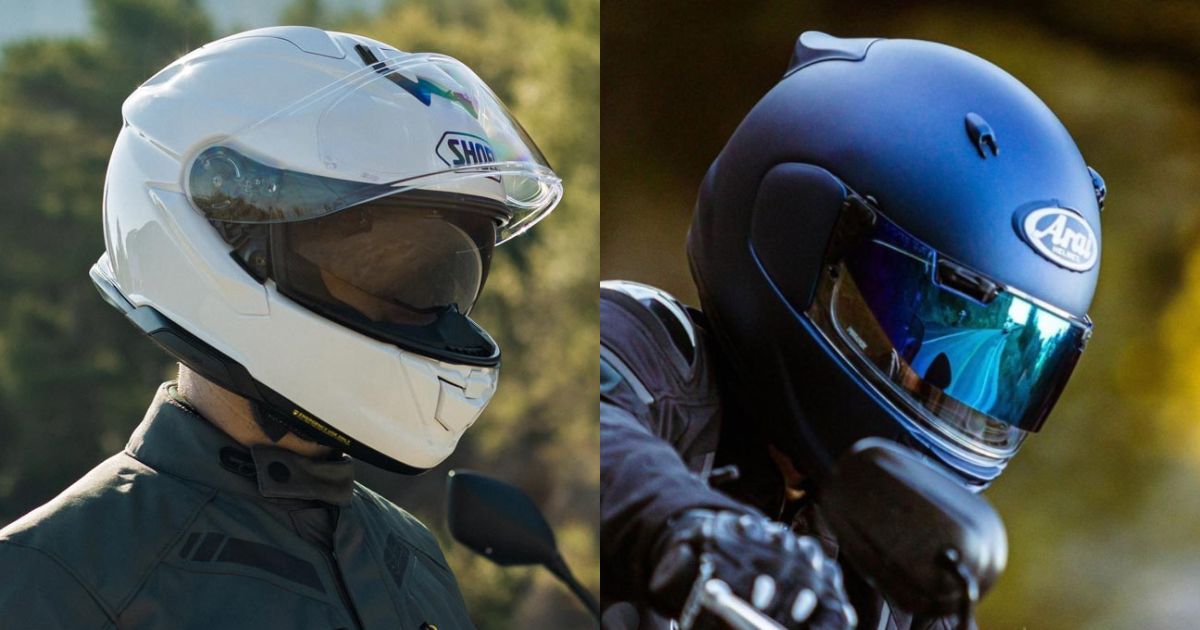
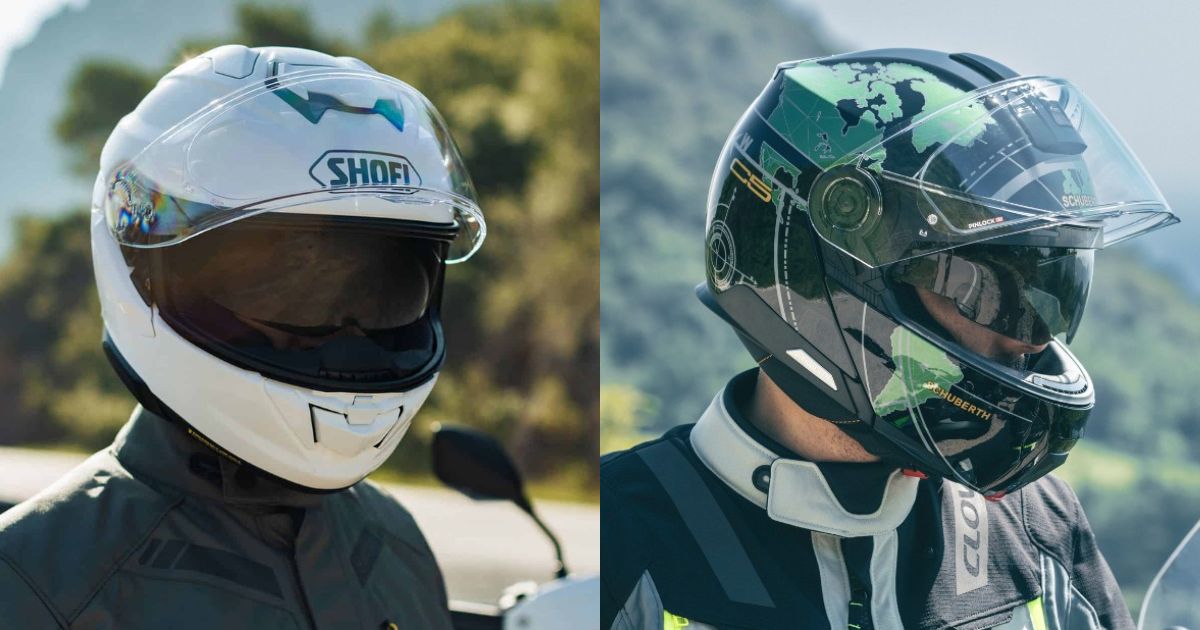
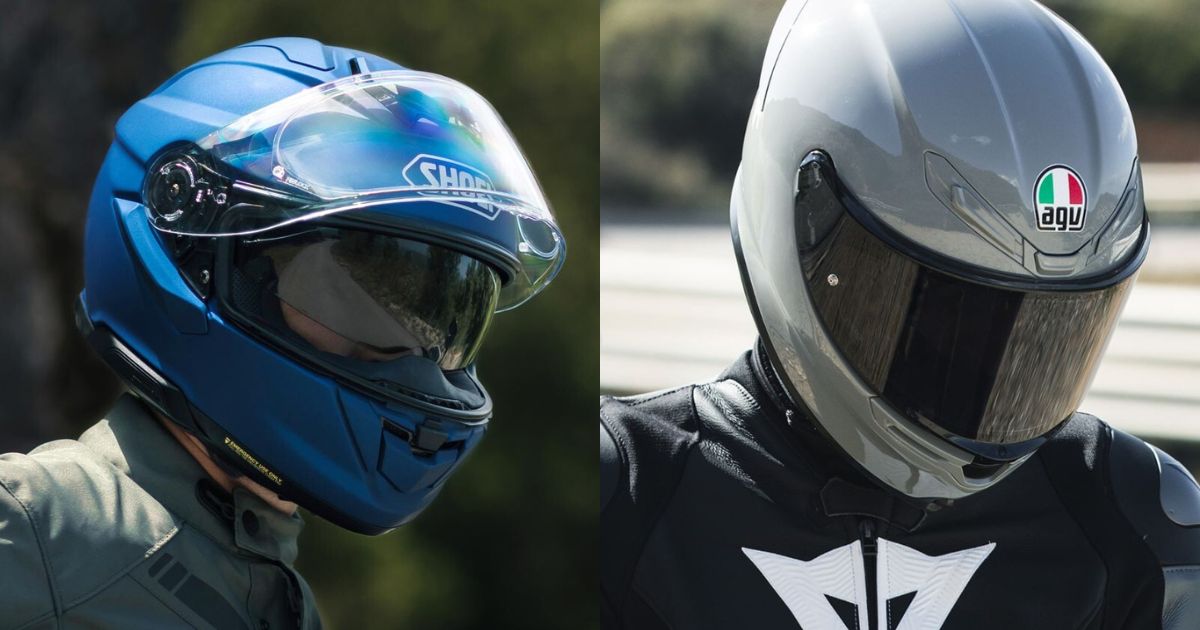
Two of the most popular touring helmets on the market, and they couldn’t be more different in design. The Shoei GT-Air 3 is a full-face with wind-tunnel-tested aerodynamics and Shoei’s signature build quality. The HJC RPHA 91 is a modular flip-up with the convenience of raising the chin bar at gas stops, priced about $120 lower. Both are ECE 22.06 certified, come with integrated sun visors and Pinlock lenses, and accept dedicated Bluetooth comms.
So which one belongs on your head for the next 500-mile day?
Buy the Shoei GT-Air 3 if you:
- Want a full-face helmet with top-tier safety scores (5/5 SHARP) and never need to flip up a chin bar
- Prioritize wind-tunnel-refined aerodynamics and Shoei’s handcrafted build quality
- Plan to pair your helmet with the Sena SRL3 for a seamless, flush-mounted comms setup

A premium touring helmet built to disappear on long rides: plush liner, adjustable vents, thick neck-roll and tight sealing visor for that sweet sweet silence and an optically-clear drop down sun shield. Fits the SRL3 Sena comms system seamlessly.
- Super quiet
- Wind tunnel molded for smoother ride (less fatigue)
- Eyeglass compatible
- Internal sun shade and Pinlock visor
- A bit heavier than carbon‑shell alternatives
- Ratchet strap may irritate throat
Buy the HJC RPHA 91 if you:
- Need the modular convenience of flipping up the chin bar for quick chats, tolls, or fresh air
- Want to save ~$120 and still get a composite shell, ECE 22.06 certification, and P/J dual homologation
- Prefer a quieter-than-average modular that tested at just 96 dB at highway speeds
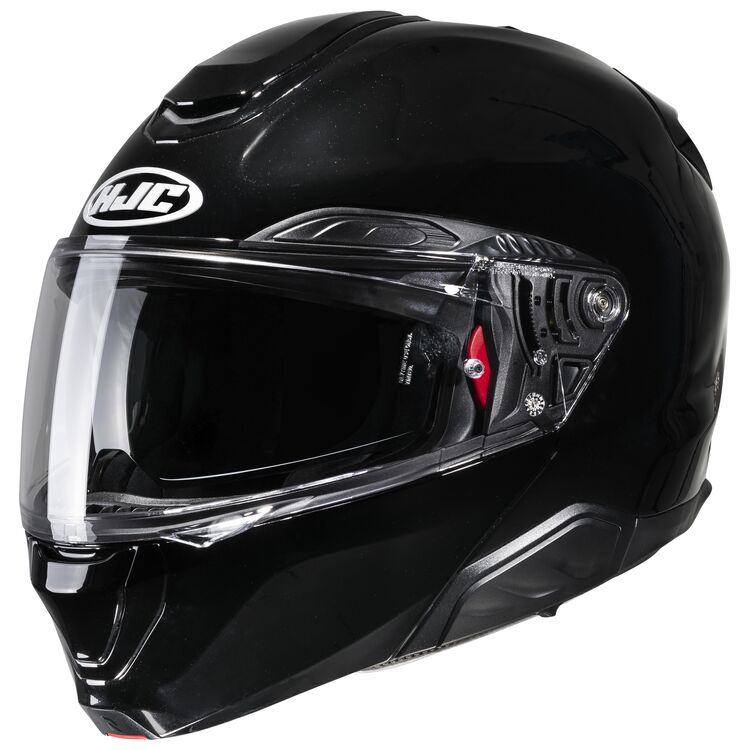
A premium DOT-rated modular helmet combining composite‑shell strength with a smooth flip‑front, quiet ride and adjustable sun visor for long-distance touring comfort.
- Composite PIM Evo shell offers superior impact protection
- Adjustable drop-down sun visor adapts to changing light
- Very quiet for a modular helmet—~96 dB at highway speeds
- Comfortable, plush liner with interchangeable cheek pads
- Slightly heavy compared to lighter modulars
- Chin bar lock can be finicky to operate with gloves
The GT-Air 3 is worth the extra ~$120 if you care most about safety test performance and full-face aerodynamic stability at highway speeds.
At-a-Glance: Specs & Price
| Specs | Shoei GT-Air 3 | HJC RPHA 91 |
|---|---|---|
| Type | Full-face | Modular (flip-up) |
| Weight | 3.91 lbs / ~1,775 g (medium) | 3.84 lbs / ~1,740 g (medium) |
| Fit/Shape | Intermediate oval, 3 shell sizes | Intermediate oval, 4 shell sizes |
| Shell/Materials | AIM (fiberglass, organic fibers, resin) | PIM EVO (carbon-aramid, carbon fiber, fiberglass, natural fiber) |
| Safety/Cert | DOT (US); ECE 22.06 (EU); SHARP 5/5 | DOT (US); ECE 22.06 + P/J (EU); SHARP 4/5 |
| Ventilation | Chin vent (with insect filter), 2-stage forehead vent, top exhaust vents | Chin vent, forehead vents, brow defogging vents, rear exhaust |
| Sun Visor | QSV-2 internal drop-down | HJ-V17 internal drop-down (adjustable depth) |
| Comms Ready | Sena SRL3 (integrated pockets) | Smart HJC 50B / 21B (integrated) |
| Closure | Stainless steel micro-ratchet | Micrometric buckle |
| Warranty | 5 years from purchase / 7 years from manufacture | 5 years from purchase / 7 years from manufacture |
| Price (typical) | $750-$880 (as of early 2026) | $630-$640 solid / $740-$745 carbon (as of early 2026) |
Who Each Product Is Built For
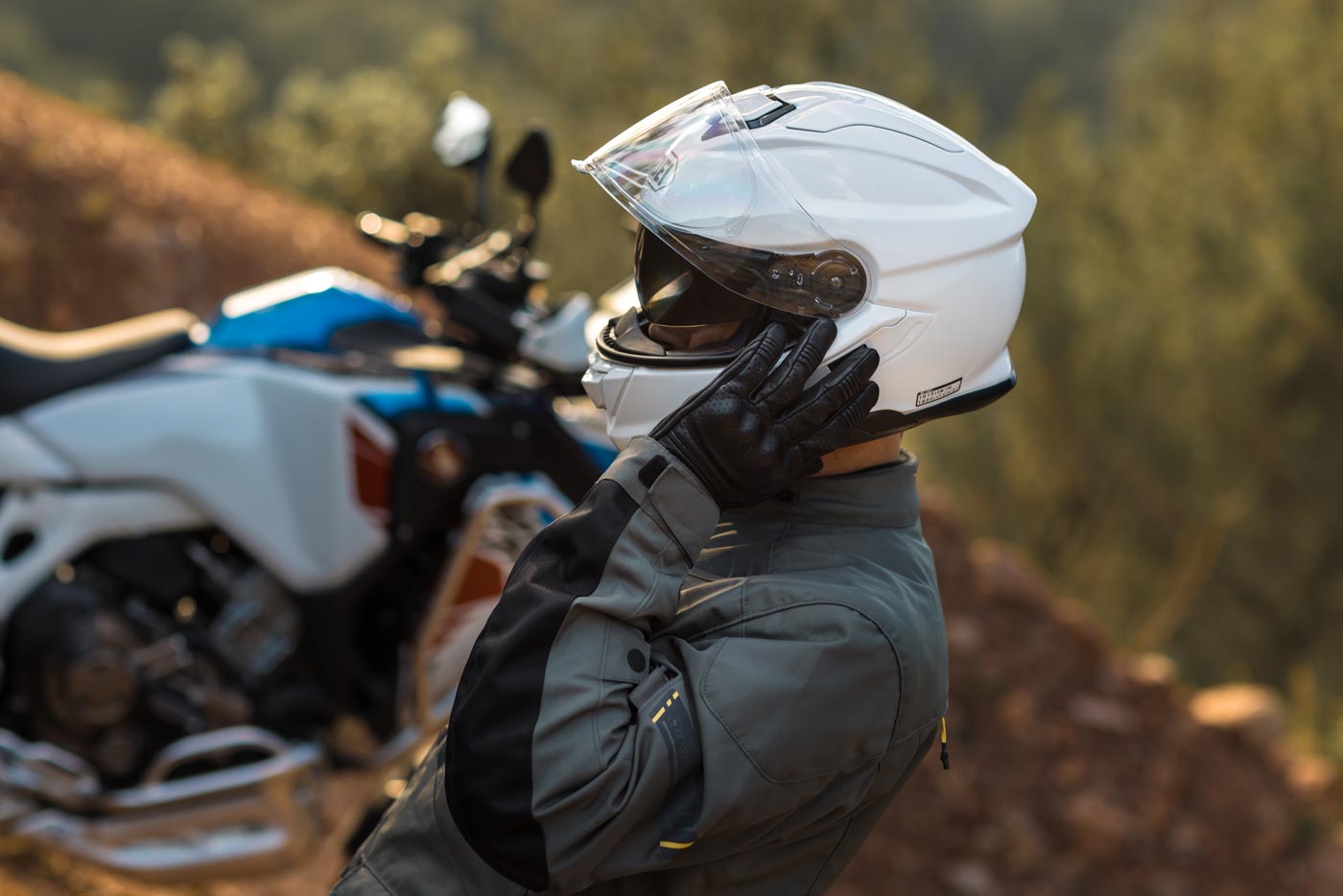
The Shoei GT-Air 3 Rider
- You plan 6-hour highway days and want a helmet that disappears on your head. No chin bar flip-ups, no compromises on aerodynamics. I have been to the Shoei gallery many times in Japan to see helmets like the GT-Air 3 and the Neotec 3 up close, and the craftsmanship Shoei pours into each lid shows the moment you pick one up.
- The GT-Air 3’s profile stays planted in crosswinds and doesn’t fight your neck at 75 mph. You’re running a Sena SRL3, which slides into pre-formed pockets without a bulge on the outside. You’ve got a Shoei-shaped head (intermediate oval), and you appreciate fine-tuning fit with interchangeable cheek pads and Shoei’s 3D center pad.
- You don’t mind the premium because the handmade AIM shell, 5-star SHARP rating, and finish quality are all part of the package.
The HJC RPHA 91 Rider
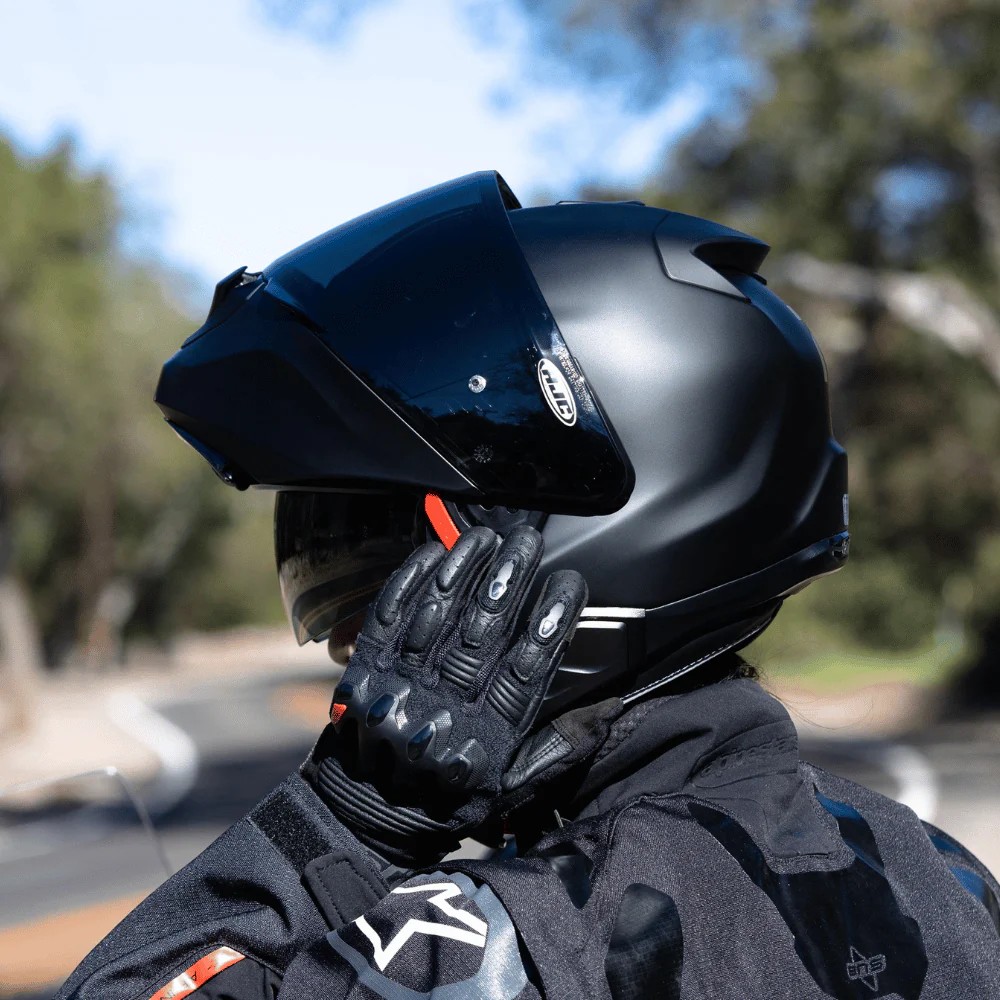
- You tour and commute. You stop for coffee, flip up the chin bar, and chat without removing your helmet. The P/J dual homologation means you can legally ride with the chin bar locked open in slow traffic on a hot day.
- The PIM EVO shell blends carbon-aramid, carbon fiber, and fiberglass into a composite that feels substantial without the $750+ price tag. Four shell sizes (one more than the GT-Air 3) mean a better chance of finding a compact fit for your head shape.
- Independent testing clocked this helmet at 96 dB at 80 mph, making it one of the quieter modulars around. You don’t need the absolute quietest (that’s the Schuberth C5, covered in our C5 vs RPHA 91 comparison), but you want something that won’t leave your ears ringing.
What Riders Report (Hands-on & Owner Feedback)
GT-Air 3 owners love:
- Quiet at speed. Multiple long-term owners call it the quietest Shoei they’ve ever worn. The reviewer we work with on our site said the same. See our hands-on GT-Air 3 review for the full take.
- Aerodynamic stability. Zero lift, zero pull, even on naked bikes with no windscreen.
- Build quality. The handmade-in-Japan finish shows in the paint, visor mechanism, and stainless steel hardware.
- Pinlock clarity. The CNS-1C visor paired with the Pinlock EVO keeps fogging at bay in cold and wet conditions.
GT-Air 3 owners flag:
- Center visor latch. Shoei moved the visor tab from the side to the center. Less convenient with gloves, especially with a chin-mounted camera.
- Inner sun visor fogging. In cold weather, moisture can fog the retracted sun visor. Not an issue in mild conditions.
- Chin strap irritation. The micro-ratchet strap can irritate the throat on some riders.
- Price of parts. Replacement visors and accessories are pricier than most competitors.
RPHA 91 owners love:
- Outstanding noise control. Multiple reviews highlight it as one of the quietest modulars at highway speeds. Independent testing confirms 96 dB.
- Chin bar convenience. Flips up smoothly and stays put. The chin curtain retracts automatically in open position.
- Plush interior. Owners describe the liner as “couch-like” with interchangeable cheek pads for a custom fit.
- Value. At ~$630, you get a composite-shell modular with ECE 22.06 and P/J for less than many mid-range full-faces.
RPHA 91 owners flag:
- Fit rides low on some heads. A recurring complaint is the helmet sitting lower than expected, with the liner resting on eyebrows. Try it on first.
- Not as airtight as the Schuberth C5. Wind sneaks through the neck roll at higher speeds.
- Smart HJC comms preferred. Third-party Bluetooth units fit but installation can be fiddly.
- SHARP 4 stars (not 5). Still strong for a modular, but one step below the GT-Air 3.
Head-to-Head by Category
Noise at Highway Speeds
The GT-Air 3 benefits from Shoei’s “Silent Ride Engineering” and a sealed full-face design with no chin bar hinge gap. Owners and independent reviewers consistently rank it among the quietest full-face helmets available.
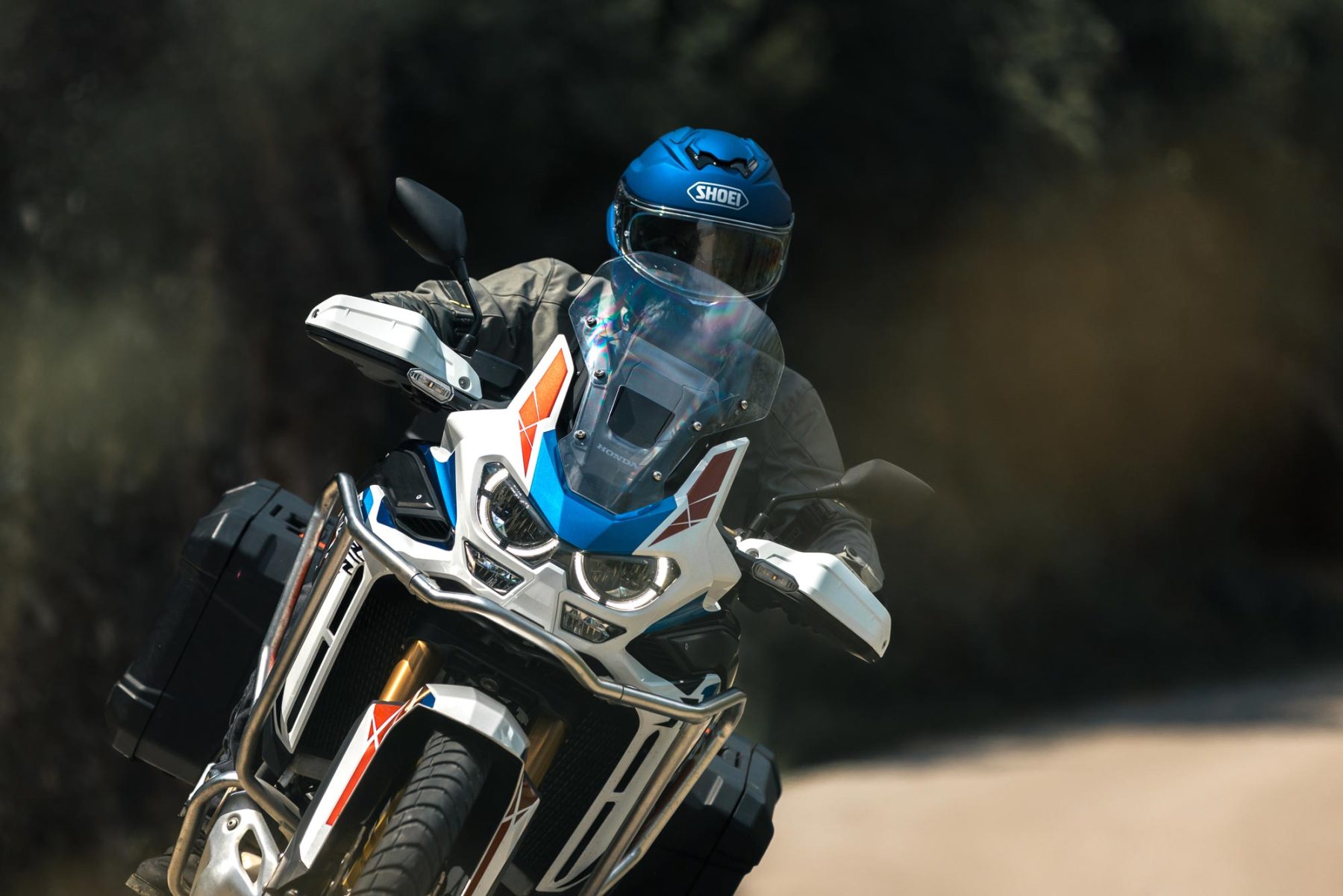
The RPHA 91 measured 96 dB at 130 km/h in structured testing, exceptional for a modular. But physics works against it: the chin bar mechanism creates a small gap that lets in more wind noise than a sealed full-face.
Edge: GT-Air 3. A full-face shell with no hinge gap will always be quieter at sustained highway speeds. For more on quiet helmets, check our quietest motorcycle helmets roundup.
Weight and All-Day Fatigue
On paper, the RPHA 91 is slightly lighter at 3.84 lbs vs. the GT-Air 3’s 3.91 lbs. That 0.07 lb difference is unnoticeable on your head.
What matters for fatigue is aerodynamics. The GT-Air 3’s wind-tunnel-tested shape reduces drag and lift. Shoei claims 6% less drag and 11% less lift compared to the GT-Air 2. Multiple owners confirm it feels planted and effortless at speed.
The RPHA 91’s aerodynamics are solid, but a few riders report slightly more buffeting behind short windscreens.
Edge: GT-Air 3. Less drag equals less neck strain over 400+ mile days.
Ventilation in Heat
The GT-Air 3 has a chin vent with insect filter, a two-stage forehead vent, and top exhaust ports positioned to capitalize on rising heat. Owners report strong airflow, though the sun visor can slightly obstruct flow in extreme heat.
The RPHA 91 runs five intake vents and seven exhaust ports. The brow vents double as defoggers. And the ability to flip up the chin bar at red lights is an undeniable advantage when you’re stuck in traffic at 95°F.
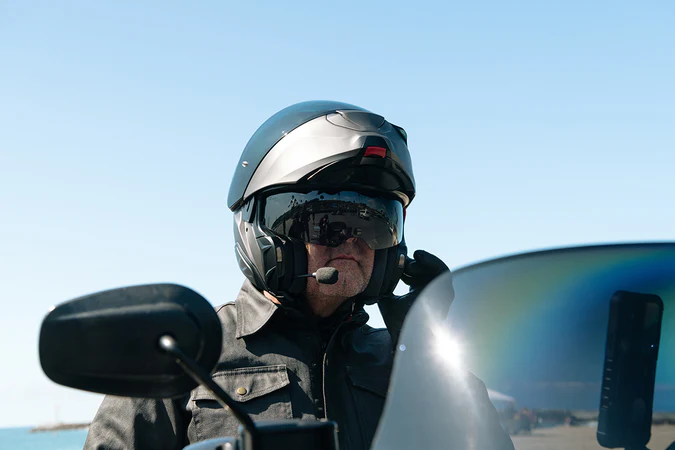
Edge: RPHA 91. More vents, and the chin bar flips up when you need instant relief.
Safety Ratings and Protection
The GT-Air 3 earned a perfect 5/5 stars from SHARP, one of the most rigorous independent helmet testing programs. It’s ECE 22.06 certified in Europe and DOT in the US.
The RPHA 91 earned 4/5 stars from SHARP, still strong for a modular. The chin bar mechanism adds a potential weak point that HJC’s engineering largely mitigates (it’s P/J certified), but the scores reflect the full-face advantage.
Edge: GT-Air 3. A 5-star SHARP score on a full-face vs. 4 stars on a modular. Both meet ECE 22.06, but the sealed shell has a structural advantage. See our best Shoei helmets for how the GT-Air 3 stacks up against other Shoei lids.
Visor and Sun Shield Usability
Both helmets include an internal drop-down sun visor and Pinlock-ready main shield. The GT-Air 3’s QSV-2 is wide and optically clear, though the new center-lock tab takes getting used to with gloves.
The RPHA 91’s HJ-V17 sun visor has an adjustable depth setting, so you can tweak how far it drops based on your face shape or whether you wear glasses. That’s a detail most helmets skip.
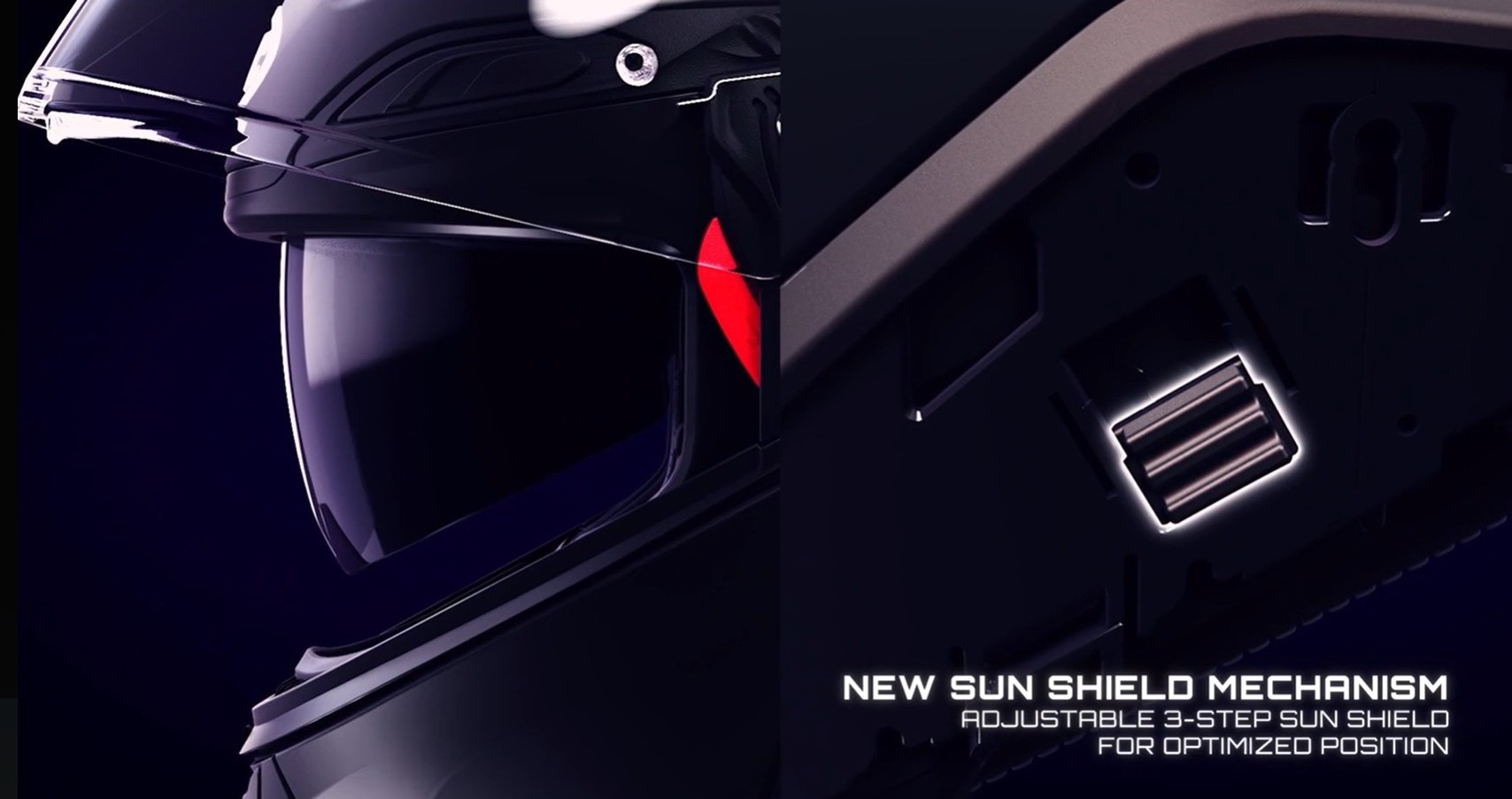
Edge: RPHA 91 (slight). The adjustable-depth sun visor and the ability to pop up the entire chin bar give it a practical advantage for glasses wearers.
Comms Integration
The GT-Air 3 is built around the Sena SRL3 with pre-formed speaker pockets and wiring channels molded into the shell. The RPHA 91 integrates the Smart HJC 50B or 21B (also Sena-based) the same way. Both deliver clean, drag-free installations. Third-party units will fit either helmet but require more effort.
Edge: Tie. Your choice depends on which comms ecosystem you’re already in. Both helmets appear in our best touring motorcycle helmets guide.
Value for Money: Is the Upgrade Worth It?
The GT-Air 3 runs about $120 more than the RPHA 91 in solid colors (~$750 vs. ~$630, as of early 2026). That $120 buys you a 5-star SHARP safety rating (vs. 4 stars), Shoei’s wind-tunnel-tested AIM shell, noticeably quieter highway performance, and seamless SRL3 comms integration.
What you give up: modular convenience, one fewer shell size, P/J dual homologation, and the RPHA 91’s adjustable-depth sun visor.
If you spend most of your time on highways and multi-day tours, the GT-Air 3’s quieter shell and higher safety scores justify the extra cost.
If you commute, stop frequently, or ride in hot traffic, the RPHA 91’s modular design saves you the hassle of helmet removal at every stop. And that $120 savings buys a tank of gas and lunch on the road.
Good Alternatives
Schuberth C5 (~$899): The quietest modular you can buy, with integrated SC2 comms and a carbon-reinforced shell. See our in-depth review of this helmet.
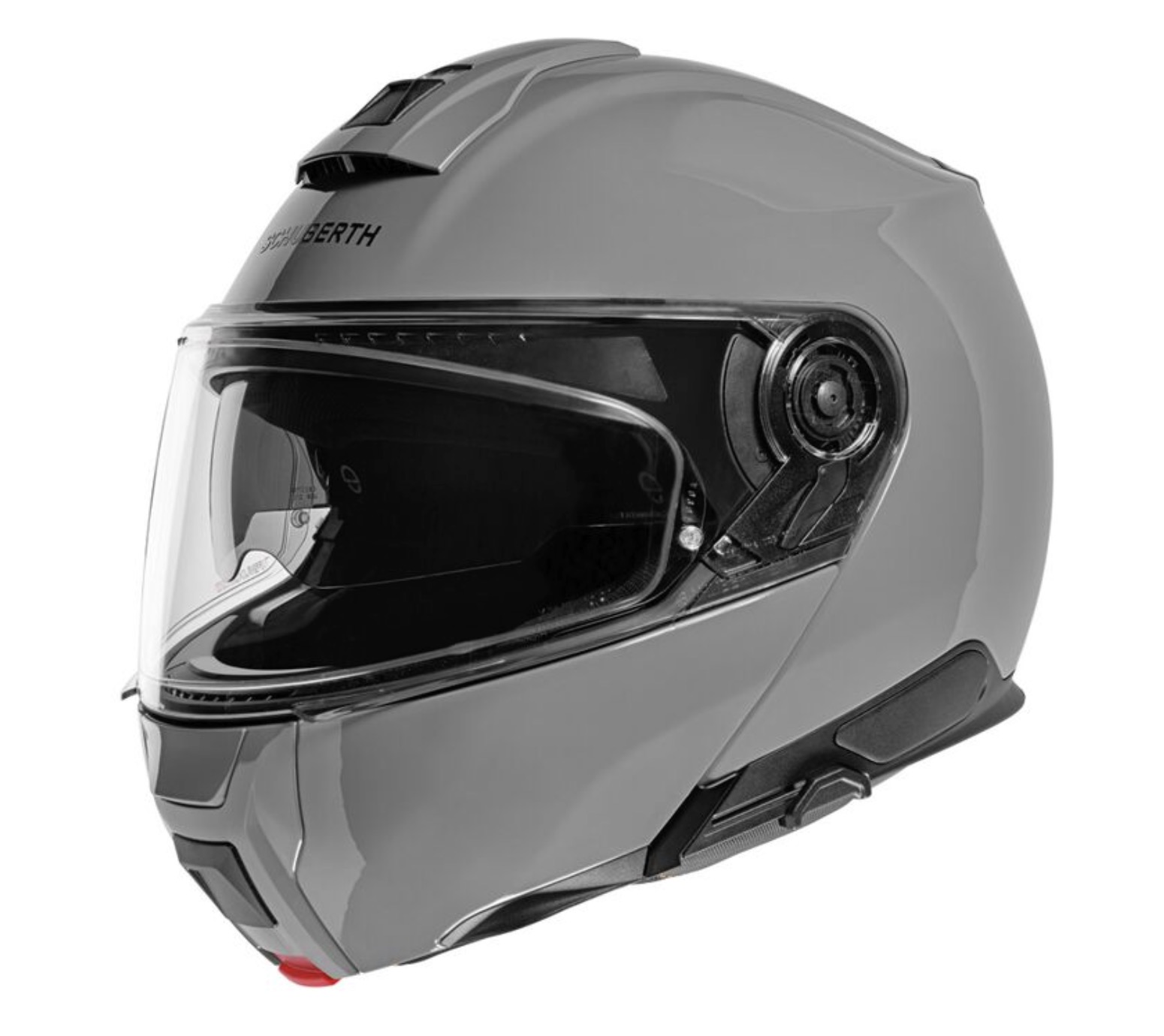
The quietest touring helmet money can buy, kitted out with all the features you expect for those long days in the saddle.
- Modular flip up chin bar
- Drop down sun visor
- Space for integrated comms unit
- Many colorway options
- DOT certified, with ECE in EU
- Heavier than most full-face helmets
- Visor mechanism needed refinement early on
Shoei Neotec 3 (~$899-$1,050): Shoei’s own premium modular. Same build quality and SRL3 compatibility as the GT-Air 3, plus a flip-up chin bar. Heavier and pricier. For a deep dive on this helmet, see our review here.
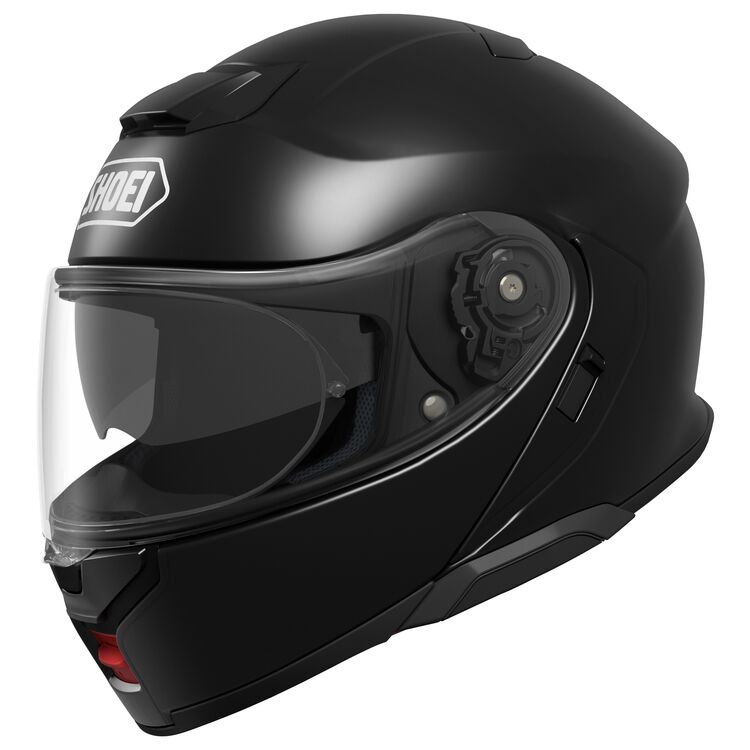
A premium modular helmet built for long-distance comfort and low noise, with a smooth flip-up chin bar, tightly-sealing visor and wide drop down sun shade. Fits the SRL3 Sena comms system seamlessly.
- Comfortable wear all day
- Quiet, aerodynamic performance
- Flip-front convenience at stops
- Integrated comms & sun visor
- Faceshield lock is sometimes stiff
- Heavier weight may fatigue neck on long rides
HJC RPHA 91 Carbon (~$740-$745): Same helmet, lighter shell. Drops to about 3.52 lbs and still undercuts the GT-Air 3 on price.

RPHA 91 Carbon offers a smooth visor system, 3-step sunshield, dark smoke insert, comfy washable pads, and seamless Bluetooth-ready integration.
- Smooth visor
- Great sunshade
- Comfy liner
- Intercom ready
- Pricey
- A bit heavy
FAQ
Is the Shoei GT-Air 3 worth the price?
For touring riders who log long highway hours, yes. The 5-star SHARP rating, whisper-quiet aerodynamics, and Shoei’s build quality make it one of the strongest full-face touring helmets you can buy.
Is the HJC RPHA 91 a good touring helmet?
One of the best modulars in its price range. The PIM EVO shell, 96 dB noise levels, and P/J certification make it well-rounded for riders who want modular convenience without sacrificing materials.
Can I use a Cardo with the Shoei GT-Air 3?
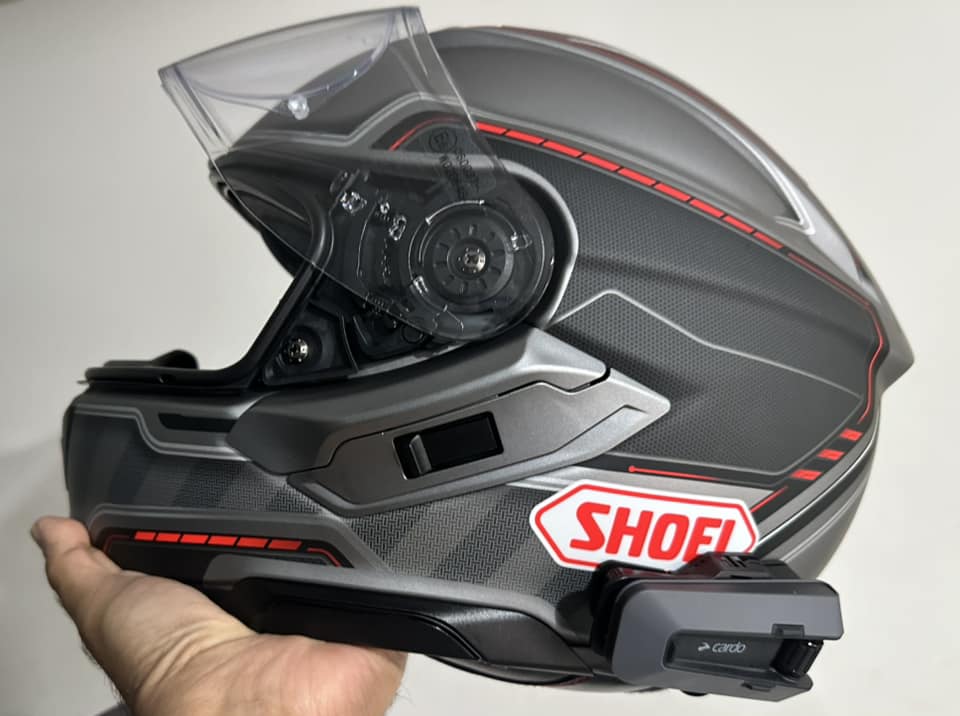
You can, but it’s not as clean as the SRL3 installation. The GT-Air 3 is designed around the Sena SRL3, so Cardo units need external mounting. If you’re committed to Cardo, you may prefer a less brand-specific helmet.
Does the HJC RPHA 91 fit round heads?
The RPHA 91 targets an intermediate oval shape. Some feedback suggests it runs slightly toward long oval. If you have a rounder head, try it on before committing. HJC’s four shell sizes help, but head shape matters more than shell size.
Which helmet is quieter, GT-Air 3 or RPHA 91?
The GT-Air 3. A sealed full-face shell has an inherent advantage, and Shoei’s wind-tunnel engineering widens that gap. The RPHA 91 is quiet for a modular (96 dB at highway speeds), but it can’t match the GT-Air 3 at sustained high speeds. Either way, wear earplugs on long rides.
Are modular helmets as safe as full-face helmets?
Modern modulars like the RPHA 91 meet the same ECE 22.06 standards as full-face helmets. SHARP testing tends to show full-face designs scoring higher because there’s no chin bar hinge to manage. The RPHA 91’s 4-star score is strong for a modular, but the GT-Air 3’s 5 stars reflect the one-piece shell advantage.
Best for long-distance highway touring
|
Best for versatile touring and commuting
|
A premium touring helmet built to disappear on long rides: plush liner, adjustable vents, thick neck-roll and tight sealing visor for that sweet sweet silence and an optically-clear drop down sun shield. Fits the SRL3 Sena comms system seamlessly. | A premium DOT-rated modular helmet combining composite‑shell strength with a smooth flip‑front, quiet ride and adjustable sun visor for long-distance touring comfort. |
|
|
|
|
A premium touring helmet built to disappear on long rides: plush liner, adjustable vents, thick neck-roll and tight sealing visor for that sweet sweet silence and an optically-clear drop down sun shield. Fits the SRL3 Sena comms system seamlessly.
- Super quiet
- Wind tunnel molded for smoother ride (less fatigue)
- Eyeglass compatible
- Internal sun shade and Pinlock visor
- A bit heavier than carbon‑shell alternatives
- Ratchet strap may irritate throat
A premium DOT-rated modular helmet combining composite‑shell strength with a smooth flip‑front, quiet ride and adjustable sun visor for long-distance touring comfort.
- Composite PIM Evo shell offers superior impact protection
- Adjustable drop-down sun visor adapts to changing light
- Very quiet for a modular helmet—~96 dB at highway speeds
- Comfortable, plush liner with interchangeable cheek pads
- Slightly heavy compared to lighter modulars
- Chin bar lock can be finicky to operate with gloves