
Arai XD-5 vs Klim Krios Pro: Which Is Better for Adventure Riding?
 Evan Rally
left for contents
Both the Arai XD-5 and Klim Krios Pro target the same rider: someone who wants a premium adventure helmet for highway miles, gravel roads, and occasional single track. The XD-5 costs roughly $100-$150 more and weighs about a pound more, but carries Snell certification and Arai’s legendary build quality. The Krios Pro counters with a full carbon fiber shell, a bundled photochromic Transitions visor, and one of the lowest weights in the ADV category.
Buy the Arai XD-5 if you:
- Want the highest safety certification available (Snell M2020D + DOT) and five shell sizes for a precision fit.
- Prioritize a quieter ride on long highway stretches and value Arai’s hand-built fiberglass construction.
- Prefer a helmet with proven long-term durability and don’t mind the extra weight.
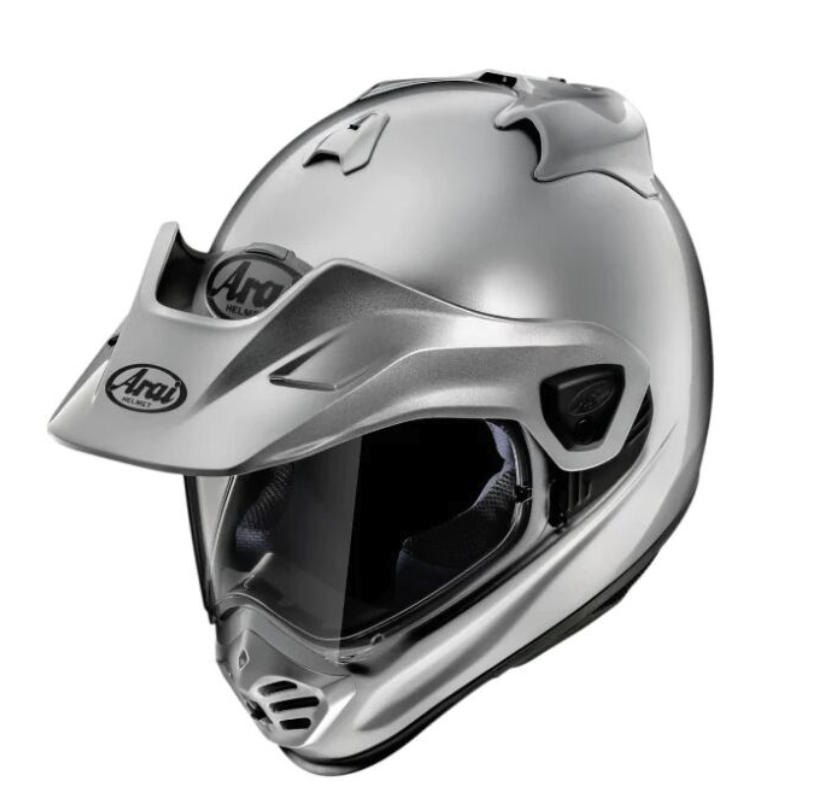
The sequel to the legendary XD-4 helmet, this lid improves in every way from its round shell design to its versatility and comfort whether you're thrashing trails or cruising on the highway.
- Quietest ADV helmet
- Removable peak
- Tons of ventilation
- Can use with googles (visor can be removed)
- DOT and Snell approved (ECE in Europe)
- None - one of the best ADV and touring helmets
Buy the Klim Krios Pro if you:
- Want the lightest ADV helmet you can get (~2.87 lbs in medium) to reduce neck fatigue on multi-day trips.
- Love the idea of a photochromic Transitions visor included in the box, so you never have to swap shields for changing light.
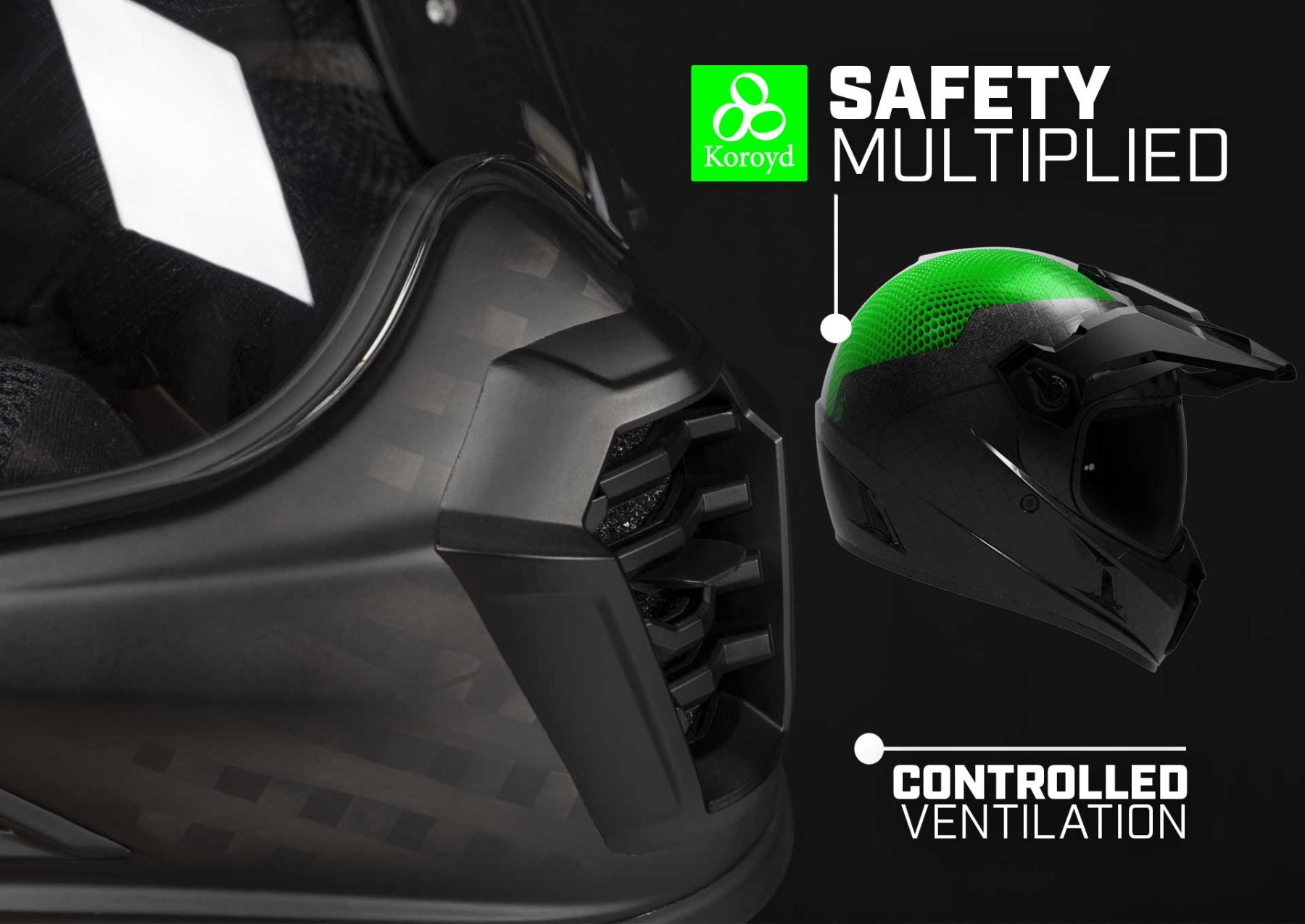
- Ride in hot climates where Koroyd’s open-cell ventilation and the carbon fiber shell keep you cooler.
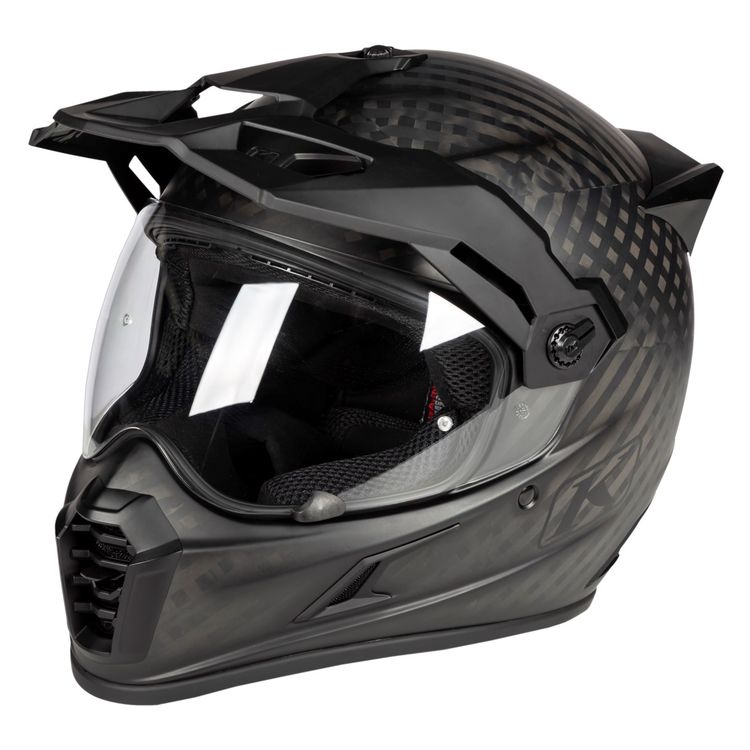
Lightweight adventure helmet with versatility for street, light adventure, and hard enduro riding.
- Carbon fiber shell for ultra-lightweight durability
- Quick release (no tools) shield and visor. Supports goggles.
- Big forehead vent
- Transitions photochromic face shield included
- DOT and ECE 22.06 certified
- Noticeable road noise at high speeds
- Transitions lens can be sluggish entering tunnels
The Krios Pro is worth saving ~$100-$150 if you care most about weight and included extras. The XD-5 is worth the premium if Snell certification, quietness, and five shell sizes matter more.
At-a-Glance: Specs & Price
| Specs | Arai XD-5 | Klim Krios Pro |
|---|---|---|
| Weight | ~3.71-3.79 lbs (size dependent) | ~2.87 lbs (size M) |
| Fit/Shape | Intermediate Oval, 5 shell sizes | Medium Oval, 2 shell sizes |
| Shell/Materials | PB-cLc fiberglass with Kevlar belt, hand-laid | Full carbon fiber, hand-laid, Koroyd liner |
| Safety/Cert | DOT + Snell M2020D (ECE 22.06 as Tour X5) | DOT + ECE 22.06 |
| Ventilation | Chin vent (2x size of XD-4) with inner shutter, forehead logo duct, crown vent, AR spoiler exhaust | Adjustable chin and forehead vents, Koroyd open-cell airflow, rear exhaust ports |
| Shield/Visor | VAS-A Max Vision with Pinlock XLT 120 included. No drop-down sun visor. | Pinlock-ready clear shield + photochromic Transitions shield included |
| Comms Readiness | Flat mount area, deep speaker pockets, wire routing in neck roll | Designed for Sena 10U integration, speaker pockets |
| Strap Closure | Traditional D-ring | Fidlock magnetic buckle |
| Warranty | 5 years | 5 years + Gear Protection Guarantee (crash replacement within 5 years) |
| Price (as of early 2026) | ~$840-$860 solids; ~$950-$1,000 graphics | ~$700-$750 |
Who Each Product Is Built For
The Arai XD-5 Rider
- You log serious highway miles between trailheads. The XD-5 was designed for riders who spend more time at 70 mph than at 15 mph, and it shows in how quiet and stable it feels at speed.
- You’re particular about fit. Arai builds this helmet in five shell sizes, which means if you’re an XS or a 2XL, you’re getting a dedicated shell instead of extra padding stuffed into a shared mold. That matters for all-day comfort on an eight-hour saddle day.
- You trust Snell certification. The XD-5 carries DOT and Snell M2020D, a standard that requires testing above and beyond what DOT or ECE demand.
- You like simplicity. No photochromic visor, no magnetic buckle, no Koroyd tubes. Just fiberglass, a D-ring, and decades of Arai’s R75 shell philosophy.
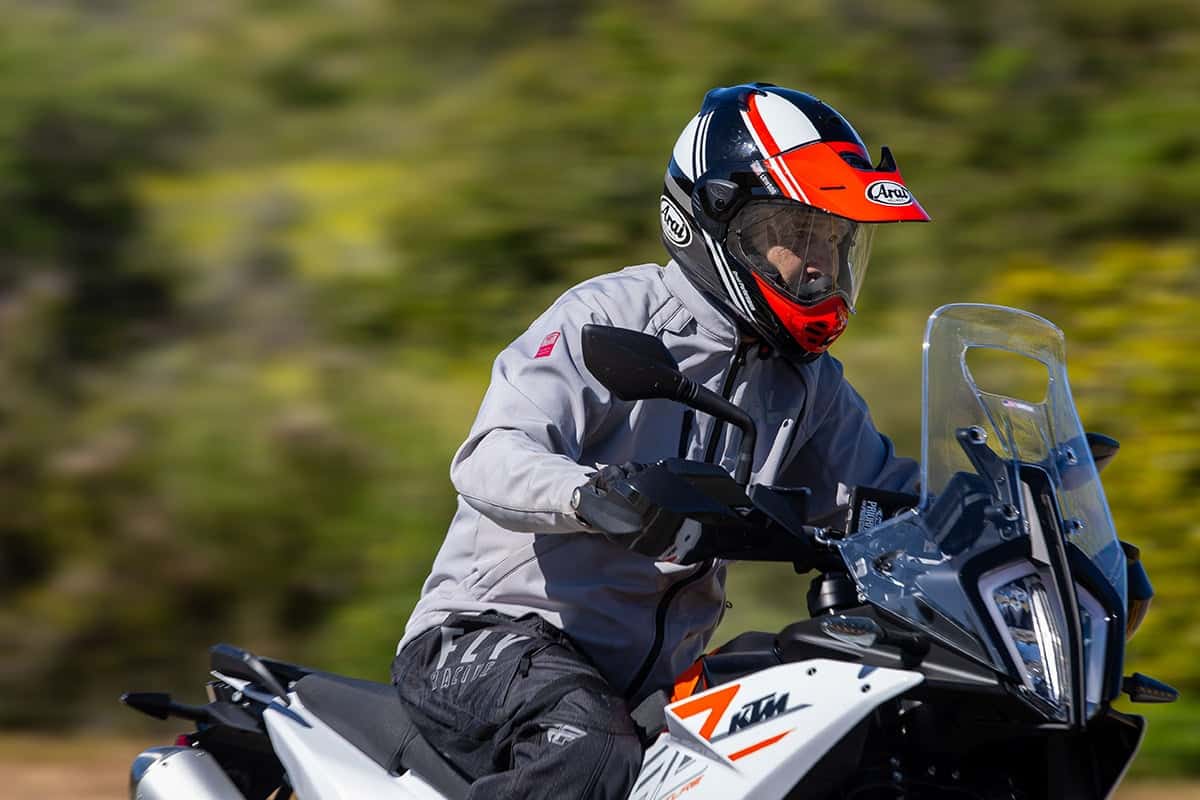
The Klim Krios Pro Rider
- You feel every ounce after hour four. At roughly 2.87 lbs in a medium, the Krios Pro is nearly a full pound lighter than the XD-5. That’s the kind of difference you notice standing on pegs through a rocky wash or craning your neck on a long descent.
- You ride through constantly changing light. The included Transitions photochromic shield darkens in sunlight and clears in shade, so you don’t need a second visor or sunglasses. If your rides take you through forest canopy, open desert, and mountain tunnels in the same day, this feature alone justifies the helmet.
- You run hot. The Koroyd liner’s open-cell construction lets air pass through channels that traditional EPS blocks. Combined with the carbon fiber shell, the Krios Pro stays cooler in sustained heat.
- You want magnetic convenience. The Fidlock buckle snaps together with one hand, even in thick winter gloves.
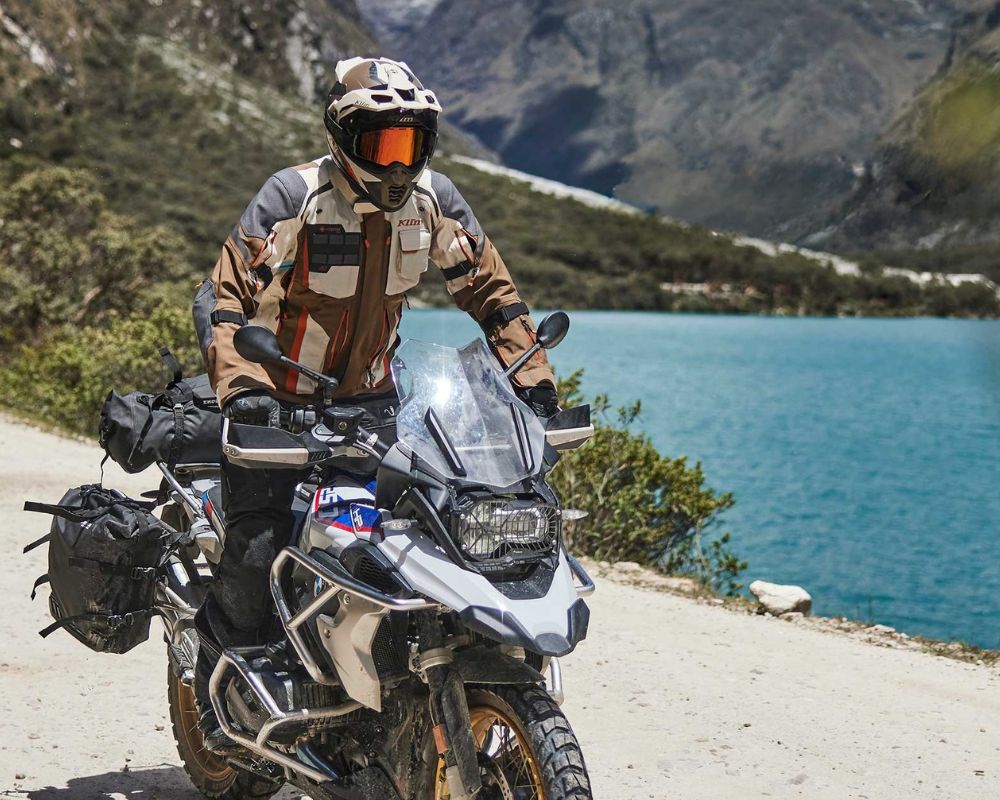
What Riders Report (Hands-on & Owner Feedback)
Arai XD-5 owners love:
- Quiet ride for an ADV lid. Multiple independent reviews note the XD-5 is one of the quietest adventure helmets available. The reviewer we work with on our site called the ventilation “superb” and said the chin spoiler helps noticeably on the highway. We ranked it as the quietest motorcycle helmet in the ADV category.
- Customizable fit. Peel-away cheek pads, multiple shell sizes, and adjustable temple pads let you dial in the fit. Owners who get the sizing right say it disappears on their head.
- Three-in-one versatility. Peak and visor for ADV, peak only with goggles for off-road, or visor only for street. Tool-free shield changes via the VAS-A system.
Arai XD-5 owners flag:
- Weight. At nearly 3.8 lbs, some riders report more neck fatigue on longer off-road days compared to carbon helmets.
- Highway noise (contested). Most reviews praise the quiet ride, but one major moto publication tester found it surprisingly loud due to increased airflow past the ears.
- No sun visor solution. Arai refuses to add an internal sun visor. You’ll need tinted inserts or sunglasses.
Klim Krios Pro owners love:
- Featherweight feel. At under 3 lbs in medium, riders say it feels closer to a motocross helmet than a full-featured ADV lid. It earned a spot on our lightest full-face helmets list.
- Transitions shield. The photochromic visor adjusts within seconds in bright sunlight, though some note it’s slightly too dark for nighttime and slow to clear in tunnels.
- Fidlock buckle. Easy to operate with gloves. Once you’ve used magnetic closure, D-rings feel archaic.
Klim Krios Pro owners flag:
- Wind noise at highway speeds. The Koroyd structure lets in more noise than the Arai. Independent testing measured around 98 dB at 80 mph. Ear plugs are essential.
- Only two shell sizes. Some riders report hot spots on the forehead from internal ridges, and between-sizes fitting can be tricky.
- No Snell certification. The Krios Pro carries DOT and ECE 22.06 but not Snell. Independent testing data for Koroyd’s claims in a motorcycle helmet remains limited.
Head-to-Head by Category
Weight and Fatigue
The Krios Pro dominates here. At roughly 2.87 lbs (medium), it’s nearly a full pound lighter than the XD-5’s 3.71 lbs. On the highway the XD-5’s aerodynamic shell distributes mass well enough. But standing on pegs through technical terrain or doing repeated head checks in traffic, that extra pound adds up fast over a long day.
Noise at Highway Speeds
The XD-5 takes this one. Arai’s smooth R75 shell shape, tight visor seal, and deployable chin spoiler combine to create one of the quietest adventure helmets available. It’s not whisper-quiet like a dedicated street lid, but for an ADV helmet with a peak, it’s remarkably hushed.
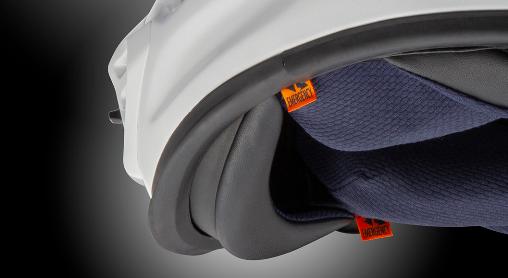
The Krios Pro trades silence for airflow. Its carbon shell and Koroyd construction let more ambient sound in, and multiple reviewers note it gets loud above 50 mph. For a 500-mile interstate slab day, the XD-5 will leave your ears in better shape.
Ventilation in Heat
Both helmets ventilate well, but differently. The XD-5 uses a chin vent twice the size of the old XD-4’s, plus a forehead logo duct, crown vent, and AR spoiler exhaust. The inner shutter lets you direct chin vent air toward your mouth or up to the visor to prevent fogging.
The Krios Pro’s Koroyd liner acts like a built-in ventilation network. Those tiny tubes let air pass through the liner itself, not just over it. Combined with adjustable chin and forehead vents, the Krios Pro moves more air at low speeds, exactly where you need it on technical trails. For hot-weather and slow-speed riding, the Krios Pro has an edge. For controlled highway airflow, the XD-5’s adjustable system gives you more precision.
Shield and Visor System
The Krios Pro wins on included value. You get a clear shield, a photochromic Transitions shield, and a Pinlock insert, all in the box. That Transitions shield darkens in bright conditions and clears in shade automatically.
The XD-5 includes a clear VAS-A Max Vision shield with a Pinlock XLT 120 insert for excellent fog resistance. But there’s no sun solution included. Arai doesn’t ship a photochromic option with the XD-5 yet (though one has been mentioned as forthcoming), and they refuse to add a drop-down sun visor. You’ll need a tinted visor or sunglasses.
Safety and Certification
The XD-5 holds the advantage. It carries DOT, Snell M2020D, and (as the Tour X5) ECE 22.06. Snell testing is more rigorous than either DOT or ECE alone, requiring additional impact tests at higher energies.
The Krios Pro carries DOT and ECE 22.06. Koroyd claims its honeycomb-like structure absorbs impact energy more efficiently than traditional EPS, but independent testing data backing those claims in a motorcycle helmet context remains limited. If safety credentials are your top priority, the XD-5 has more third-party verification.
Build Quality and Finish
Both feel premium, but differently.
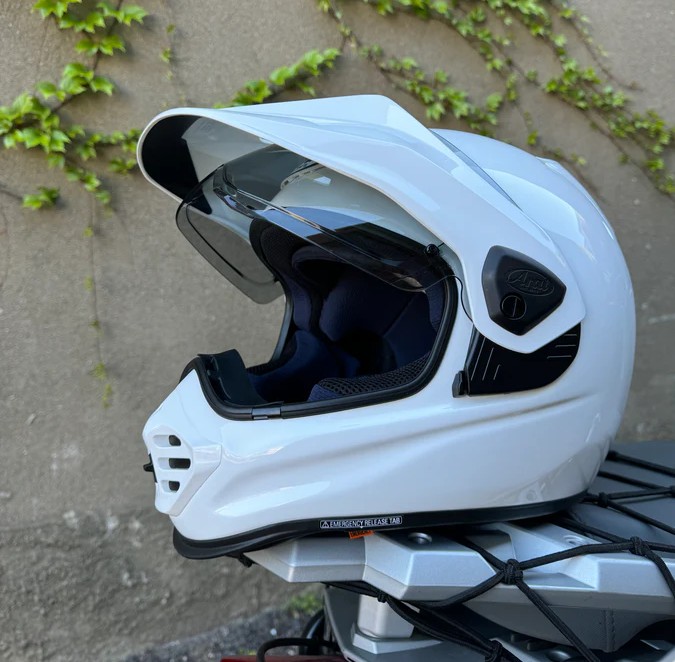
The XD-5 has unmistakable Arai hand-built quality: dense cheek pads, a visor that clicks shut with vault-like precision, and five shell sizes so the proportions look right on more head shapes.
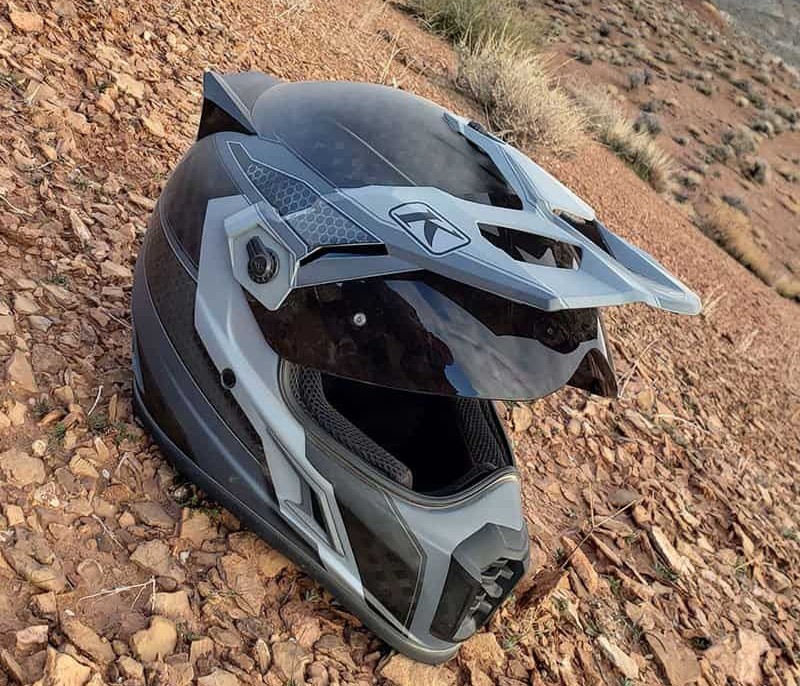
The Krios Pro’s visible carbon weave looks sharp, the Fidlock magnetic buckle is a standout, and the quarter-turn visor swap is fast. Both helmets feel like you’re getting what you paid for.
Value for Money: Is the Upgrade Worth It?
Here’s the surprise: the Krios Pro actually costs less than the XD-5. The Krios Pro runs $700-$750, while the XD-5 starts at $840 for solid colors and pushes past $950 for graphics (as of early 2026).
So what does the extra $100-$150 for the Arai get you? Snell M2020D certification, five shell sizes instead of two, a quieter ride at highway speeds, and Arai’s fiberglass PB-cLc shell with proven long-term durability.
What do you save by choosing the Klim? Nearly a pound less on your neck, a photochromic Transitions visor you’d otherwise buy separately (~$80-$120 value), a Fidlock magnetic buckle, and Klim’s Gear Protection Guarantee (crash replacement within 5 years).
If you ride mostly highway and value proven safety certs and quiet, the XD-5 earns its price. If weight savings, variable-light riding, and off-road comfort are your priorities, the Krios Pro delivers more usable features for less money.
Good Alternatives
Shoei Hornet X2 (~$650-$700): Premium Japanese build quality with four shell sizes and excellent aerodynamics. Quieter than the Krios Pro and lighter-feeling than the XD-5. See our Arai XD-5 vs Shoei Hornet X2 comparison.
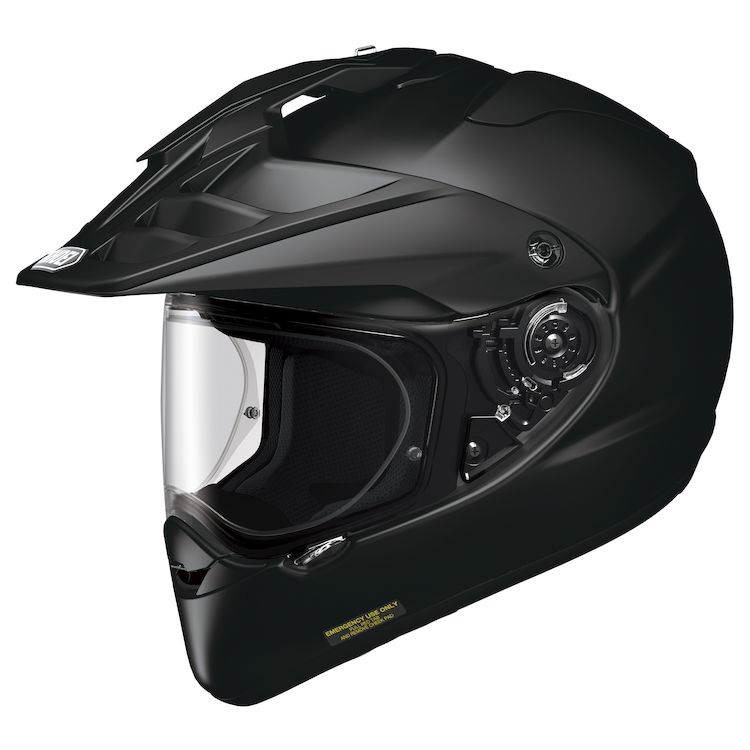
Shoei Hornet X2 Adventure Helmet delivers the perfect blend of on-road comfort and off-road capability for serious adventure riders.
- Lightweight AIM+ shell for superior protection and aerodynamics
- Advanced ventilation system for optimal airflow in all conditions
- Emergency Quick-Release System for enhanced rider safety
- Runs small, sizing up is recommended
Nexx X.WED3 (~$500-$550): Mid-price ADV helmet with an integrated sun visor, 11 vents, and a stable peak. I personally own this helmet, check out my review.
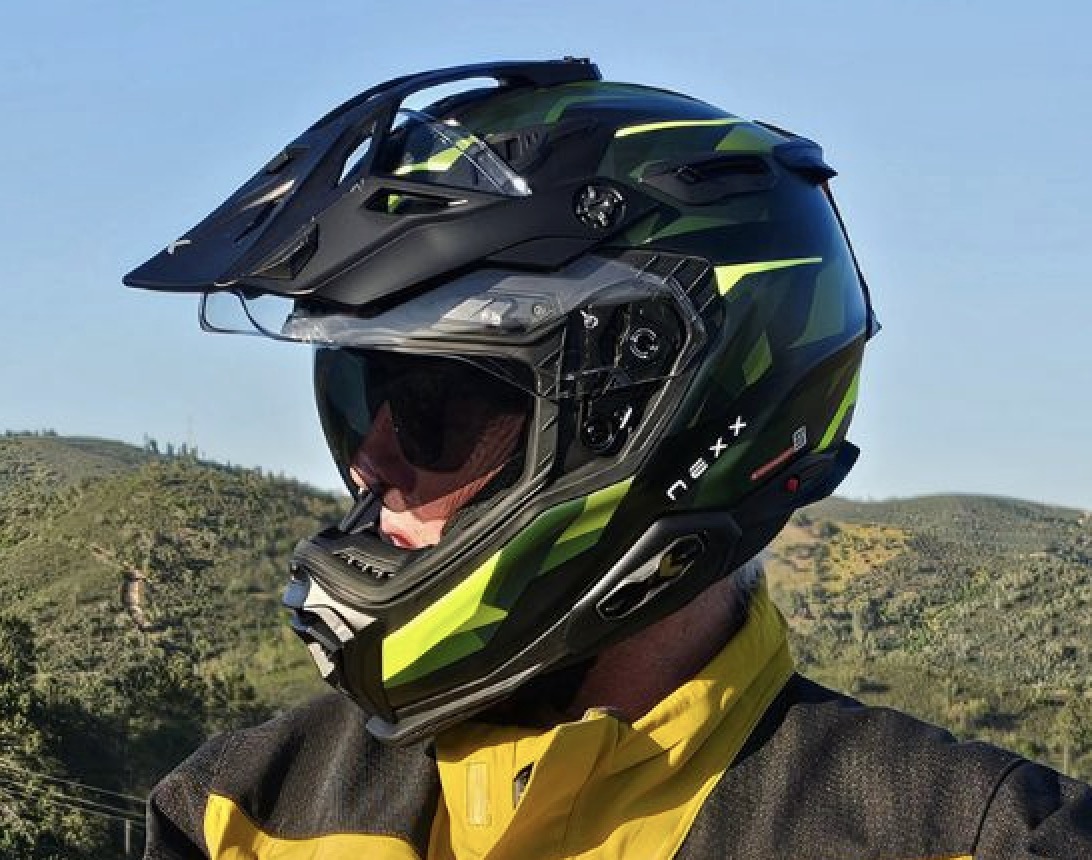
A premium helmet at midrange price: advanced composite or full carbon fiber shell, flexible ventilation system, integrated comms, and versatile street + off-road design that doesn't require tools to switch. Long term review here.
- Big eyeport
- Lightweight
- Anti-vibration system
- So popular it's often out of stock
Scorpion EXO-AT960 (~$280-$315): Modular convenience and ADV styling at a fraction of the price. Heavier and less refined, but the flip-up chin bar and built-in sun visor add everyday utility. See our Klim Krios Pro vs Scorpion EXO-AT960 breakdown.

A do-everything helmet, it's as comfortable on trails as the highway - though not as solid as premium competitors like the Arai XD-5. One of the rare modular ADV helmets, it's also it's DOT and ECE approved.
- Modular chinbar (rare in ADV helmet)
- Removable peak
- Decent airflow
- Drop down sun shade
- DOT and ECE 22‑06 approved
- Susceptible to visor leaks and fogging in heavy rain
- Sun peak vibrates noticeably at highway speeds
FAQ
Is the Arai XD-5 worth the price?
You’re paying for Snell certification, five shell sizes, Arai’s hand-built fiberglass construction, and a level of quietness that’s unusual for an ADV lid. If you ride long highway distances and want a helmet built to last its full five-year service life, it’s a smart investment. For a deeper look, check out our full Arai XD-5 review.
Is the Klim Krios Pro good for long-distance touring?
It’s excellent for multi-day adventures across varied terrain. The light weight keeps neck fatigue low, and the Transitions visor handles changing light without stopping to swap shields. The trade-off is highway noise, so bring quality ear plugs if your tours involve long interstate slabs.
Can I use a Cardo or Sena system with both helmets?
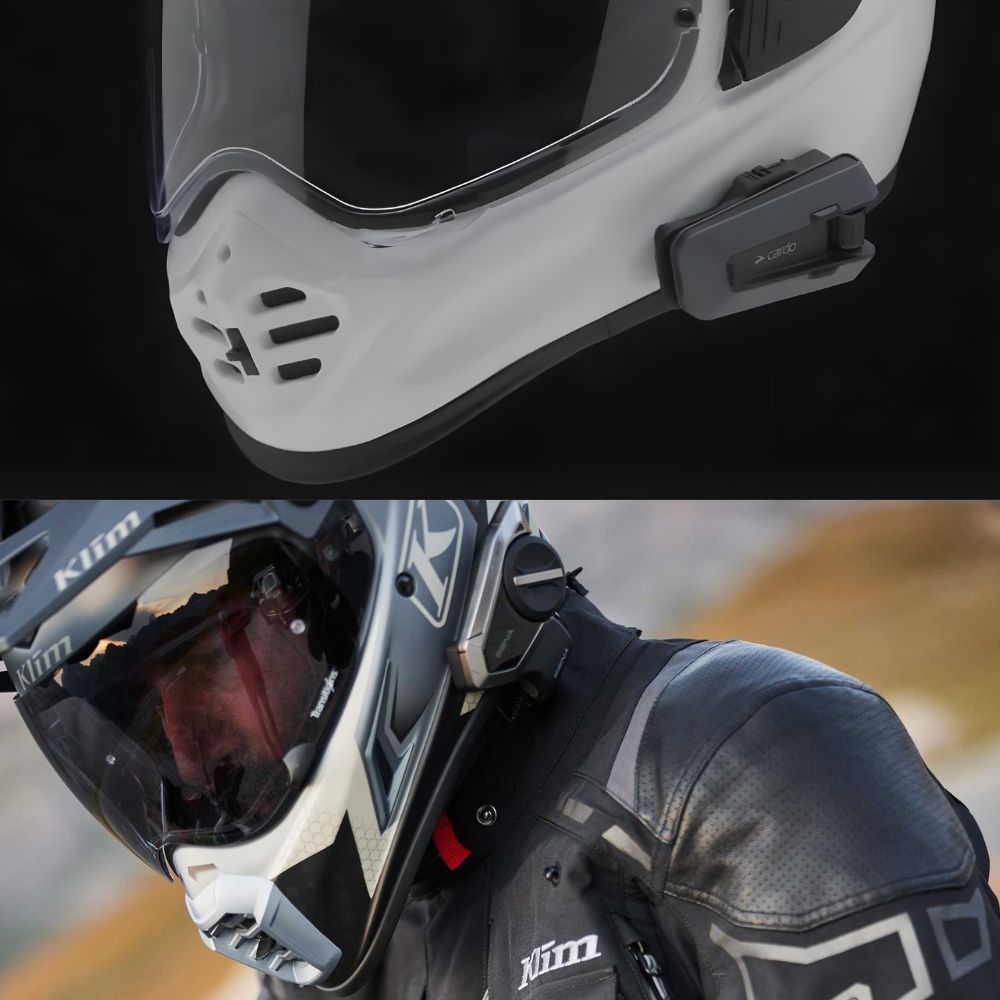
Yes. The XD-5 has a flat mounting area, deep speaker pockets, and wire routing in the neck roll. The Krios Pro is designed for the Sena 10U internal system but also works with external clamp or adhesive mounts from Cardo and Sena. Both helmets are Bluetooth-ready for adventure riding.
Do either of these helmets have a drop-down sun visor?
No. Arai doesn’t include internal sun visors in any helmet. Klim doesn’t either, but solves the problem with the included photochromic Transitions shield. If a drop-down sun visor is a must-have, look at the Scorpion EXO-AT960 or the Nexx X.WED3.
Which helmet is better for off-road riding?
Both support goggle use with the visor removed and have removable peaks. The Krios Pro has an edge off-road thanks to lighter weight and better low-speed ventilation through the Koroyd liner. The XD-5’s wider base opening makes it easier to get on and off, and its five shell sizes reduce pressure points during aggressive riding.
How do the warranties compare?
Both carry a 5-year warranty against manufacturing defects. Klim adds their Gear Protection Guarantee: free crash replacement within five years of purchase (police report required). Arai’s warranty covers defects but doesn’t include crash replacement. That Klim policy is a notable extra for off-road riders where drops and low-speed spills are more common.
Best for quiet, long-haul ADV touring
|
Best for lightweight mixed-terrain riding
|
The sequel to the legendary XD-4 helmet, this lid improves in every way from its round shell design to its versatility and comfort whether you're thrashing trails or cruising on the highway. | Lightweight adventure helmet with versatility for street, light adventure, and hard enduro riding. |
|
|
|
|
The sequel to the legendary XD-4 helmet, this lid improves in every way from its round shell design to its versatility and comfort whether you're thrashing trails or cruising on the highway.
- Quietest ADV helmet
- Removable peak
- Tons of ventilation
- Can use with googles (visor can be removed)
- DOT and Snell approved (ECE in Europe)
- None - one of the best ADV and touring helmets
Lightweight adventure helmet with versatility for street, light adventure, and hard enduro riding.
- Carbon fiber shell for ultra-lightweight durability
- Quick release (no tools) shield and visor. Supports goggles.
- Big forehead vent
- Transitions photochromic face shield included
- DOT and ECE 22.06 certified
- Noticeable road noise at high speeds
- Transitions lens can be sluggish entering tunnels