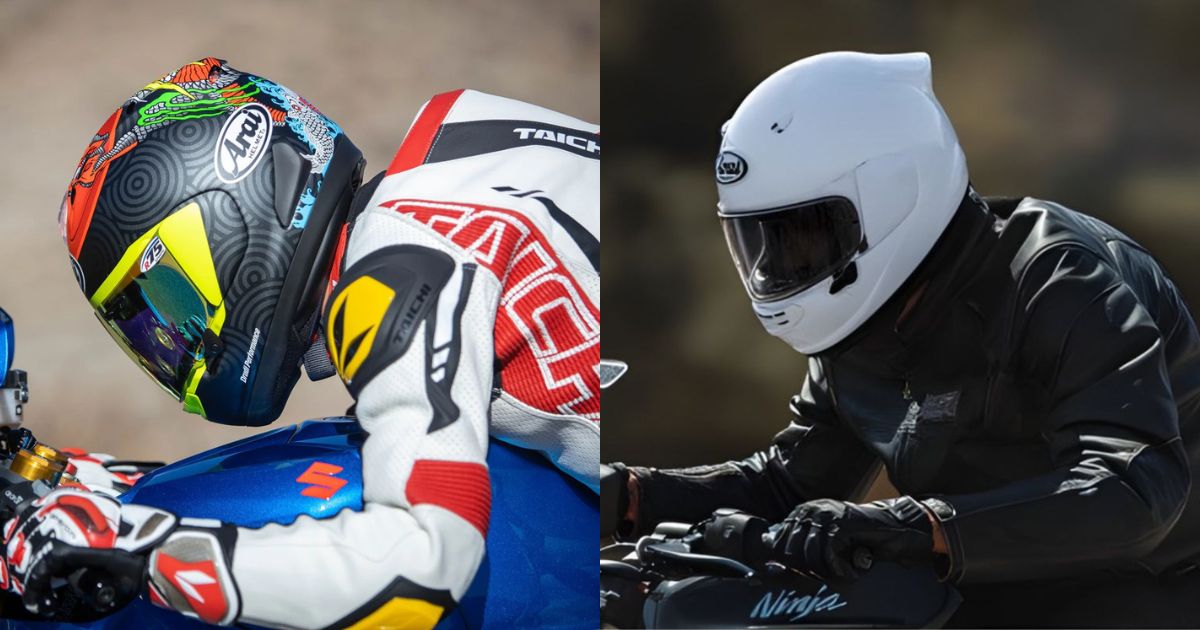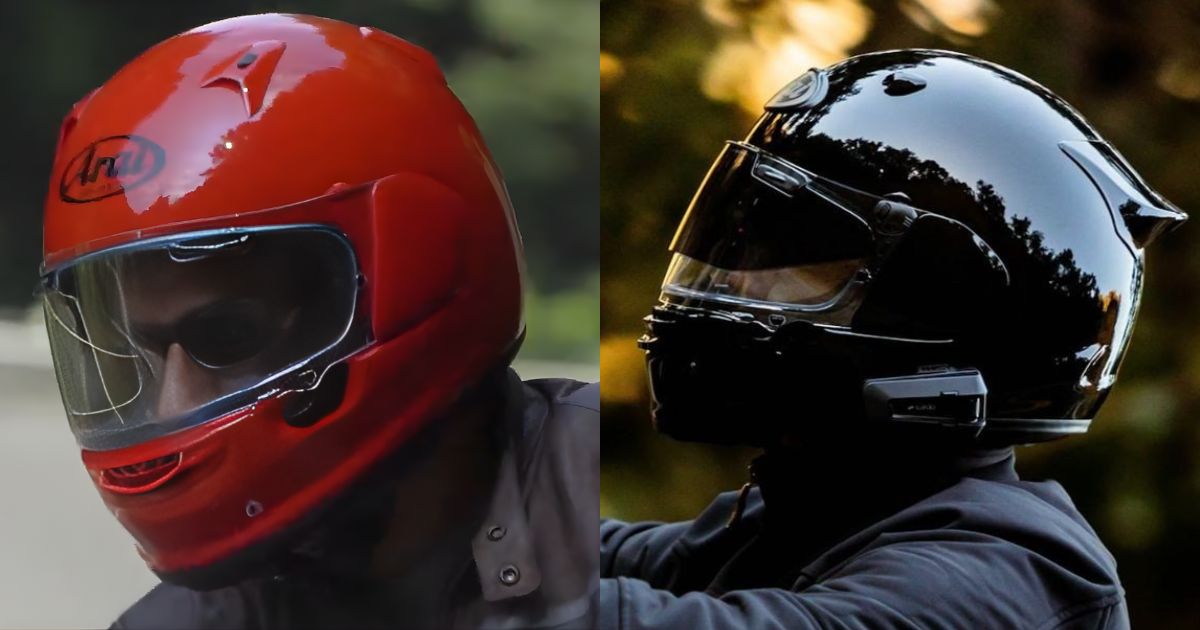

Arai Regent-X vs Quantum-X: Which Is Better for Street Riding?
 Evan Rally
left for contents
The Regent-X and Quantum-X sit in Arai’s lineup like fraternal twins. Same DNA, same Snell-certified protection, same handmade Japanese construction. But they’re built for different heads, and the Quantum-X costs roughly $120 more in solid colors.
That gap buys you a Kevlar-reinforced shell, emergency cheek pad release, and ECE certification on top of Snell. Whether you actually need those depends on what’s between your ears and how you ride.
Buy the Arai Regent-X if you:
- Have an intermediate oval head shape (slightly longer front-to-back than side-to-side)
- Want Arai build quality without paying Arai flagship prices
- Prefer a helmet that’s easy to pull on and off, especially if you wear glasses
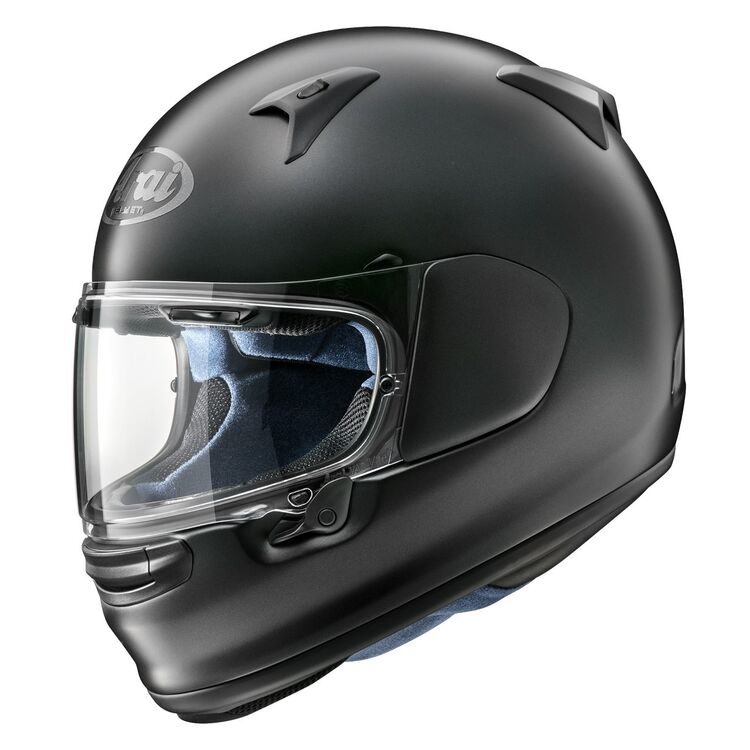
Entry‑level Arai helmet offering premium build quality, plush comfort, and high‑end safety certifications in a surprisingly easy‑to‑put‑on package.
- Exceptional comfort thanks to plush Facial Contour System
- Snell M2020 & DOT certified for elite crash protection
- Effortless donning with wider shell opening
- Wide eyeport with Pinlock‑ready Max Vision shield
- Vent controls can feel stiff when wearing gloves
- Heavier and noisier than ultra‑premium sport helmets
Buy the Arai Quantum-X if you:
- Have a round oval head shape (similar front-to-back and side-to-side measurements)
- Want emergency cheek pad release, ECE certification, and a more refined interior
- Plan to add an Arai Pro Shade system or want the option to convert to intermediate oval later
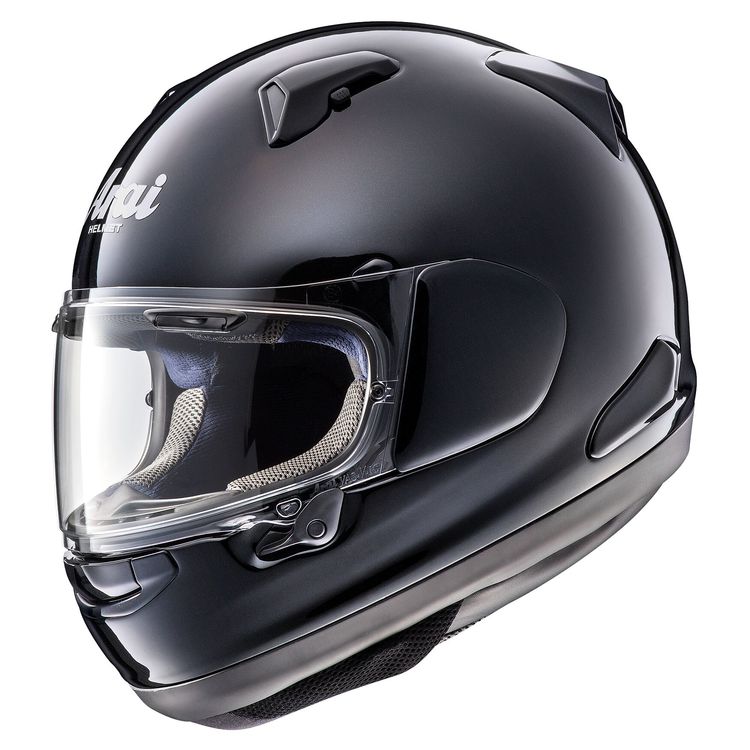
Arai Quantum-X Helmet delivers premium protection and comfort for riders with a round-oval head shape.
- Snell 2025 and DOT approved for top-tier safety
- Advanced ventilation system for superior airflow
- Removable, odor-resistant liner for a fresh, customized fit
- Premium price may not fit all budgets
The bottom line: The Quantum-X is worth the extra ~$120 if you need the round oval fit or value the emergency release cheek pads and ECE certification. If your head is intermediate oval, the Regent-X gives you Snell-certified Arai protection for less.
At-a-Glance: Specs & Price
| Specs | Arai Regent-X | Arai Quantum-X |
|---|---|---|
| Weight | ~3.41 lbs (1,546g) | ~3.52 lbs (1,595g) |
| Fit/Shape | Intermediate Oval | Round Oval (convertible to IO) |
| Shell | PB-cLc (fiberglass composite) | PB-SCLC (fiberglass + Kevlar belt) |
| Safety Certs | Snell M2020D, DOT | Snell M2020, DOT, ECE |
| Ventilation | Free Flow System (chin + brow intake, rear exhaust) | QVF/QVR system with 3-position intake + ES Chincover |
| Shield | VAS-V Max Vision, Pinlock-ready | VAS-MV Max Vision, Pinlock included |
| Sun Visor | No (Pro Shade compatible) | No (Pro Shade compatible) |
| Emergency Cheek Pad Release | No | Yes |
| Interior | Removable/washable (top pad fixed) | Fully removable/washable with peel-away temple pads |
| Warranty | 5 years | 5 years |
| Price (solid, as of early 2026) | ~$560 | ~$680 |
| Price (graphics, as of early 2026) | ~$690 | ~$830 |
Who Each Helmet Is Built For
The Regent-X rider
- Have an intermediate oval head and want a Snell-certified helmet that fits right out of the box
- Wear glasses or sunglasses while riding. The 5mm wider cheek and chin opening makes sliding them on far less annoying
- Want the lightest full-face Arai you can get at this price point
- Ride mostly in warmer months and don’t need the Quantum’s ES chincover for cold-weather sealing
- Prioritize easy on/off over interior refinement. Getting stuck at a red light with a helmet you can’t easily pull off in summer heat gets old fast
- Are buying your first Arai and want to test the brand without a $700+ commitment

The Quantum-X rider
- Have a round oval head. This is the single biggest factor. A helmet that doesn’t match your head shape will never be comfortable, no matter what features it has
- Want emergency cheek pad release tabs for first-responder access in a crash
- Ride in varied weather and want the water-repellent ES chincover that smooths airflow and cuts wind noise at the chin
- Care about ECE certification alongside Snell and DOT (important if you ride internationally or want triple-certified coverage)
- Want the option to convert from round oval to intermediate oval with a liner swap. The Quantum-X can do this; the Regent-X can’t go the other direction
- Plan to add the Arai Pro Shade system and want a helmet whose premium interior justifies the total investment

What Riders Report (Hands-on & Owner Feedback)
Regent-X owners love:
- Comfort out of the box. Multiple owners call it the most comfortable helmet they’ve ever worn. You put it on, and it just fits.
- Easy on/off. The 5mm wider base opening isn’t a marketing gimmick. Riders with glasses, bigger heads, or just tired of wrestling with tight openings all call it out.
- Solid build quality. The fit and finish hold up to Arai’s reputation, even at the lowest price point in their full-face lineup.
Regent-X owners flag:
- Fixed top headliner. The crown padding isn’t removable for cleaning, which gets old after a sweaty summer season.
- Velcro durability. A handful of long-term owners mention the liner Velcro loses grip after a year or two.
- Highway noise (mixed). Most find it quiet for its class, but a few report it gets louder than expected at sustained highway speeds.
Quantum-X owners love:
- Round oval salvation. The phrase “like a gift from the gods” shows up more than once in forum threads from riders who’ve spent years in helmets that squeeze their temples or leave gaps at the forehead.
- Excellent ventilation. Independent reviewers consistently rate the airflow as top-tier, with the 3-position QVF intake giving real control over how much air you let in.
- ES chincover. Less wind noise at the chin, better moisture management on cold mornings, and it comes installed from the factory.
Quantum-X owners flag:
- Noise. The most common complaint by far. Multiple owners report it’s louder than expected, especially with the vents closed. Some say it’s noticeably louder than the previous Quantum model.
- Shield latch with gloves. The face shield latch can be tricky to operate with thick winter gloves.
- Vent leakage in rain. A few owners report the top vents let water through in heavy downpours.
If highway quiet is your top priority, check out our roundup of the quietest helmets we’ve tested before committing.
Head-to-Head by Category
Fit and Head Shape
This is the decision that matters most, and no feature comparison can override it. The Regent-X fits intermediate oval heads. The Quantum-X fits round oval heads. If you’re not sure which you are, use our helmet sizing guide before spending $500+ on either.
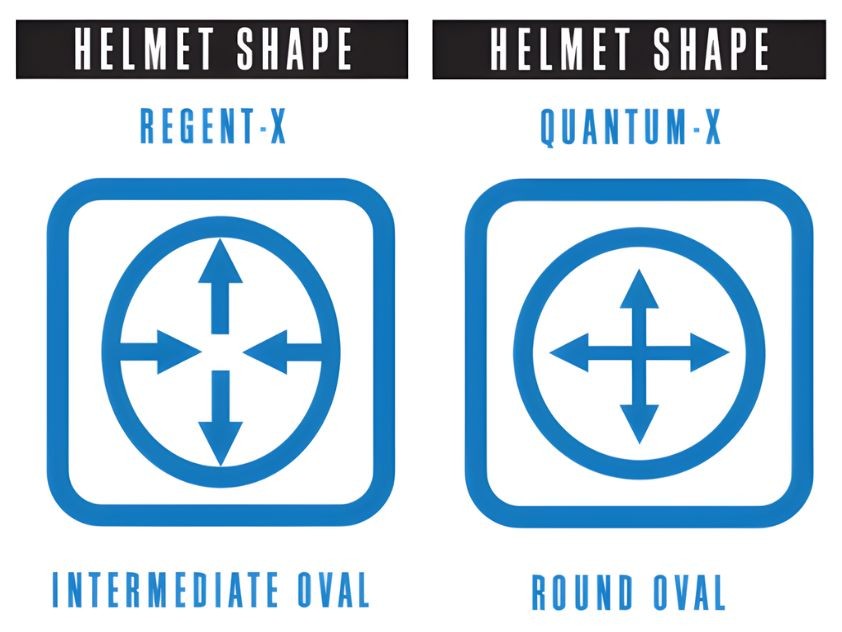
The Regent-X’s wider opening at the cheeks and chin makes a real difference for daily use. Pulling the helmet on and off dozens of times a week during a commute is noticeably easier. If you wear glasses, this alone might tip the scales.
The Quantum-X has a trick up its sleeve: you can swap the interior liner with a Corsair-X or Signet-X comfort liner (roughly $47) to convert from round oval to intermediate oval. The Regent-X can’t do the reverse. So if your head shape is borderline, the Quantum-X gives you more flexibility to dial in the fit.
Safety and Certification
Both helmets meet Snell and DOT standards, which puts them in elite company. Only a small percentage of helmets on the market bother with Snell certification. Arai designs every shell around the R75 Shape concept, keeping outer contours smooth so the helmet glances off surfaces during impact rather than snagging.
The Quantum-X adds ECE certification, which the Regent-X doesn’t carry. For most US street riders, DOT and Snell cover your bases. But if you ride internationally, or if having all three major certifications gives you peace of mind, the Quantum-X has that edge.
Neither helmet includes an internal sun visor, and that’s by design. The void space required for a drop-down sun visor disqualifies a helmet from Snell certification. Arai chose safety compliance over convenience. Both are compatible with the external Pro Shade system if you want sun protection without giving up the Snell rating.
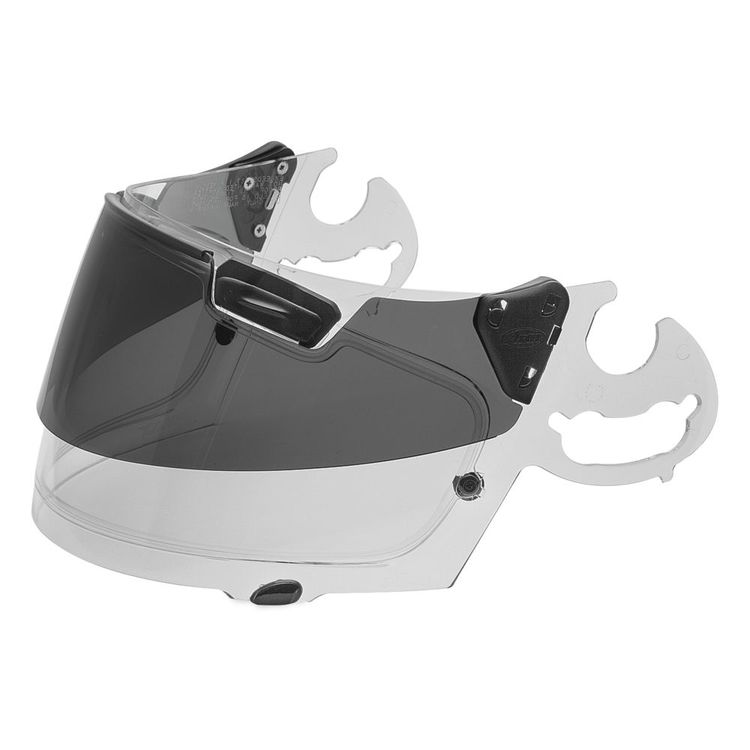
An external sun visor system that gives instant shade without reducing helmet protection. Flip it up or down as conditions change - no need to swap shields.
- Quick shade adjustment without stopping
- No impact on helmet safety or EPS thickness
- Multiple positions for changing light conditions
- Eliminates need to carry spare visor
- Can feel bulky compared to standard shields
- Some riders report minor wind noise or lift
Shell Construction and Weight
The Regent-X uses Arai’s PB-cLc (Peripherally Belted Complex Laminate Construction) shell. It’s a fiberglass composite with a reinforcing belt of super fibers around the eye port. At roughly 3.41 lbs, it’s noticeably light for a Snell-certified full-face.
The Quantum-X steps up to PB-SCLC (Super Complex Laminate Construction), adding a Kevlar belt inside the shell for extra puncture and impact resistance. That premium construction adds about a tenth of a pound, bringing it to roughly 3.52 lbs.

On a 30-minute commute, you won’t feel the difference. On a 6-hour highway day, that slight weight advantage in the Regent-X could reduce neck fatigue, especially if you’re carrying the extra weight of a comms unit.
Ventilation and Weather Handling
The Regent-X runs a straightforward Free Flow System with closable chin and brow intakes plus always-open rear exhausts. It works well in warm weather, and you get good airflow when the vents are open and reasonable noise reduction when they’re shut.
Some riders find the vent toggles fiddly with thick gloves, though most adapt with practice.
The Quantum-X’s QVF/QVR system feels more refined. The 3-position front intake gives you an extra level of control, and the side vent keeps exhausting air even when the top shutter is closed. The real differentiator is the ES chincover: a water-repellent piece that comes installed and smooths airflow around the chin bar while cutting wind noise and rain intrusion.
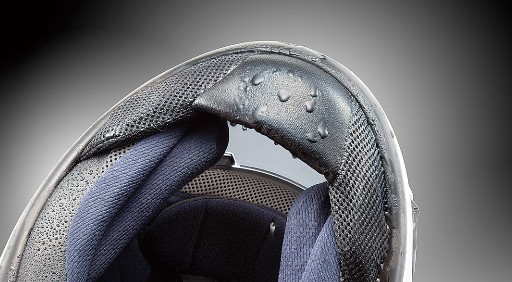
If you ride year-round or deal with cold, wet commutes, the Quantum-X’s weather handling is a meaningful upgrade. For fair-weather-only riders, the Regent-X moves plenty of air. For tips on reducing wind noise regardless of which helmet you pick, we’ve got a full guide.
Interior and Comfort Details
Both helmets have removable, washable cheek pads with recesses for comms speakers. Both use multi-density foam liners. But the details differ.
The Quantum-X’s interior uses Eco Pure comfort material, which maintains a neutral pH close to human skin and has antibacterial properties. The temple pads have 5mm peel-away layers for micro-fitting adjustments. You don’t need to buy new pads to fine-tune the fit. Just peel and ride.
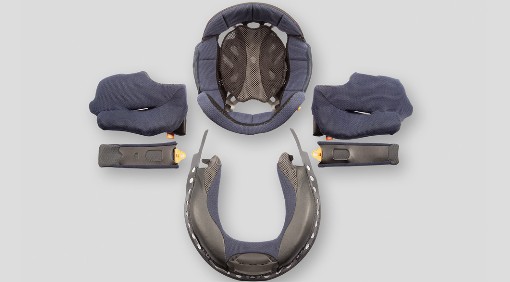
The Regent-X’s interior is comfortable (many owners call it the best they’ve worn), but the top headliner isn’t removable. You can wash the cheek pads, but the crown padding stays put. Over time, especially in hot climates, that’s a hygiene trade-off.
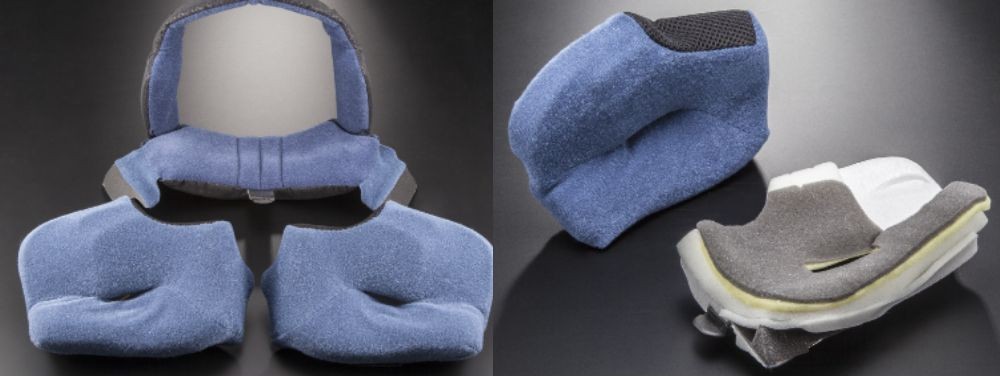
The Quantum-X also includes emergency cheek pad release tabs. In a crash, first responders can pull these tabs to remove the cheek pads and slide the helmet off without manipulating your neck. The Regent-X doesn’t have this feature. It’s one of those things you hope you never need, but it’s a genuine safety upgrade.
Visor and Optics
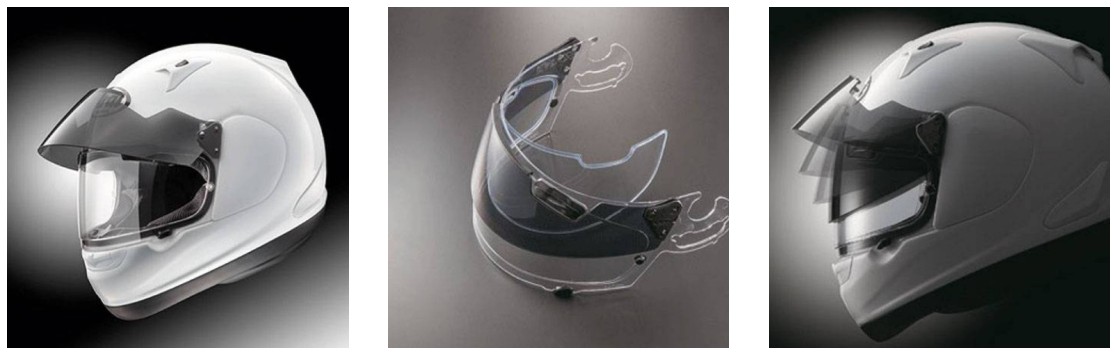
Both helmets use Arai’s VAS (Variable Axis System) Max Vision face shield, which is Pinlock-ready and provides wide peripheral vision. The Quantum-X comes with a Pinlock anti-fog insert in the box. The Regent-X is Pinlock-ready but doesn’t always include the insert, so budget an extra $30-40 if yours doesn’t come with one.
The VAS latch on the Quantum-X has a larger design that’s slightly easier to grab. Both helmets have a de-mist cracked-open position. Neither has an internal sun visor (see the safety section above for why), but both accept Arai’s external Pro Shade system.
Value for Money: Is the Upgrade Worth It?
The Quantum-X costs roughly $120 more than the Regent-X in solid colors (~$140 more for graphics). Here’s what that gap buys you:
- Emergency cheek pad release for first-responder access
- ECE certification alongside Snell and DOT (triple-certified)
- PB-SCLC shell with Kevlar belt vs. standard PB-cLc construction
- Fully removable interior including top headliner, with peel-away temple pads for micro-fitting
- ES chincover for improved weather sealing and noise reduction at the chin
If you ride daily and year-round, those five upgrades add up to a meaningful improvement in safety, comfort, and weather handling. The emergency release alone is hard to put a price on.
If you ride mostly on weekends in good weather and your head is intermediate oval, the Regent-X gets you into Arai’s world for $120 less. That’s money you could put toward a Pinlock insert, a comms unit, or better earplugs.
One thing to keep in mind: neither helmet is “budget.” Both sit in the most comfortable helmets for street riding category, and both carry Arai’s handmade build quality and 5-year warranty. You’re choosing between good and better, not good and bad.
Good Alternatives
If neither the Regent-X nor the Quantum-X feels like the right call, here are three helmets worth a look:
Shoei RF-1400 (~$530-$600): A strong intermediate oval option with excellent ventilation and quieter noise levels than either Arai at this price point. Great if noise is your top concern. Check out our dedicated review of the Shoei RF-1400.
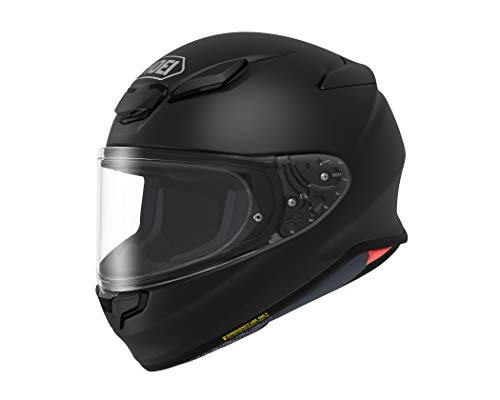
One of the top motorcycle helmets for street riding due to its incredible safety ratings, solid build construction, versatile shell for street and track riding, and reasonable price. Long term review here.
- Staff pick at Revzilla
- Quietest helmet on the market
- Excellent build quality
- Thick noise-sealing cheekpads
- Visor seal built like Fort Knox
- Snell certified for track use
- Lacking touring comfort features like drop down sun shield
Arai Signet-X (~$680-$830): Arai’s long oval option. If your head is longer front-to-back than either intermediate or round oval, this is where you should be looking. Check out our long oval helmet guide for more options.
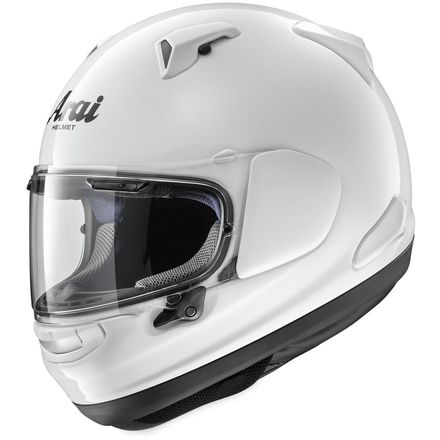
Purpose-built for long‑oval heads, the Arai Signet‑X delivers exceptional comfort, top-tier Snell-rated protection, and robust ventilation—all without pressure points or fit compromises.
- Long-oval: no forehead hotspots
- Lightweight: less fatigue on long rides
- Excellent airflow: stays cool in heat/traffic
- Snell M2020/DOT; adjustable padding
- Vent-heavy design can be noisy
- Face-shield latch is stiff with gloves
Arai XD-5 (~$700+): Arai’s adventure-touring option with a peak visor. A very different use case than street-focused helmets, but worth considering if you split time between pavement and dirt. We reviewed it in our Arai XD-5 review.
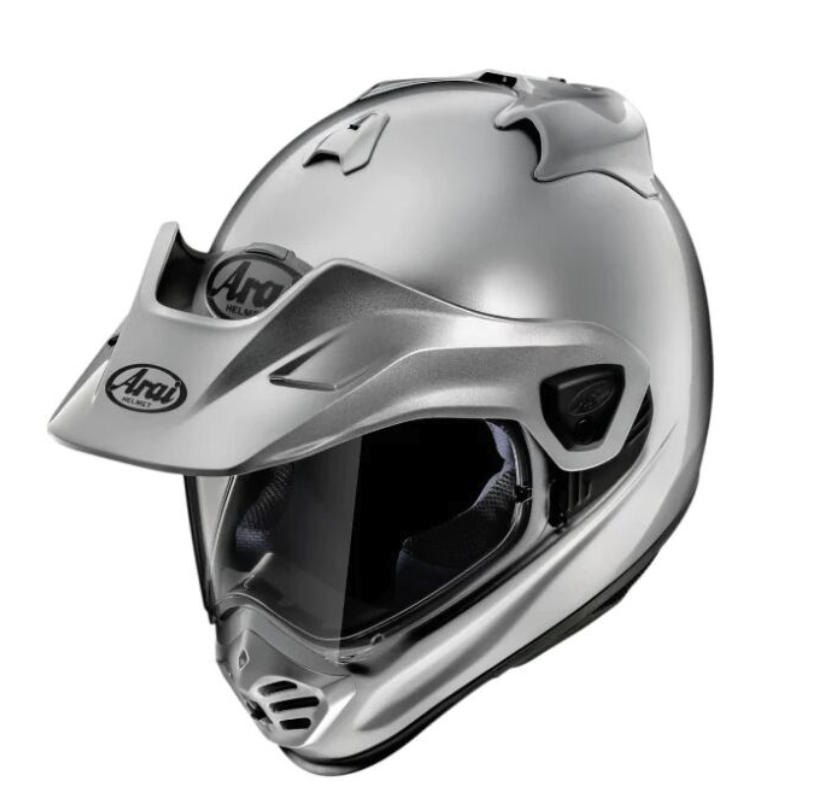
The sequel to the legendary XD-4 helmet, this lid improves in every way from its round shell design to its versatility and comfort whether you're thrashing trails or cruising on the highway.
- Quietest ADV helmet
- Removable peak
- Tons of ventilation
- Can use with googles (visor can be removed)
- DOT and Snell approved (ECE in Europe)
- None - one of the best ADV and touring helmets
FAQ
Can the Quantum-X fit an intermediate oval head?
Yes, with a liner swap. You can replace the Quantum-X’s stock round oval liner with a Corsair-X or Signet-X comfort liner (roughly $47) to convert it to intermediate oval. The Regent-X cannot be converted to round oval. If you’re between head shapes, the Quantum-X gives you more flexibility. Not sure what head shape you have? Use our helmet sizing guide to measure before buying.
Are both helmets Snell certified?
Yes. The Regent-X carries Snell M2020D and DOT certification. The Quantum-X carries Snell M2020, DOT, and ECE certification. Both exceed the minimum DOT standard by a wide margin.
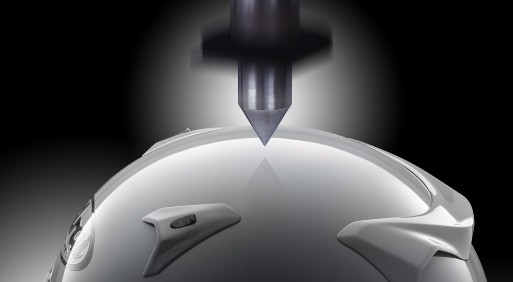
Why doesn’t either helmet have a built-in sun visor?
Arai prioritizes Snell certification, and the void space required inside the shell for an internal drop-down sun visor automatically disqualifies a helmet from Snell standards. Both helmets are compatible with Arai’s external Pro Shade system, which attaches to the outside of the shield and flips down manually.
Which is quieter, the Regent-X or Quantum-X?
Neither helmet is known as a quiet option compared to competitors like the Shoei RF-1400. The Quantum-X’s ES chincover does help reduce wind noise around the lower face, giving it a slight edge. Both helmets benefit from quality earplugs at highway speeds. For more tips, see our guide on how to make a motorcycle helmet quieter.
Do both helmets fit Bluetooth comms systems?
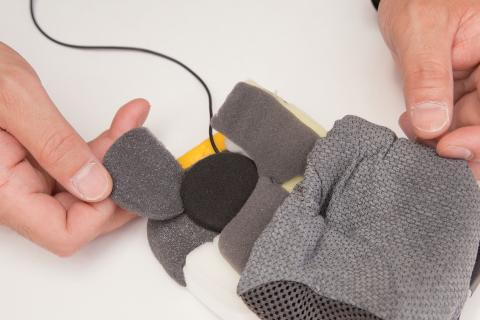
Yes. Both have recessed speaker pockets in the cheek pads designed for aftermarket Bluetooth communicators like Cardo and Sena units. The cheek pads on both models are shaped to accommodate speakers without creating pressure points on your ears.
How long do Arai helmets last?
Arai backs both helmets with a 5-year warranty from date of purchase (up to 7 years from date of manufacture). Most manufacturers and safety organizations recommend replacing a helmet every 5 years or after any impact, whichever comes first. Arai’s shell construction is durable, but the EPS liner and interior foam degrade over time.
Best for intermediate oval heads
|
Best for round oval heads
|
Entry‑level Arai helmet offering premium build quality, plush comfort, and high‑end safety certifications in a surprisingly easy‑to‑put‑on package. | Arai Quantum-X Helmet delivers premium protection and comfort for riders with a round-oval head shape. |
|
|
|
|
Entry‑level Arai helmet offering premium build quality, plush comfort, and high‑end safety certifications in a surprisingly easy‑to‑put‑on package.
- Plush FCS liner for all-day comfort
- Snell M2020 + DOT certified protection
- Wider opening for easy on/off
- Wide eyeport with Pinlock-ready shield
- Vent controls can feel stiff when wearing gloves
- Heavier and noisier than ultra‑premium sport helmets
Arai Quantum-X Helmet delivers premium protection and comfort for riders with a round-oval head shape.
- Snell 2025 and DOT approved for top-tier safety
- Advanced ventilation system for superior airflow
- Removable, odor-resistant liner for a fresh, customized fit
- Premium price may not fit all budgets