
Best Waterproof Motorcycle Gloves (2026): 4 Picks and the Catch With Each
 Evan Rally
left for contents
Short on time? Get the Adventure GTX Short from Klim. Its reviewer at Kings Motorcycle Gear describes Gore-Tex bonded to a goatskin shell with no insulation, and its short cuff tucks under your jacket sleeve, which is how you actually keep rain out of a glove. Riding through cold, wet months? Look at the Rukka Mars 2.0: Flies on the Visor’s tester came back from three hours of heavy rain with dry hands.
Ever peeled off a pair of waterproof gloves at a gas station and wrung them out like a dish rag? Tried to shove a damp hand back into a glove whose liner came out with your fingers? Wondered why your hands got soaked when the tag swore they wouldn’t?
I ride year-round in Bangkok, monsoon season included, so I don’t get to treat rain as a maybe. Wet hands get cold, clumsy and slow on the levers, and that’s the real reason to care. All four of my picks sell at RevZilla, and every one of them has a catch.
Quick picks
- Best overall: Adventure GTX Short. Unlined Gore-Tex, short cuff, three seasons. Its Kings reviewer’s hands ran hot above about 75°F.
- Best for cold, wet riding: Mars 2.0. Flies on the Visor’s tester stayed dry through a three-hour heavy-rain ride. Premium money, soft knuckle padding only.
- Best for cool-weather touring: WT-4. Light insulation, mid cuff, bone dry in torrential rain for one SportsBikeShop buyer. Not a winter glove.
- Best for cold commutes: Hydra 3. The cheapest of the four, with 100g of insulation and a fleece liner. Size up.
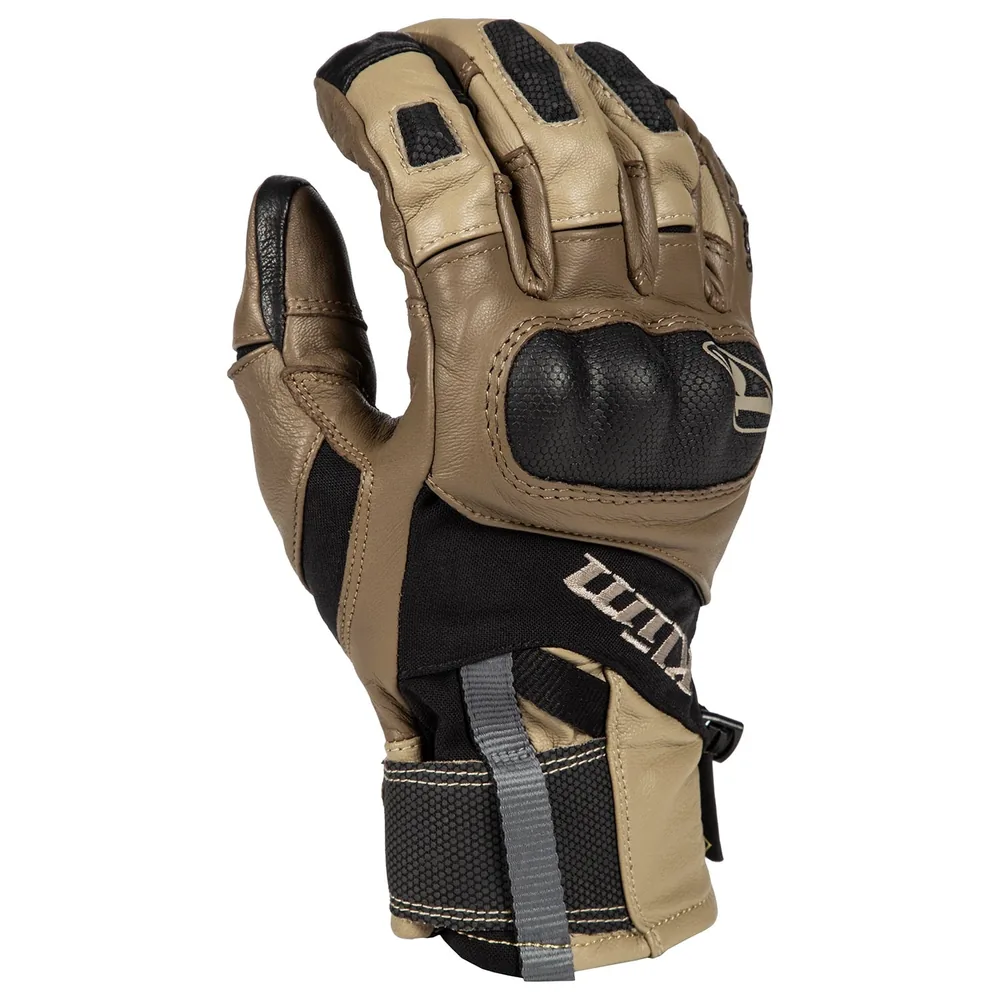
Best Overall 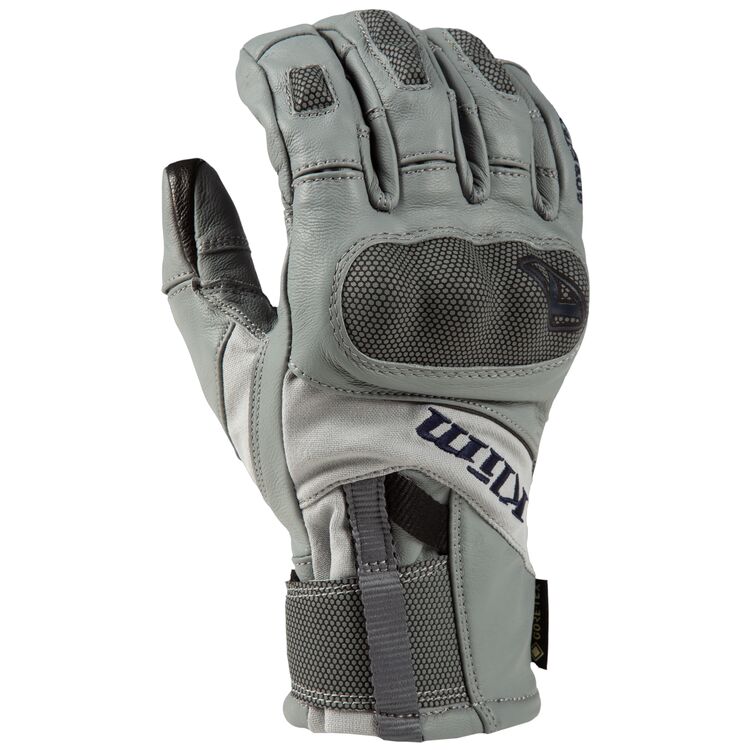
|
Best for Cold, Wet Riding 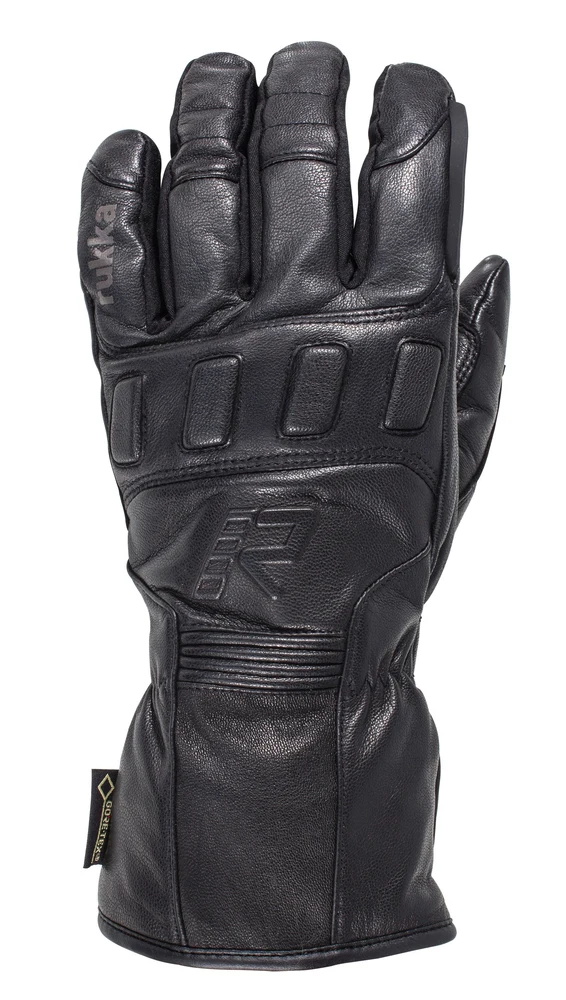
|
Best for Cool-Weather Touring 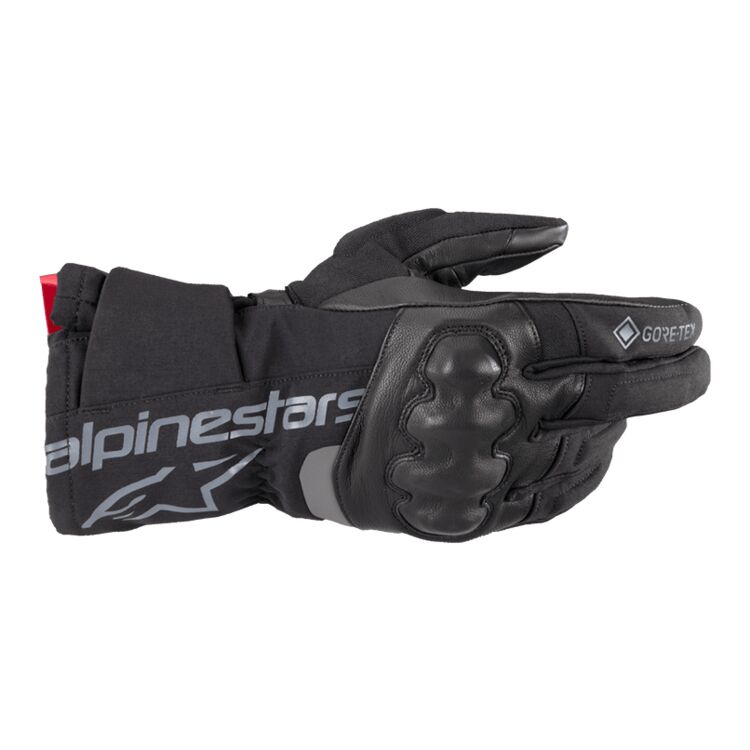
|
Waterproof, low-profile women’s adventure glove that combines breathability, CE‑rated impact protection, and touchscreen fingertips—ideal for all‑terrain riding. | Rukka's fleece-lined leather glove with a Gore-Tex lining, light insulation, a medium-length cuff with a large Velcro wrap, and a visor wiper on the left index finger. | Premium waterproof and insulated gloves for cold-weather riding. |
|
|
|
|
|
|
Waterproof, low-profile women’s adventure glove that combines breathability, CE‑rated impact protection, and touchscreen fingertips—ideal for all‑terrain riding.
- Keeps hands dry with GORE‑TEX grip
- Durable goat leather resists abrasion
- Slim cuff fits neatly under jacket
- Touchscreen fingers for easy use
- Runs small—consider sizing up
- Breaks in slowly due to stiff leather
Rukka's fleece-lined leather glove with a Gore-Tex lining, light insulation, a medium-length cuff with a large Velcro wrap, and a visor wiper on the left index finger.
- Flies on the Visor's tester had dry hands after a three-hour ride in heavy rain
- SportsBikeShop buyers report warm, dry hands in downpours
- Medium cuff fits inside or outside the jacket sleeve, per Flies on the Visor
- Visor wiper on the left index finger
- Knuckle protection is small foam pads, per Flies on the Visor
- One SportsBikeShop buyer found them soaked after an hour of heavy rain
Premium waterproof and insulated gloves for cold-weather riding.
- GORE-TEX construction for top-tier waterproofing and breathability
- PrimaLoft Silver insulation for warmth and moisture resistance
- Touchscreen-compatible fingertips for easy device use
- Mid-cuff design may not provide full gauntlet coverage
Jacket cuffs too tight to tuck a glove under? Take the WT-4 or the Mars 2.0. Alpinestars says the WT-4’s mid-cuff is “engineered to be worn over or under the sleeve,” and Flies on the Visor says the Mars 2.0’s cuff “will fit inside or outside your jacket sleeve.” Over the sleeve is still the leakier way to wear a glove in rain (more on why in the buying guide below), and Flies on the Visor says the Mars 2.0 may be best worn inside in heavy rain. If yours has to go over, cinch the cuff strap down hard.

The four side by side
| Glove | Best for | Price (US) | Membrane | Insulation | Cuff |
|---|---|---|---|---|---|
| Klim Adventure GTX Short | Most riders, spring to fall | Under $200 | Gore-Tex, bonded to the shell | None | Short, goes under the sleeve |
| Rukka Mars 2.0 | Cold, wet days | Premium | Gore-Tex lining | Fleece lining, light insulation | Medium, inside or outside the sleeve |
| Alpinestars WT-4 | Cool, wet touring | Under $200 | Gore-Tex | 80g PrimaLoft Silver | Mid, over or under the sleeve |
| REV’IT! Hydra 3 H2O | Cold commutes | Under $150 | Hydratex Z-liner, bonded to the liner | 100g Thinsulate, tri-fleece liner | Short |
Three of the four use Gore-Tex. The Hydra 3 runs REV’IT!’s own Hydratex membrane and costs the least. If your rain mostly falls on mild days and you’ll wear the glove under your sleeve, the Klim is the easy call. If you ride in the cold, you’re choosing between the Rukka, the WT-4 and the Hydra 3 on warmth, cuff and budget.
Klim Adventure GTX Short Gloves: best overall
Buy it if: you want one rain glove for spring, fall and mild winter days, you ride ADV or touring, and your jacket cuff can go over a glove.
Waterproof, low-profile women’s adventure glove that combines breathability, CE‑rated impact protection, and touchscreen fingertips—ideal for all‑terrain riding.
- Keeps hands dry with GORE‑TEX grip
- Durable goat leather resists abrasion
- Slim cuff fits neatly under jacket
- Touchscreen fingers for easy use
- Runs small—consider sizing up
- Breaks in slowly due to stiff leather
This is the glove I’d hand most riders who ask for waterproof gloves and mean it. Simon Mallinson, who reviewed it for Kings Motorcycle Gear, describes a Gore-Tex membrane “that’s bonded to the outer shell” of goatskin leather, with no insulation. Bonded matters. Adventure Bike Rider rates that build as more water-tight than a drop liner, which can let water pool inside the glove (more on bonded vs drop liners).
Mallinson’s verdict after a season of rain: “After testing the Klim Adventure GTX for three months over a very wet winter, I must say I am really impressed.” Mallinson fit them under the cuffs of a Klim Badlands Pro, a RevIt Sand 4 and a Mosko Moto Woodsman jacket without bunching.
Mallinson on wet-weather use:
- Under the sleeve: the short cuff slips under most jacket cuffs. A thick, heavily reinforced cuff like the one on Mallinson’s Klim Kodiak took some wiggling.
- Over the sleeve: worse. In Mallinson’s words, “the shorter gauntlet length doesn’t provide quite as much overlap and coverage as a full-length gauntlet would.”
- Drying: “It usually takes 24-48 hours for complete drying.” So on a multi-day trip, a soaked pair is still damp the next morning.
- Sizing: “I wore a size Large in the Calderas, but find I should have sized up to an XL in the Adventure GTX for a comparable fit.”
The catch? Heat. There’s no venting, and Mallinson found that “Once the mercury climbed over about 75°F, my hands started to feel quite hot and sweaty inside the gloves.” Not everyone agrees. A Motorcycle.com commenter who wears Klim’s Adventure GTX gloves daily (the comment doesn’t say which cuff length) wrote that “They breath reasonably well so I can wear them when it’s 100 degrees”. Hands differ. If you run hot, plan on these being your rain glove, not your August glove.
Silver lining: no insulation means no bulk, and they’re under $200.
Rukka Mars 2.0 Gore-Tex Gloves: best for cold, wet riding
Buy it if: you ride through cold, wet months, you want a warm glove without bulk, and you’ll pay for it.
Rukka's fleece-lined leather glove with a Gore-Tex lining, light insulation, a medium-length cuff with a large Velcro wrap, and a visor wiper on the left index finger.
- Flies on the Visor's tester had dry hands after a three-hour ride in heavy rain
- SportsBikeShop buyers report warm, dry hands in downpours
- Medium cuff fits inside or outside the jacket sleeve, per Flies on the Visor
- Visor wiper on the left index finger
- Knuckle protection is small foam pads, per Flies on the Visor
- One SportsBikeShop buyer found them soaked after an hour of heavy rain
The UK site Flies on the Visor ran a simple test in November 2024. Wait for rain, then ride 30 to 40 minutes at motorway speeds in each glove, with an old pair of Oxford gloves as the control. The Rukka Mars 2.0 never made it into the formal test: “I couldn’t test the Rukka gloves because Roger refused to give them back. Having dry hands after a three-hour ride in heavy rain was all Roger needed to declare them totally waterproof and not look any further.”
Buyers on SportsBikeShop, where it rates 4.8 from 24 verified reviews, mostly back that up:
- Downpour: “I wore them last week in an almighty downpour whilst dropping my bike off for a service, and they kept my hands both warm and dry without the need for heated grips.”
- Years of rain: a buyer on a second pair of Mars gloves says “They have never let me down in all kinds of rain and storms.”
- Cold: another buyer’s “fingers were still warm in a 1-2 degree Celsius ride,” which is about 34 to 36°F.
A Flies on the Visor commenter, who doesn’t say which generation, adds: “I have had my Rukka Mars gloves just over 3 years now and they are my go to gloves when it is wet or cold or both!”
Rukka’s spec, as SportsBikeShop lists it, calls the waterproofing a Gore-Tex lining under the leather, with a fleece lining and light insulation; it doesn’t say whether that lining is laminated to the shell. Flies on the Visor adds a full-length visor blade on the left index finger, and on the cuff: “The glove’s cuff is medium in length. It will fit inside or outside your jacket sleeve, although inside may be best in heavy rain. A large Velcro-backed wrap at the cuff ensures a tight seal against the elements.” They say the fleece lining works well, keeping their hands warm “especially when compared to other gloves with fancier branded thermal insulation layers.”
The catch? Three of them. First, it isn’t bulletproof in the wet. One SportsBikeShop buyer writes, “After 1 hour ride in heavy rain gloves were soaking and unusable for 1-2 days on readiator to dry.” Second, protection is light. Flies on the Visor says the knuckle protection is foam padding “limited to small sections on each knuckle,” and the palm gets a leather overlay rather than a hard slider. Third, price. In SportsBikeShop’s UK listings, where both are sold, the Mars 2.0 runs well over the WT-4. If you crash often or ride hard off-road, look at the Klim, which Mallinson says has hard knuckles.
Not Sure What Size to Order? Get Our Gear Fit Guide.
Sizing charts for helmets, jackets, gloves & boots — with brand-specific fit notes and pro tips so your gear fits right the first time.
- Helmet sizing by brand
- Jacket, glove & boot charts
- Head shape guide
- Between-sizes tips
Alpinestars WT-4 Gore-Tex Gloves: best for cool-weather touring
Buy it if: you ride cool, wet shoulder seasons, you want a little insulation, and you’d like the choice of wearing the cuff over or under your sleeve.
Premium waterproof and insulated gloves for cold-weather riding.
- GORE-TEX construction for top-tier waterproofing and breathability
- PrimaLoft Silver insulation for warmth and moisture resistance
- Touchscreen-compatible fingertips for easy device use
- Mid-cuff design may not provide full gauntlet coverage
Alpinestars builds the WT-4 around a Gore-Tex construction with Gore Grip, 80g of PrimaLoft Silver insulation on the back of the hand, a leather palm, and a mid-cuff it says is “engineered to be worn over or under the sleeve”. That’s the maker’s spec as SportsBikeShop lists it, and it doesn’t say how the membrane is attached. One buyer there says the membrane and lining “seem bonded to the outer”. The glove holds a 4.7 from 10 verified buyer reviews.
The most detailed of those reviews comes from a buyer who got them for rain in the warmer months and wore them on a trip to France: “On both times, once torrential rain and the other very light rain, the gloves worked perfectly, and my hands were bone dry.” The temperature, that buyer adds, “was between 9-18 degrees on these occasions,” which is roughly 48 to 64°F.
Other SportsBikeShop buyers:
- Getting them off: “Bonus is the membrane and lining seem bonded to the outer which helps when taking them off.” That’s the wet re-entry problem, handled.
- Rain with heated grips: they “Held well in rain, not too warm but work with heated grips.”
- Wrist straps: “The wrist straps also get stuck when trying to take the gloves off and are at risk of ripping.”
- Sizing: the France-trip buyer measured as a medium, found them too tight, and went up to a large.
The catch? It isn’t a winter glove, whatever the insulation suggests. The France-trip buyer doesn’t think they’d suit anything colder than that trip, and the buyer who flagged the wrist straps goes further: “Even with cotton inner gloves these won’t keep your hands warm.” If your rain falls near freezing, pair them with heated grips or look at our winter motorcycle gloves instead.
Silver lining: of the three Gore-Tex gloves, it’s the only one with a named insulation fill, so it’s a solid pick when the rain is cool but not freezing.
REV’IT! Hydra 3 H2O Gloves: best for cold commutes
Buy it if: you commute through cold, wet months, you want warmth more than airflow, and you’d rather not spend Gore-Tex money.
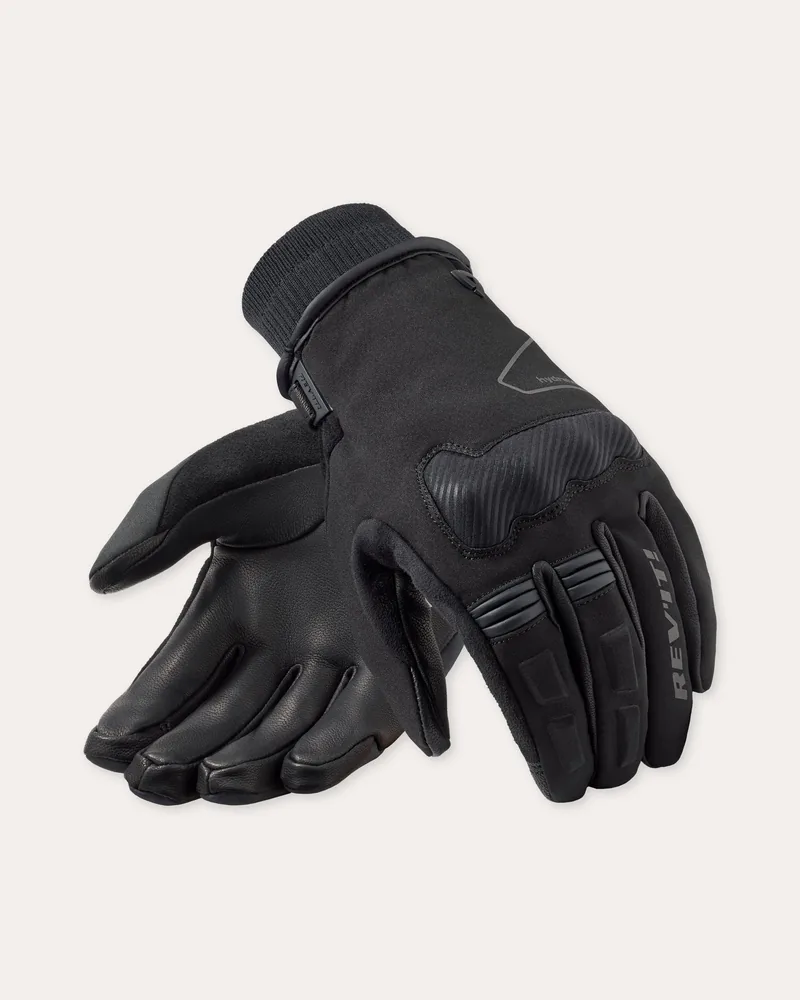
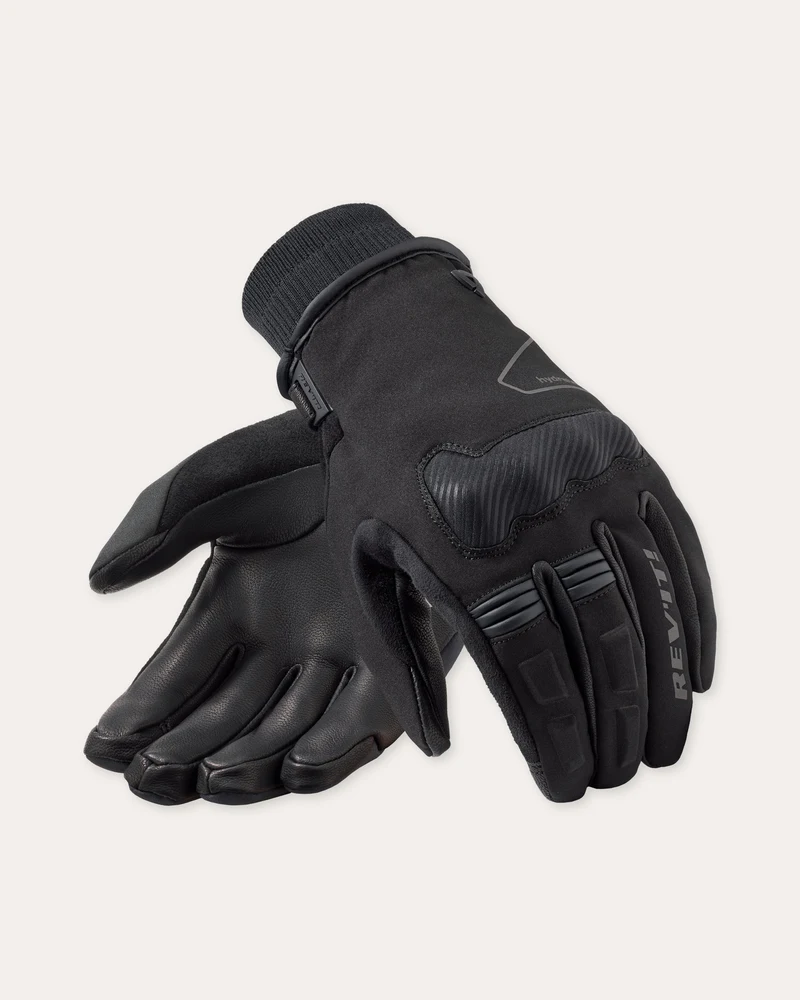
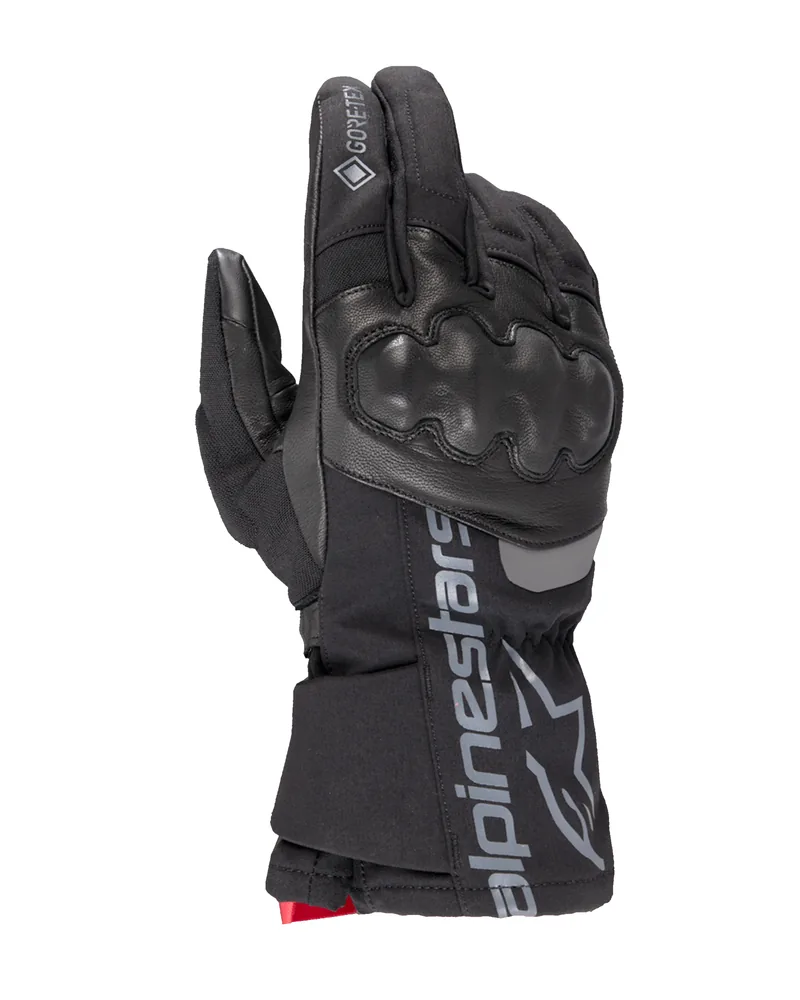
REV'IT!'s short-cuff cold-weather glove: softshell and goat leather/suede over a Hydratex Z-liner membrane, with 100g Thinsulate, a tri-fleece liner and hard shell knuckles.
- SportsBikeShop buyers call it waterproof
- 100g Thinsulate and a tri-fleece liner for cold commutes
- Short cuff that owners say fits under jacket cuffs
- The least expensive of these four picks
- Runs small; owners say size up
- Snug cuff makes it tight to pull on
SportsBikeShop’s listing pitches the Hydra 3 at colder rides in the city. The spec it lists puts a Hydratex Z-liner membrane under a softshell and goat leather/suede shell, with 3M Thinsulate 100g, a tri-fleece liner, hard shell knuckles and a short cuff. It’s the cheapest glove of the four, under $150.
Wade Thiel’s Wind Burned Eyes write-up describes the Z-liner as a waterproof, breathable membrane “bonded to the liner.” That’s not the same claim Mallinson makes for the Klim, whose Gore-Tex is bonded to the outer shell. Either way, SportsBikeShop buyers call the Hydra 3 waterproof.
The owners on SportsBikeShop rate it 4.8 from five reviews. One buyer, who already owns a REV’IT! Gore-Tex winter glove, got these for spring: “Got these for the Spring. They are comfy, warm, waterproof and a lot less bulky.” The temperature floor: “Perhaps not for the depths of winter, but 5c plus they are fine.” That’s about 41°F. Another buyer kept it short: “Comfortable and definitely waterproof.” A third says the cuff “easily fits under the jacket cuffs”.
The catch? Sizing, and it’s consistent. The spring buyer: “As other reviews, size up. I am L in RST gloves. XL in rev’it and fit well.” Another went up to an XL on the same advice, and a buyer who got a large for what that buyer calls medium hands says “Even the large are snug and quite tight to get your hand through the cuff.” A snug cuff is a pain on a wet stop, so order a size up and try them on dry first.
Thiel also flags a membrane trade-off: “The waterproof membrane, while effective, can trap moisture if the rider’s hands become sweaty, leading to a clammy feeling.” With 100g of fill on the back of the hand, this is a cold-weather glove. Wear it on a warm, wet afternoon and you’ll know it.
How to pick a waterproof glove that stays dry
When waterproof gloves leak, it usually comes down to three things: how the membrane is attached, where the cuff sits, and what the word waterproof actually promises. Get those right and almost any decent glove keeps you dry. Get them wrong and the best Gore-Tex on the market won’t save you.
Bonded membrane or drop liner
Adventure Bike Rider’s Bryn Davies, who rain-tested nine winter gloves in 2021, sorts them into two builds. They’ll “either feature a waterproof liner that sits between the outer and inner or they’ll have a waterproof membrane bonded to the inside of the outer material.” He calls the first a drop liner and says which works better: “There’s no doubt that a laminated membrane is more effective at providing a water-tight glove than a drop liner. A drop liner will also allow water to penetrate through the outer material and pool inside the glove, making your hand feel cold.”
His test backed it up. The Spada Enforcer, Bering Crezus and Racer Evolution all let water in at the fingertips, and his best guess was that the gloves using a waterproof lining instead of a laminated membrane were the ones letting water through. A Flies on the Visor commenter points at the other weak spot: “Gloves are complex with a lot of stitching, and IME it’s the stitching that causes the problem.”
Among the four picks, only the Klim’s membrane is described as bonded to the shell, by Mallinson. Rukka’s and Alpinestars’ specs name Gore-Tex without saying how it’s fixed, and Thiel describes the Hydra 3’s Hydratex only as “bonded to the liner.”
Construction matters for the wet re-entry problem too. A liner that pulls out with your sweaty fingers leaves you fishing it back in at a gas station. RideApart’s Chris Cope hit exactly that in a 2018 review of Klim’s Adventure gauntlets, an older gauntlet-cuff model, not the Short: “the liner will pull out when your hands get sweaty/damp.” Cope’s fix was to carry a chopstick to push it back into the fingers. On the WT-4, one buyer says the membrane and lining “seem bonded to the outer,” which “helps when taking them off.”
Put the cuff under your sleeve
This one surprises people. Water runs down your jacket sleeve, and if the glove cuff sits outside it, the sleeve funnels rain straight into the glove. Davies again: “The best way to wear your gloves in wet weather is to have them tucked under the cuff of your jacket. When worn like this rain won’t be able to drip down the outer of your jacket and into the inside of your gloves.”
Flies on the Visor reached the same conclusion from the saddle: “Ensuring that your jacket goes over the glove’s cuff is more important than I ever thought it would be. I’d never considered rainwater wicking its way from the cuff and soaking the inside of the glove.” Held told them the same about its Tonale glove, which only reaches full waterproof performance inside the sleeve.
Before you blame the glove, check the sleeve. Knox founder Geoff Travell, answering readers in that ABR test, put it this way: “Check that the gloves are actually leaking rather than water running down the arm and seeping into the glove.” And a glove is only half the system. If your jacket wets out, the gloves never stood a chance, so pick the jacket with the same care. Our waterproof motorcycle jacket picks cover that half.
What the waterproof label actually means
Not as much as you’d hope. Flies on the Visor points out that “In the UK, a manufacturer can claim a garment is made from waterproof material if the hydrostatic head test is 1,500mm or better.” That test measures how tall a column of water a piece of fabric holds before it leaks. Tents print the number. Gloves don’t: “But I’ve never been able to find this figure when buying waterproof motorcycle gloves.”
So treat the word on the tag as a starting point. A named membrane bonded to the shell, plus an owner who rode the glove through a downpour, tells you more than the label does.
Sweat, heat and heated grips
A membrane that stops rain also slows sweat. One Motorcycle.com commenter found that a pair of Alpinestars Drystar and Dainese D-Dry gloves “were only good for wet weather,” because “the Drystar and D-Dry membranes are 100% windproof, which means your hands were sweating like crazy.” That rider ended up stopping to swap gloves going into and out of storms.
Heated grips add a twist. Travell explains that “Hydrophilic membranes work on heat and density pressure so if the grips are warmer than your hands it may pull moisture through the membrane to the inside of the glove. However this is moisture, not water, so at best your hands will only feel clammy, not wet.” Clammy palms on heated grips don’t mean a leak. If you want heat built into the glove itself, that’s a different category, and our heated motorcycle gloves roundup covers it.
Wet leather is cold leather
Even when the membrane holds, the shell outside it can soak through. Cope, after a year of British rain in those Klim Adventure gauntlets: “The leather of the glove takes on moisture, sometimes failing to dry completely overnight, but the Gore-Tex lining always manages to keep that moisture off from my hands.” Cope follows it with “wet gloves are by nature colder gloves”. Travell makes the same point about leather, which “may be affected by water more than a textile glove,” and says leather gloves with a bonded insert “will perform better in the wet”.
Drying them out and keeping them waterproof
A soaked pair takes a while. Mallinson puts the Klim at 24 to 48 hours to dry fully, and is firm about how: “I never use direct heat sources – they can damage the leather and Gore-Tex.” So skip the radiator and the hotel hair dryer, and do what Mallinson does: stuff them with paper towels and let them dry at room temperature.
Why does a glove that was dry last season start soaking through? Part of it is the shell. Mallinson says the factory water-repellent coating on the Klim keeps water beading on the outside, “reducing the chances of the outer shell becoming saturated and heavy,” and tops it up by hand: “Every few months, I apply a DWR (Durable Water Repellent) spray designed for Gore-Tex.” The other part is damage you can’t fix. Travell is clear that once seams start to rip on a waterproof glove, “they will not be repairable as the membrane will be affected so you will have to replace them.”
Pack a spare pair anyway
While waiting in the rain for a ferry home, the Flies on the Visor writer watched a rider change his socks after 400 miles in the rain. His advice: “the last thing to go in your luggage, and therefore the first thing to come out, are dry socks and a spare pair of dry gloves.” No membrane beats a dry pair you can reach in ten seconds. For the rest of the wet-weather kit, see our motorcycle rain gear guide.
Quick checklist before you buy
- A named membrane (Gore-Tex, Hydratex), ideally bonded to the shell.
- A cuff slim enough to go under your jacket sleeve, with a strap that cinches it.
- A visor wiper on the left hand. ABR calls one “very useful” for a wet or mucky visor.
- Insulation that matches your temperatures, not your hopes.
- Room to size up. Mallinson on the Klim, a WT-4 buyer and three Hydra 3 buyers all went up a size or wished they had.
FAQ
Are there waterproof gloves you can wear in summer?
Yes, if you pick one without insulation. The Klim Adventure GTX Short is the closest of the four, though Mallinson’s hands got hot above about 75°F. Unlined Gore-Tex keeps a summer storm out, but it won’t flow air like a mesh glove. For dry heat, a vented glove from our summer motorcycle gloves picks will be cooler, and you carry the waterproof pair for the storm.
Is Gore-Tex worth it over a brand’s own membrane?
Often, but it’s not the only thing that matters. Motorcycle.com calls Gore-Tex “the gold standard” and adds that “the other waterproofing membranes on the market are getting progressively better.” Owners on SportsBikeShop call the Hydra 3’s Hydratex liner waterproof. How the membrane is attached, and where your cuff sits, matter at least as much as the brand name on it.
Why do my waterproof gloves still get wet inside?
Usually it’s the sleeve, not the glove. Rain runs down an over-the-cuff glove and wicks inside. Tuck the cuff under your jacket sleeve first. If your hands still get wet, Travell says the membrane may be holed or torn, which can happen in use or in production. A drop liner can also let water collect inside the glove, and sweaty hands feel wet even when nothing leaked.
What’s the difference between waterproof and winter gloves?
Insulation. The Hydra 3 and the WT-4 carry named fill, and buyers of both say they’re not deep-winter gloves. The Rukka has only a fleece lining and light insulation, yet one buyer reports warm fingers at 1 to 2°C. Much below that, look at insulated winter gloves or add heated grips.
Bottom line: get the Klim if you want one rain glove for most of the year, the Rukka if your wet days are cold ones, and tuck the cuff under your sleeve whichever you buy. Then go ride in the rain on purpose.