
Schuberth C5 vs Arai Contour-X: Which Is Better for Touring?
 Evan Rally
left for contents
Two premium touring helmets, two opposing philosophies. The Schuberth C5 is a wind-tunnel-tuned German modular built around quiet highway miles and plug-and-play comms integration. The Arai Contour-X is a hand-built Japanese full-face built around Snell-rated protection, light weight, and 13 vents you can actually feel. They sit within $100–$200 of each other and force one question: do you want a flip-up chin bar, or the lightest, most ventilated lid you can get at this tier?
Buy the Schuberth C5 if you:
- Want to flip the chin bar up at fuel stops, toll booths, and rest breaks without removing the helmet
- Prioritize a quiet cabin for long highway days and plan to run a factory-integrated SC2 (Sena) or SC Edge (Cardo) comms unit
- Need a drop-down internal sun visor for changing light on day-long rides
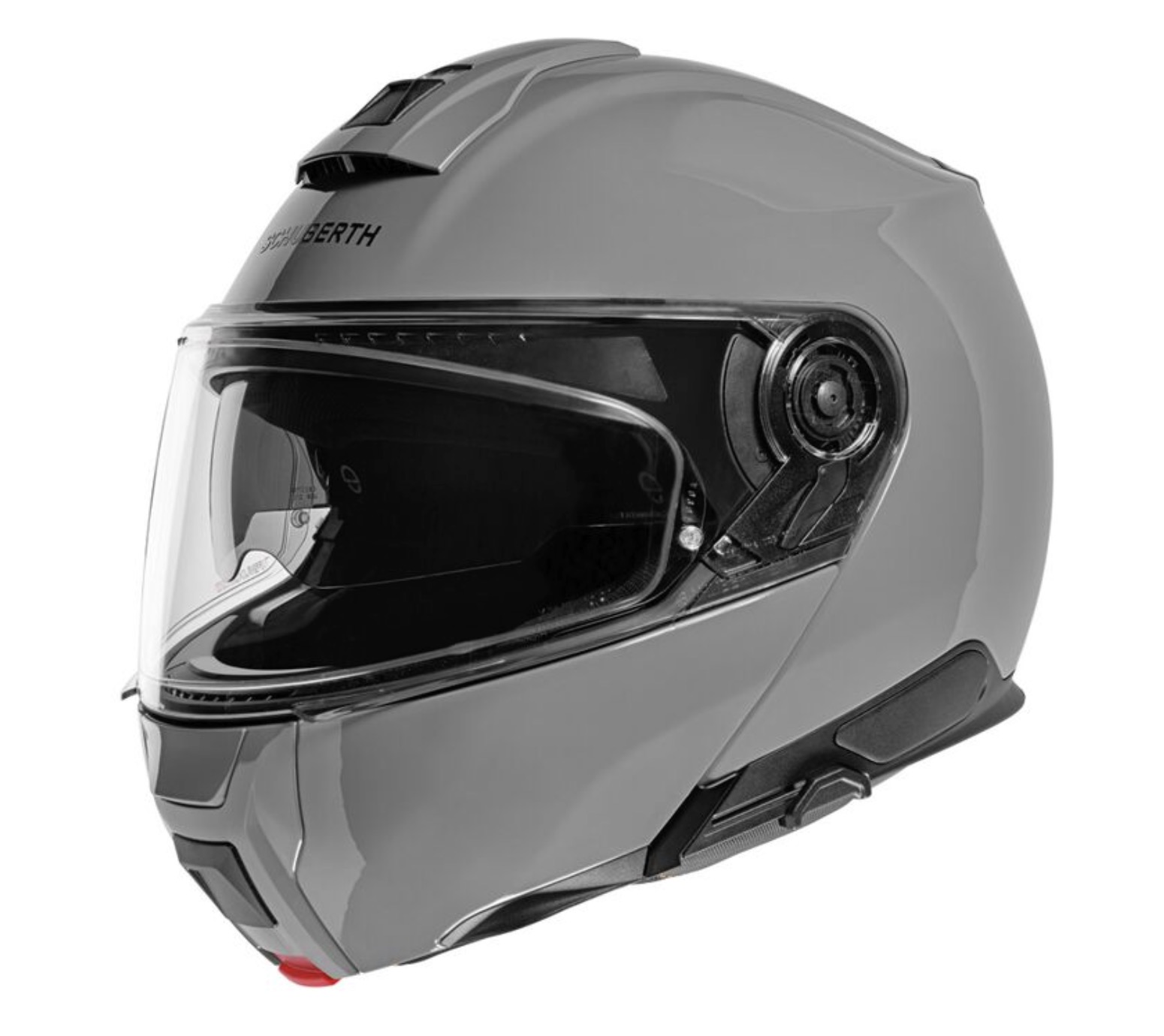
The quietest touring helmet money can buy, kitted out with all the features you expect for those long days in the saddle.
- Modular flip up chin bar
- Drop down sun visor
- Space for integrated comms unit
- Many colorway options
- DOT certified, with ECE in EU
- Heavier than most full-face helmets
- Visor mechanism needed refinement early on
Buy the Arai Contour-X if you:
- Want the lightest possible helmet on your neck for 6-plus hour days in the saddle
- Value Snell M2025D certification on top of DOT for the most demanding U.S. impact standard
- Need maximum ventilation for hot-climate touring, with 13 ports you can dial in port by port
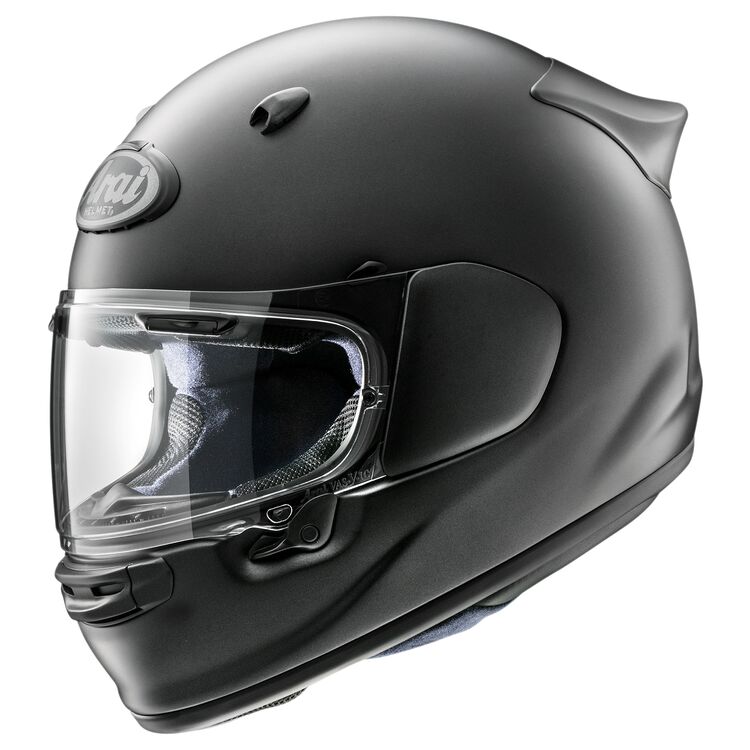
Combining race-derived aerodynamics with touring comfort, the Arai Contour-X delivers strong protection, excellent airflow, and a plush liner that keeps you cool and comfortable on both daily rides and long hauls.
- Unmatched comfort thanks to ultra-soft liner & roomy 5 mm flare at base
- Great ventilation: 7 intakes + 6 exhausts pull cool air & reduce heat build-up
- Aerodynamic shell & spoiler reduce buffeting at highway speeds
- Integrated speaker pockets & wire channel make comms setup clean & easy
- Shield locking mechanism is a bit finicky and takes getting used to
- Raised logo vent can be hard to operate when wearing thick gloves
The Schuberth C5 is worth +$100–$200 if you genuinely flip the chin bar up on most rides. If you don’t, the Contour-X spends that money on protection, ventilation, and weight savings instead.
At-a-Glance: Specs & Price
| Specs | Schuberth C5 | Arai Contour-X |
|---|---|---|
| Weight | ~3.7–3.8 lbs / ~1,640 g (size M, fiberglass) | ~3.34 lbs / ~1,515 g (size M) |
| Fit/Shape | Intermediate oval, 2 shell sizes | Intermediate oval, 2 shell sizes, 5 mm flared base |
| Shell/Materials | DFP fiberglass reinforced with carbon fiber, EPS with two densities | PB-cLc2 laminated fiberglass with Super Fiber belt and Z-Compound resin |
| Safety/Cert | DOT, ECE 22.06 with P/J dual homologation | DOT, Snell M2025D |
| Ventilation | Double chin intake with filter, top vent, rear spoiler extractor | 13 ports (7 intake, 6 exhaust), 3D logo vent, F1-derived crown intakes, 3-way rear spoiler |
| Sun Visor | Integrated drop-down sun visor | None (Pro Shade VAS-V accessory sold separately) |
| Comms Ready | Plug-and-play SC2 (Sena) or SC Edge (Cardo) pre-wired with speakers and antennas | Universal speaker pockets, flat side panels, wire channel in neck roll |
| Visor/Shield | Pinlock 120 Max Vision ready, Memory Function visor | VAS-V MAX Vision, Pinlock included |
| Chin Strap | Micro ratchet with Anti-Roll-Off System | Double D-ring |
| Warranty | 5 years from purchase / 7 years from manufacture | 5 years from purchase / 7 years from manufacture |
| Price (typical) | ~$700–$900 solid; up to ~$1,000 graphics (as of early 2026) | ~$740 solid; ~$890–$950 graphics (as of early 2026) |
Who Each Product Is Built For
The Schuberth C5 Rider
You think of your helmet as a cockpit. You ride sport-touring miles behind a windshield, stop for gas every couple of hours, and would rather flip the chin bar up than wrestle a full-face off every time.
- You ride a touring or sport-touring bike with a fairing and want the calmest air money can buy behind that windshield
- You’re committed to Sena or Cardo and want a comms unit that disappears into the shell
- You wear glasses and like being able to put them on after the helmet is already seated
- You ride through changing light (backroads, tunnels, sunrise commutes) and want a drop-down sun visor instead of swapping shields
- You ride two-up some days and want one lid that handles tours, commutes, and rest stops gracefully

The Arai Contour-X Rider
You want a helmet that disappears on your head. The Contour-X is nearly half a pound lighter than the C5 and trades modular convenience for protection, airflow, and shell purity.
- You ride upright or sportier-leaning touring bikes and want minimum mass on your neck for full-day rides
- You spend time on twisty roads where head-checks pile up, and you want a helmet that doesn’t fight you through each one
- You want Snell M2025D certification on top of DOT for the most demanding U.S. impact standard
- You ride in hot climates (the American Southwest, southern Europe, Southeast Asia) and need real airflow you can dial in vent by vent
- You aren’t married to a single comms brand and want a helmet that fits whatever you upgrade to in three years
What Riders Report (Hands-on & Owner Feedback)
Schuberth C5 owners love:
- Wind tunnel quietness. Schuberth claims 85 dB(A) at 100 km/h on a naked bike, and long-term owners back that up. Behind a touring fairing it’s noticeably calmer than most modulars.
- Phenomenal ventilation. This hands-on Schuberth C5 review describes the top vent as a feature the reviewer “didn’t know she was missing.” The lower brow vent clears fog in seconds.
- Sun visor placement. The slider sits on the lower left edge of the shell, easy to grab with a gloved hand at speed.
- Plug-and-play comms. Speakers, antennas, and wiring come pre-installed. Drop in the SC2 (Sena) or SC Edge (Cardo) and you’re done.
- ECE 22.06 with P/J. First Schuberth modular legally certified for road use with the chin bar either open or closed.
Schuberth C5 owners flag:
- The visor drops at speed. The clear main shield can creep down from a cracked-open position once you hit highway speeds, often between 50 and 70 mph. Our reviewer fixed hers with a $1.70 set of rubber O-rings, but out of the box it’s a real complaint.
- Weight. At ~3.7–3.8 lbs, the fiberglass C5 is heavier than most premium full-face helmets. The Carbon version shaves around 100–150 g.
- Chin strap pull tag. The small red tag on the ratchet is fiddly with thick winter gloves.
- Chin strap as a passenger. Our reviewer noted that passenger posture pushed the chin strap into her Adam’s apple. Worth checking if you ride pillion.
Arai Contour-X owners love:
- Comfort out of the box. Multiple independent reviewers call the brushed nylon interior one of the most comfortable in Arai’s lineup. The 5 mm flared base means you don’t have to wrestle it past your ears.
- Class-leading airflow. The 3D Arai logo vent channels roughly 40% more air at low speeds than older Arai venting. With all 13 ports open, owners in hot climates consistently report it outperforms competitors.
- Featherweight feel. At ~3.34 lbs, the Contour-X is noticeably lighter than the C5 and most premium touring lids. After hour four, you feel the difference.
- Snell M2025D. Arai is currently the only manufacturer with its entire North American lineup certified to the latest Snell standard.
- Universal comms fitment. Flat side panels, dedicated speaker pockets, and a wire channel in the neck roll let any comms brand mount cleanly.
Arai Contour-X owners flag:
- VAS-V visor mechanism. Arai’s safety-driven shield latch takes some learning. Expect to fumble the first few rides before muscle memory kicks in.
- No drop-down sun visor. You run sunglasses, swap to a tinted shield, or buy the Pro Shade accessory. None is as seamless as an integrated drop-down.
- Logo vent with thick gloves. The 3D logo vent lever sits high and small. Hard to operate with winter gauntlets.
- No factory-integrated comms. Your unit lives on the outside of the shell. It works, but it’s not as clean as Schuberth’s plug-and-play.
Not Sure What Size to Order? Get Our Gear Fit Guide.
Sizing charts for helmets, jackets, gloves & boots — with brand-specific fit notes and pro tips so your gear fits right the first time.
- Helmet sizing by brand
- Jacket, glove & boot charts
- Head shape guide
- Between-sizes tips
Head-to-Head by Category
Noise at Highway Speeds
Edge: Schuberth C5.
The C5 is one of the quietest helmets on the market in this category, period. Schuberth’s wind tunnel work and redesigned neck roll seal out wind from underneath. Our reviewer rode the C5 across multiple bikes (BMW R1200RT, GS, Honda NC750) and consistently found it quieter than the Shoei Neotec 2 she compared it against. Schuberth’s published 85 dB(A) at 100 km/h on a naked bike is one of the lowest claims in the category.
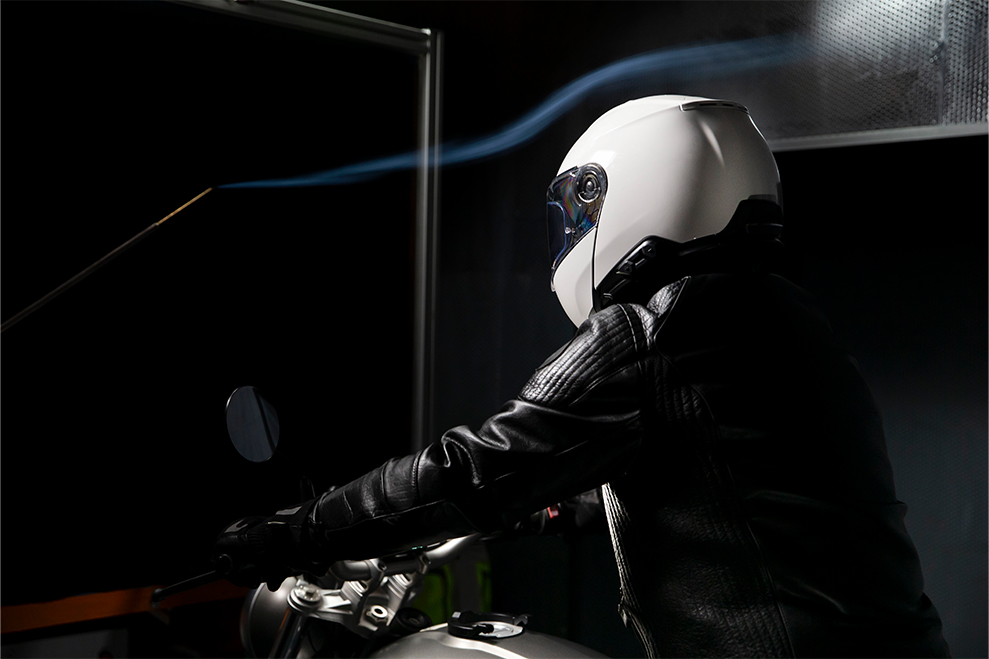
The Contour-X is quiet for a full-face but not silent. It prioritizes airflow over absolute sound deadening. With all 13 vents open at highway speed, you’ll hear more air movement than in a sealed-up C5. Close the vents and it tightens up, but it’s still not in C5 territory.
If quietness is your single top priority, the C5 wins this comfortably. For noise reduction strategies regardless of which lid you choose, see our tips for reducing helmet noise.
Weight and All-Day Fatigue
Edge: Arai Contour-X.
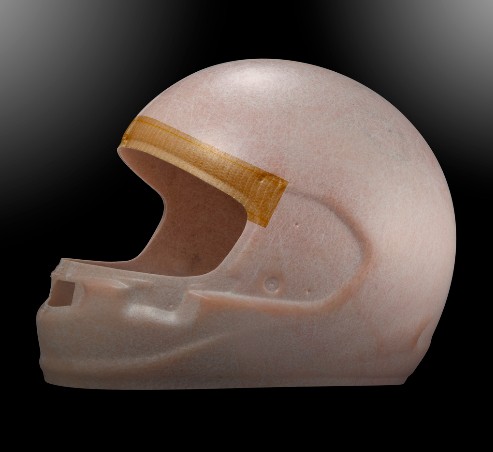
The Contour-X weighs roughly 3.34 lbs in size M. The fiberglass C5 weighs roughly 3.7–3.8 lbs in size M. That’s a gap of about half a pound, and you absolutely feel it after hour four.
The C5’s weight comes from physics you can’t engineer around: a flip-up chin bar needs hinges, a locking mechanism, sealing components, and reinforcement that lets ECE 22.06 P/J certification work in both positions. Add the SC2 comms module and you’re closer to 4 lbs total.
The Contour-X benefits from Arai’s PB-cLc2 shell with Z-Compound resin, which trimmed weight without losing impact performance.
If you ride 6-hour-plus days, that half-pound compounds. If you ride weekend loops, you probably won’t notice.
Ventilation in Heat
Edge: Arai Contour-X.
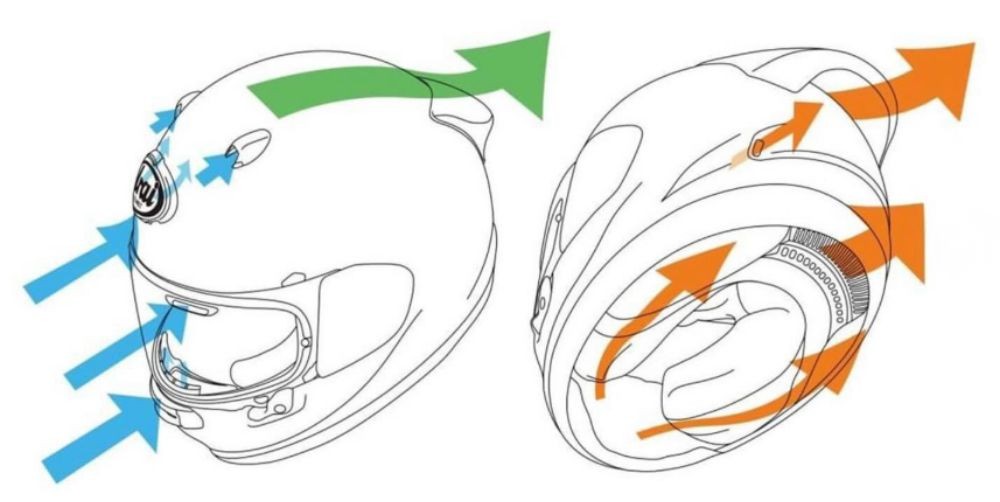
This isn’t close. The Contour-X has 13 ports (7 intakes, 6 exhausts) compared to the C5’s two intakes and rear exhaust. The 3D logo vent feeds central forehead intakes, F1-derived crown vents pull air across the top of your head, and the three-position chin vent pushes cool air across your face. The rear spoiler actively scavenges hot air out.
The C5’s ventilation is good for a modular. The Featured Creator who reviewed it for us specifically called out the top vent and brow vent as standout features she now uses constantly. Both designs work. The Contour-X just moves more air, full stop, especially at lower speeds where heat builds up worst.
If you ride in 90°F-plus heat regularly, the Contour-X is meaningfully better ventilated.
Visor and Sun Shield Usability
Edge: Schuberth C5.
The C5 ships with an integrated drop-down sun visor you deploy with a slider on the lower left of the shell. Our reviewer specifically called the placement “way better” than what she’d used on the Neotec 2. For day-long rides through changing light, a tinted visor a finger-flick away is a daily convenience.

The Contour-X has no built-in sun visor. Your options are sunglasses underneath, a swapped tinted shield, or the optional Pro Shade VAS-V that clips a tinted strip onto the existing face shield. Some riders find the transition between tinted strip and clear lower zone distracting.
Both helmets include Pinlock anti-fog inserts. One C5 caveat: out of the box, the main face shield is known to creep down at highway speed. The fix is real (rubber O-rings, about $1.70, ten minutes), but you should know going in.
Comms-Ready Fitment
Edge: Schuberth C5 if you use Sena or Cardo. Arai Contour-X if you want flexibility.
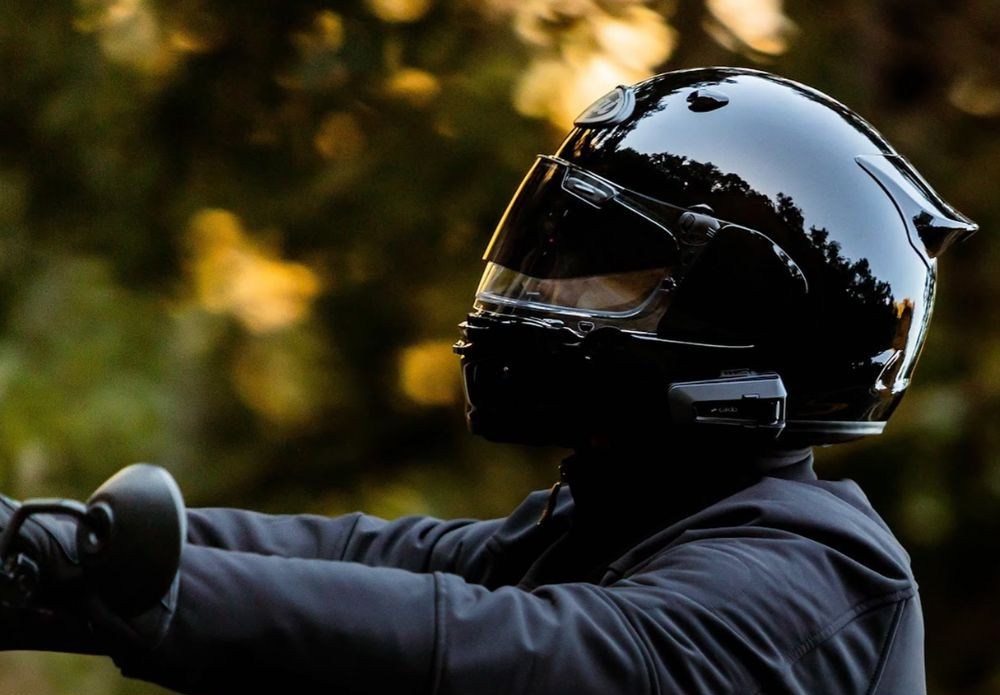
The C5 is built for plug-and-play comms. Speakers and antennas (FM, Bluetooth intercom, Mesh intercom) come pre-installed. The SC2 module drops Sena hardware into the shell. The SC Edge does the same for Cardo Packtalk Edge. Both look factory-integrated.
The Contour-X takes the universal approach. Flat side panels accept any sticky-mount unit, speaker pockets are recessed into the liner, and a stitched opening in the neck roll lets you tuck wires. Not as slick, but you aren’t locked into one brand. Want to switch from Sena to Cardo in three years? The Contour-X comes with you.
Safety Certifications and Build
Edge: Draw. Two different excellent standards.
The C5 carries DOT and ECE 22.06 with P/J dual homologation. ECE 22.06 tests across more impact angles and locations than ECE 22.05, including oblique impacts. The P/J homologation means it’s certified with the chin bar either open or closed.
The Contour-X carries DOT and Snell M2025D. Snell tests at higher impact energies and requires repeated hits to the same area. Arai is the only manufacturer with its entire North American lineup certified to M2025D.
Both helmets exceed DOT by a wide margin. Snell is typically required at U.S. track days; ECE 22.06 covers more impact angles in testing. Pick the cert that matches your riding, but neither helmet is a compromise on protection.
Value for Money: Is the Upgrade Worth It?
Depending on color and retailer, the C5 runs roughly $700–$900 in solid colors and the Contour-X runs roughly $740 in solids. They sit close enough that neither is the budget pick. In some cases the Contour-X is cheaper; in others, the C5 dips below it on sale.
What the C5 buys you over the Contour-X:
- A flip-up chin bar with P/J dual homologation
- An integrated drop-down internal sun visor
- Pre-wired plug-and-play SC2 (Sena) or SC Edge (Cardo) comms integration
- Lower wind noise at highway speed
- ECE 22.06 certification
What the Contour-X buys you over the C5:
- Roughly half a pound less weight on your neck
- Snell M2025D certification on top of DOT
- A 13-port ventilation system instead of a 3-port system
- Universal comms fitment (any brand works)
- A simpler shell with fewer moving parts
If you genuinely use the flip-up chin bar at fuel stops and conversations, the C5’s modular convenience and sun visor justify any premium it carries. If you mostly ride chin-bar-down anyway, you’re paying for a feature you don’t use, and the Contour-X spends that money on weight savings, ventilation, and Snell certification instead.
Good Alternatives
Shoei Neotec 3 (~$950 solid): The other premium modular touring helmet in this tier. Quieter than most modulars, plug-and-play Sena SRL3 integration, integrated QSV-2 drop-down sun visor. Best for riders who like the C5’s concept but prefer Shoei build. See our in-depth review of the Neotec 3 here.
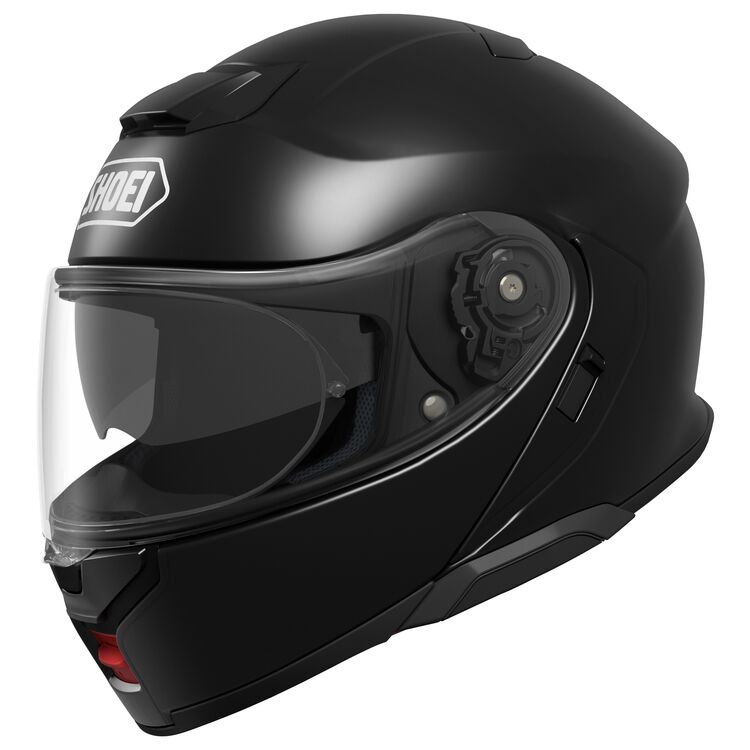
A premium modular helmet built for long-distance comfort and low noise, with a smooth flip-up chin bar, tightly-sealing visor and wide drop down sun shade. Fits the SRL3 Sena comms system seamlessly.
- Comfortable wear all day
- Quiet, aerodynamic performance
- Flip-front convenience at stops
- Integrated comms & sun visor
- Faceshield lock is sometimes stiff
- Heavier weight may fatigue neck on long rides
Shoei GT-Air 3 (~$600–$650): A premium full-face touring helmet at a lower price than either lid here. Drop-down sun visor, SRL3 compatibility, very quiet, and lighter than the C5. Best for riders who want a sun visor without the modular weight penalty.

A premium touring helmet built to disappear on long rides: plush liner, adjustable vents, thick neck-roll and tight sealing visor for that sweet sweet silence and an optically-clear drop down sun shield. Fits the SRL3 Sena comms system seamlessly.
- Super quiet
- Wind tunnel molded for smoother ride (less fatigue)
- Eyeglass compatible
- Internal sun shade and Pinlock visor
- A bit heavier than carbon‑shell alternatives
- Ratchet strap may irritate throat
Arai Regent-X (~$580–$620): Shares the Contour-X’s 5 mm flared base and brushed nylon interior at a discount. Fewer vents, slightly less aerodynamic, but still Snell-certified Arai build. Best for riders who like the Contour-X’s approach but want to save a couple hundred dollars.
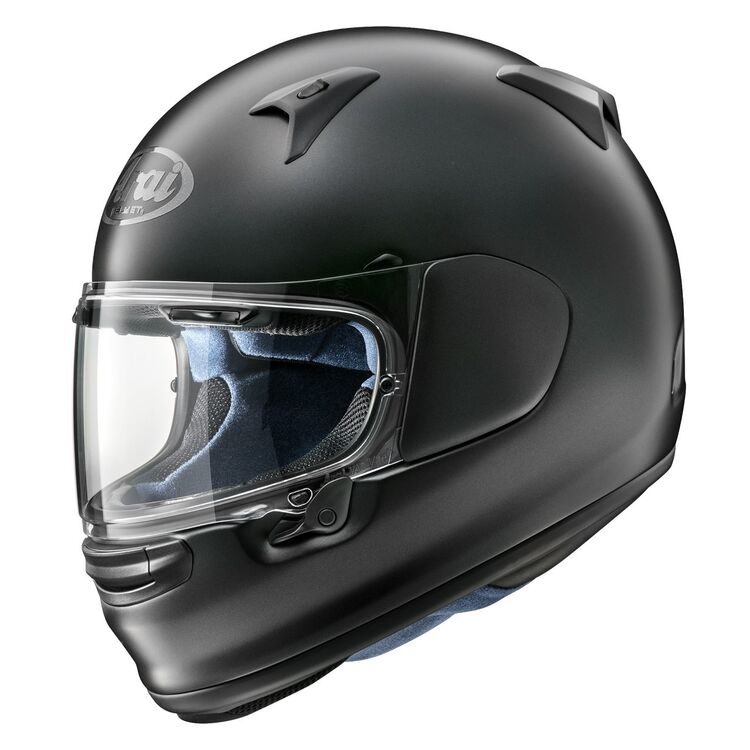
Arai's most accessible helmet offering premium build quality, plush comfort, and high-end safety certifications in a surprisingly easy-to-put-on package.
- Exceptional comfort thanks to plush Facial Contour System
- Snell M2020 & DOT certified for elite crash protection
- Effortless donning with wider shell opening
- Wide eyeport with Pinlock‑ready Max Vision shield
- Vent controls can feel stiff when wearing gloves
- Heavier and noisier than ultra‑premium sport helmets
HJC RPHA 91 (~$500–$600): A more affordable premium modular option. Drop-down sun visor, quiet for its price tier, ECE 22.06 with P/J. Best for budget-conscious modular touring riders.
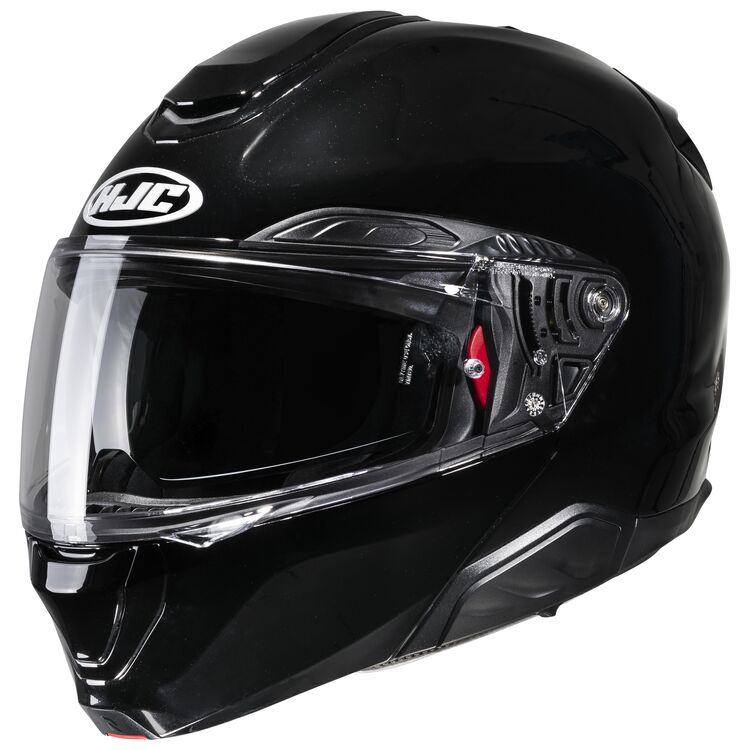
A premium DOT-rated modular helmet combining composite‑shell strength with a smooth flip‑front, quiet ride and adjustable sun visor for long-distance touring comfort.
- Composite PIM Evo shell offers superior impact protection
- Adjustable drop-down sun visor adapts to changing light
- Very quiet for a modular helmet—~96 dB at highway speeds
- Comfortable, plush liner with interchangeable cheek pads
- Slightly heavy compared to lighter modulars
- Chin bar lock can be finicky to operate with gloves
FAQ
Is the Schuberth C5 the quietest helmet you can buy?
It’s one of the quietest modulars on the market, and Schuberth’s claimed 85 dB(A) at 100 km/h on a naked bike is among the lowest figures any manufacturer publishes. For full-face touring helmets, the Shoei RF-1400 typically rates equally quiet or slightly better. Noise also depends heavily on your bike, windscreen, and riding position, so try if you can.
Does the Arai Contour-X have a drop-down sun visor?
No. Arai’s design philosophy avoids moving parts inside the shell that could compromise impact performance. You can buy the optional Pro Shade VAS-V system, which clips a tinted strip onto the face shield, or run sunglasses or a tinted shield.
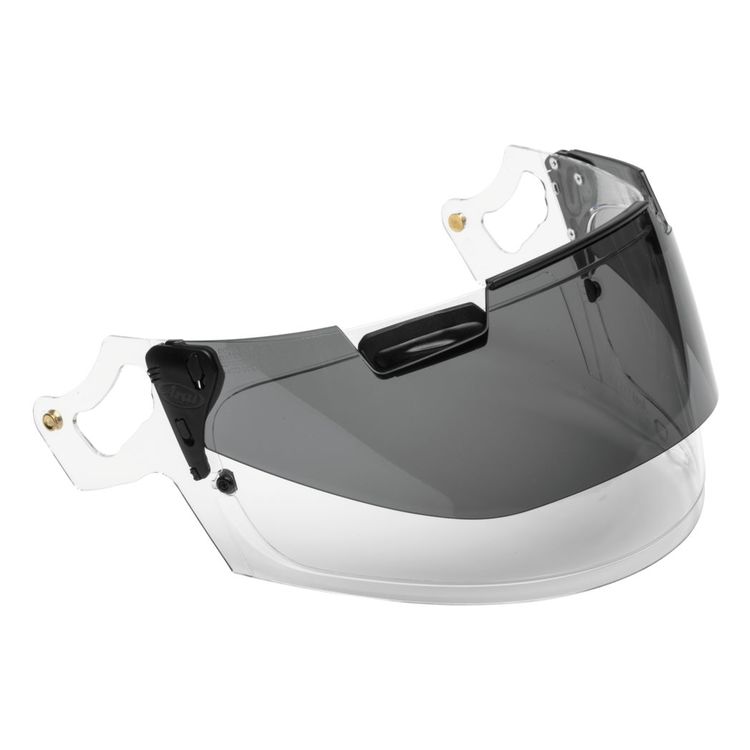
Adds quick glare control to VAS-V Arai helmets while keeping a clear shield for changing light, so you can ride day to night without swapping visors.
- Switches from sun shade to clear view fast
- Great for day-to-night touring rides
- External design preserves Arai’s shell concept
- Pre-mounted shield makes setup simple
- Tint layer can add slight reflections in low light
- Only fits Arai helmets using VAS-V shields
Is the Schuberth C5 visor really known to drop at speed?
Yes, this is a real and well-documented issue. The clear main face shield can creep down from a cracked-open position once you hit highway speeds, often between 50 and 70 mph depending on bike and windscreen. The good news: our reviewer found a fix using $1.70 worth of rubber O-rings that completely solves it. Full details are in this Schuberth C5 review.
Which helmet is better for hot-weather touring?
The Arai Contour-X. Its 13-port ventilation system moves significantly more air than the C5’s two-intake setup, especially at low speeds. The 3D logo vent alone channels 40% more air at low speeds than older Arai designs. If you ride in 90°F-plus heat regularly, the Contour-X is the clearer choice.
Can I run a Cardo Packtalk in the Schuberth C5?
Yes. The C5 has a Cardo-specific module called the SC Edge that drops Cardo Packtalk Edge hardware into the same plug-and-play pockets the Sena SC2 uses. You get factory-integrated speakers, antennas, and wiring without external bumps.
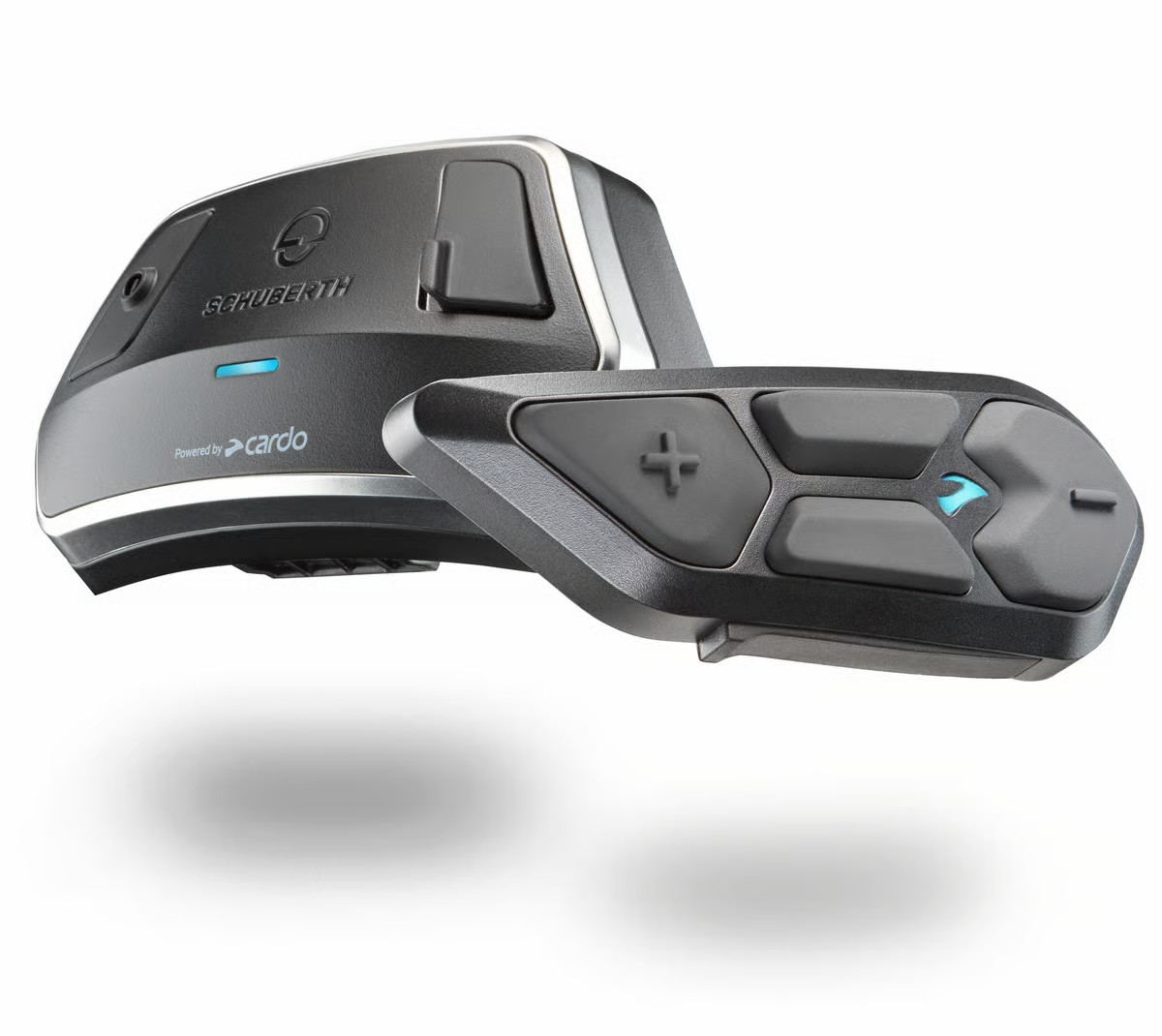
A factory-fit Cardo comm unit for Schuberth helmets, giving riders clean Mesh connection, clear audio, and hands-free control without bulky add-ons.
- Factory fit keeps the helmet clean
- DMC Mesh reconnects riders smoothly
- Voice control works well hands-free
- Good sound clarity for music and calls
- Only fits select Schuberth helmets
- App connection may take a moment
How do I know which helmet fits my head shape?
Both helmets are designed for an intermediate oval head shape, which fits most North American riders. The Contour-X has a 5 mm flared base that makes it easier to get on and off, while the C5 uses Schuberth’s Universal Concept liner you can fine-tune with optional pads. If you’re between sizes, our helmet fitting guide walks through how to measure. Try both on at a dealer if you can.
Best for quiet modular touring
|
Best for lightweight ventilated touring
|
Description: The quietest touring helmet money can buy, kitted out with all the features you expect for those long days in the saddle. | Description: Blending race-inspired aerodynamics with touring comfort, the Arai Contour-X delivers strong protection, excellent airflow, and all-day comfort for daily rides and long hauls. |
Pros:
| Pros:
|
Cons:
| Cons:
|
The quietest touring helmet money can buy, kitted out with all the features you expect for those long days in the saddle.
- Modular flip up chin bar
- Drop down sun visor
- Space for integrated comms unit
- Many colorway options
- DOT certified, with ECE in EU
- Heavier than most full-face helmets
- Visor mechanism needed refinement early on
Blending race-inspired aerodynamics with touring comfort, the Arai Contour-X delivers strong protection, excellent airflow, and all-day comfort for daily rides and long hauls.
- Ultra-soft liner and 5 mm base flare boost comfort
- 7 intakes and 6 exhausts keep airflow strong
- Aero shell and spoiler reduce highway buffeting
- Speaker pockets and wire channel simplify comms
- Shield lock takes time to get used to
- Top logo vent is tricky with thick gloves